

Grab reports US$252 million in Q2 earnings, raises guidance for 2026
Company reaches a record 54 million monthly transacting users in the quarter, says group CEO Anthony Tan

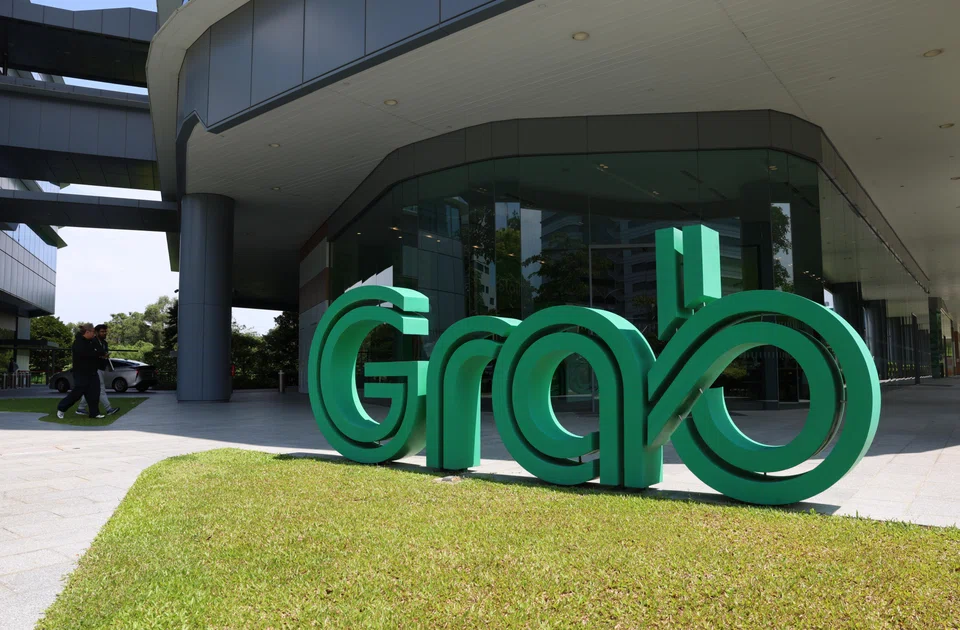
[SINGAPORE] Grab announced a profit of US$252 million for the second quarter of 2026, a more than six times increase from the US$35 million in Q2 2025.
Revenue for Q2 rose 22 per cent on the year to US$997 million from US$819 million. The growth was driven by revenue growth across deliveries, mobility and financial services.
Grab also reached a record 54 million monthly transacting users in Q2 2026, said group CEO and co-founder Anthony Tan. User penetration remains nascent across Grab’s markets, as the monthly transacting user (MTU) base is still a minority of South-east Asia’s addressable users.
Engagement among users is deepening, as growth in daily transacting users outpaced MTU growth, while retention rates remained stable, said Tan.
As users engage with more services, their lifetime value rises and they remain embedded in the platform, he added.
“This is why our growth this quarter was led by transactions and users rather than prices – the healthiest form of growth we can generate,” said Tan.
Revenue for deliveries grew 21 per cent in the quarter to US$531 million from US$439 million in Q2 2025. This was driven by growth in gross merchandise value (GMV) and the advertising business.
The groceries segment, GrabMart, grew GMV at 17 times the rate of food deliveries in Q2 2026, with the growth expected to outpace the deliveries portfolio, said Alex Hungate, Grab’s chief operating officer.
Grocery penetration is still nascent, while users rose 42 per cent. GrabMart constitutes about 14 per cent of the user base.




“Longer term, we can see that some of the global peers are reporting (around) 30 per cent or even higher for grocery penetration, so there’s obviously lots of upside there,” he added.
Mobility revenue for Q2 rose 12 per cent to US$331 million from US$295 million in the year-ago period. This was driven by an increase in mobility GMV, and growth in mobility monthly transacting users and transactions.
Over US$7 million was committed to support drivers amid the ongoing fuel crisis, resulting in average monthly active drivers growing 19 per cent to reach an all-time high.
Financial services revenue grew 59 per cent to US$134 million in Q2 from US$84 million in the previous corresponding period. This was driven by increased lending across GrabFin and the digital banks. Total loans disbursed increased 72 per cent to hit US$1.2 billion in the quarter.
The gross loan portfolio grew 197 per cent to US$2.3 billion in Q2 2026 from US$781 million in Q2 2025. Total customer deposits across GXS Bank, GXBank and Superbank hit US$2.5 billion at the end of Q2 2026.
Adjusted earnings before interest, taxes, depreciation and amortisation (Ebitda) rose 54 per cent to US$168 million in Q2 2026 from US$109 million. This was due to the growth in revenue and profitability across all business segments.
Regional corporate costs for Q2 was 13 per cent higher on the year at US$104 million from US$92 million. This was driven mainly by increases in cloud and software costs. On a quarter-on-quarter basis, regional corporate costs narrowed by US$10 million due to lower staff costs and professional fees.
Cost per artificial intelligence interaction for drivers and merchants have more than halved since June 2025, said Tan. Grab deploys AI to every ecosystem partner, and treats AI as a margin lever and not a cost centre.
“Internally, our engineers now pair with autonomous coding agents as standard practice, cutting time to market of new products by up to 30 per cent year on year, while Jarvis, our internal AI data analytics assistant, cumulatively saves our sales teams approximately 40,000 hours every quarter,” he added.
Earnings were driven by a US$334 million increase in finance income, mainly attributable to a US$307 million gain recognised in consolidating Superbank since June 2026 and a US$66 million gain from the recognition of deferred tax assets. This was partially offset by a US$183 million increase in fair value loss on financial assets and liabilities.
Grab also raised its full-year guidance for 2026, with revenue for 2026 to hit between US$4.1 billion and US$4.15 billion at a growth rate of 22 to 23 per cent. Previously, Grab guided for 2026 revenue to come in between US$4.04 billion and US$4.1 billion at a growth rate of 20 to 22 per cent.
Adjusted Ebitda for 2026 was raised to between US$720 million and US$740 million at a growth rate of 44 to 48 per cent. Previously, it guided for adjusted Ebitda of between US$700 million and US$720 million at a growth rate of 40 to 44 per cent.
The raising of 2026’s guidance is a reflection of the strength in the underlying business, along with the consolidation of Superbank and the acquisition of US fintech Stash, said Peter Oey, chief financial officer of Grab. Headwinds in foreign exchange as well as fuel subsidies were also accounted for in these new projections.
The board has authorised an additional US$750 million for share repurchases. This brings Grab’s share repurchase programme to nearly US$1.8 billion since 2024.
As for Uber’s potential acquisition of Delivery Hero, which includes food delivery platform foodpanda, Tan noted that Uber is still restricted from competing with Grab in its core markets until one year after selling its stake.
“Regardless of that, our markets have always been competitive... Our competitive strength stems from structural advantages that are hard to disrupt,” he added.
Decoding Asia newsletter: your guide to navigating Asia in a new global order. Sign up here to get Decoding Asia newsletter. Delivered to your inbox. Free.
Copyright SPH Media. All rights reserved.






