

As Gulf conflict rattles investors, STI listcos spend S$180 million on share buybacks
Shareholders welcome share buybacks as a way for corporates to return cash to them, but they can be a double-edged sword

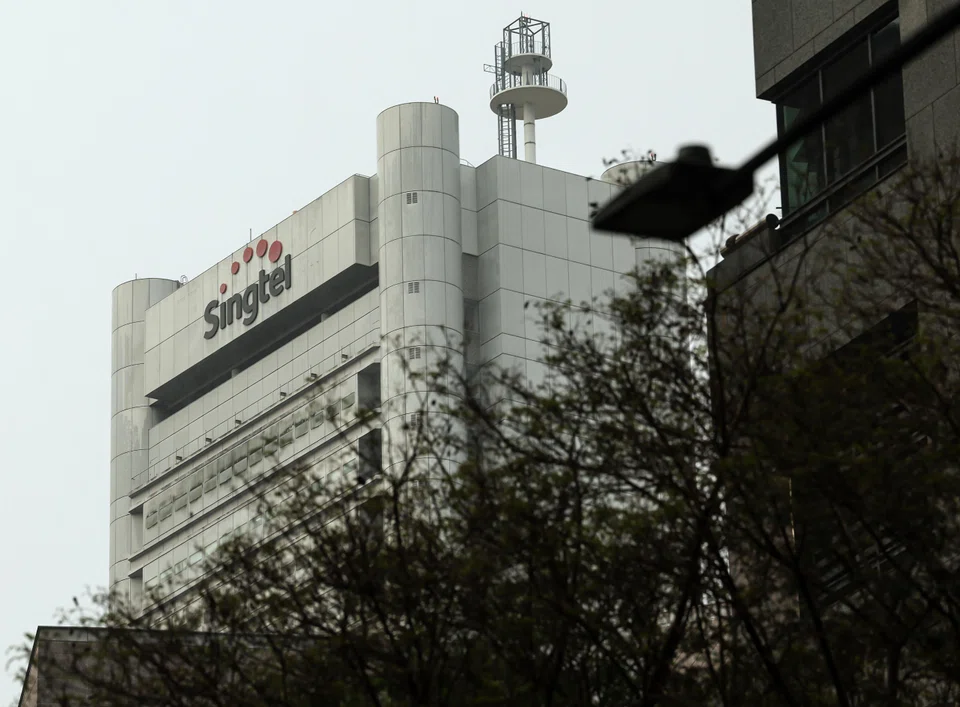
[SINGAPORE] Singapore shares have been on a wild ride since war broke out in the Gulf two weeks ago.
On balance, countless stocks are now deep in negative territory. Blue chips in the benchmark Straits Times Index (STI) have not been spared, leaving its recently achieved 5,041.33 record high in the rear-view mirror.
The latest Middle East conflict began with the US and Israel’s strikes against Iran on Feb 28, not long after the STI crossed the 5,000 mark on Feb 12. Since then, global markets, including Asian bourses, have been hammered – even blue-chip counters.
But many corporates are unfazed and have forked out good money to pick up their own shares. Generally, shareholders welcome share buybacks as a way for corporates to return cash to them, even though they can be a double-edged sword.
Shareholders can either sell their shares back to companies or continue to hold them; in the latter case, their stake in the company increases percentage-wise. A decrease in the number of shares held in public hands leads to improvements in metrics such as earnings per share, a stock’s price-earnings ratio and possibly dividend payouts.
While dividends involve a commitment – cutting them sends a negative signal to the market – buybacks do not, as the company can pause or end such programmes.
Whichever means a company chooses to return cash to shareholders, both buybacks and dividends can signal that a company has excess cash with no better ways to deploy it. This is sometimes frowned upon since it can curtail future growth prospects.
As the war in the Middle East continues, here are some of the largest Singapore corporations that have collectively spent over S$180 million to repurchase their shares through the first half of March:
ST Engineering : The group bought back two million shares for around S$21.1 million.

On Mar 2, it paid around S$10.3 million for one million of its shares, translating to a price range of S$10.11 to S$10.39 per share. On Mar 6, it bought 500,000 shares for around S$5.4 million, working out to S$10.61 to S$10.95 per share. On Mar 10, it spent some S$5.4 million on another batch of 500,000 shares, or S$10.58 to S$10.79 per share. The company kept all repurchased shares in treasury.
Keppel : The asset manager conducted share buybacks daily for the first 10 trading sessions in March. In total, it bought back some 3.1 million shares for around S$37.9 million and kept all in treasury.
- Mar 2: It bought 400,000 shares for S$5.1 million, or S$12.42 to S$12.80 per share.
- Mar 3: It bought 200,000 shares for S$2.5 million, or S$12.42 to S$12.76 per share.
- Mar 4: It bought 500,000 shares for S$6.1 million, or S$11.85 to S$12.54 per share.
- Mar 5: It bought 200,000 shares for S$2.4 million, or S$12.09 to S$12.22 per share.
- Mar 6: It bought 200,000 shares for S$2.4 million, or S$12.04 to S$12.29 per share.
- Mar 9: It bought 500,000 shares for S$5.9 million, or S$11.65 to S$11.85 per share.
- Mar 10: It bought 300,000 shares for S$3.6 million, or S$11.94 to S$12.10 per share.
- Mar 11: It bought 200,000 shares for S$2.5 million, or S$12.21 to S$12.35 per share.
- Mar 12: It bought 300,000 shares for S$3.7 million, or S$12.21 to S$12.35 per share.
- Mar 13: It bought 300,000 shares for S$3.6 million, or S$12.08 to S$12.15 per share.
Singtel : The telco spent around S$63.7 million to buy back around 12.9 million shares in the first two weeks of March, cancelling all of them.
- Mar 2: It bought back 4.8 million shares for around S$23.7 million, or S$4.89 to S$4.93 per share.
- Mar 4: It bought back some 4.2 million shares for around S$20.4 million, at S$4.86 to S$4.92 per share.
- Mar 5: It bought back 989,300 shares for around S$4.9 million, or S$$4.94 to S$4.96 per share.
- Mar 9: It bought back 600,000 shares for around S$3 million, at S$4.94 to S$4.95 per share.
- Mar 11: It bought around 1.1 million shares for close to S$5.7 million, paying between S$4.96 and S$4.98 per share.
- Mar 12: It bought 250,000 shares for around S$1.2 million, paying between S$4.95 and S$4.98 per share.
- Mar 13: It bought 982,000 shares for around S$4.9 million, paying between S$4.96 and S$4.98 per share.
UOB : The lender conducted daily share buybacks for 10 consecutive trading sessions in the first two weeks of March. In total, it bought back some 377,000 shares for around S$13.6 million, all of which it cancelled.
- Mar 2: It bought back 37,000 shares for around S$1.3 million, or S$36 to S$36.44 per share.
- Mar 3: It bought back 37,000 shares for around S$1.3 million, or S$36.19 to S$36.68 per share.
- Mar 4: It bought back 37,000 shares for around S$1.3 million, or S$35.44 to S$36.20 per share.
- Mar 5: It bought back 38,000 shares for around S$1.4 million, or S$35.85 to S$36.15 per share.
- Mar 6: It bought back 38,000 shares for around S$1.4 million, or S$35.95 to S$36.14 per share.
- Mar 9: It bought back 38,000 shares for around S$1.3 million, or S$35.15 to S$35.59 per share.
- Mar 10: It bought back 38,000 shares for around S$1.4 million, or S$35.69 to S$36.31 per share.
- Mar 11: It bought 38,000 shares for around S$1.4 million, or S$36.09 to S$36.42 per share.
- Mar 12: It bought 38,000 shares for around S$1.4 million, or S$35.95 to S$36.58 per share.
- Mar 13: It bought 38,000 shares for around S$1.4 million, or S$36.14 to S$36.36 per share.
Singapore Airlines : The national carrier conducted daily share buybacks for all five trading sessions in the first week of March, storing all repurchased shares in treasury. In total, it paid around S$20.2 million for three million shares.
On Mar 2, it bought back one million shares for around S$6.8 million, at S$6.79 to S$6.87 a share. Subsequently, it bought back four tranches of 500,000 shares each over the next four trading sessions:
- Mar 3: It bought back 500,000 shares for around S$3.4 million, or S$6.74 to S$6.89 per share.
- Mar 4: It bought back 500,000 shares for around S$3.3 million, or S$6.57 to S$6.75 per share.
- Mar 5: It bought back 500,000 shares for around S$3.4 million, or S$6.65 to S$6.72 per share.
- Mar 6: It bought back 500,000 shares for around S$3.3 million or S$6.57 to S$6.65 per share.
Singapore Exchange : The bourse operator bought back 750,000 shares for S$13.2 million.
On Mar 4, it bought back 250,000 shares for around S$4.4 million, at S$17.25 to S$17.70 apiece. On Mar 6, it bought back 100,000 shares for around S$1.8 million, or S$17.55 to S$17.85 a share. On Mar 5 and 9, it purchased two tranches of 200,000 shares each; it paid around S$3.5 million for each tranche, translating to a range of S$17.53 to S$17.70 per share for the earlier tranche and a range of S$17.28 to S$17.35 per share for the later one. All repurchased shares were kept in treasury.
Seatrium : The offshore and marine specialist repurchased 1.7 million shares for nearly S$4 million. On Mar 3, the group bought back 840,000 shares for around S$2 million at about S$2.36 per share. On Mar 10, it repurchased 860,000 shares for close to S$2 million at S$2.30 per share. All shares were stored in treasury.
Sats : The ground handler spent more than S$6.2 million on 1.7 million shares.
On Mar 10, it paid nearly S$1.1 million for 294,700 shares. It paid between S$3.58 and S$3.61 for each share. On Mar 12, it paid S$2.4 million for 650,000 shares. On Mar 13, it paid around S$2.8 million for 768,300 shares. It paid between S$3.59 and S$3.66 for each share. All shares were stored in treasury.
Genting Singapore : The group bought back 4.4 million shares for close to S$3 million.
On Mar 6, it bought back 500,000 shares for S$340,630 or S$0.68 per share. It bought back 2.5 million shares for around S$1.7 million, or S$0.665 to S$0.68 per share on Mar 9. It repurchased 1.1 million shares for S$738,365, or S$0.67 per share on Mar 12. It bought back 300,000 shares for S$199,760.95 or S$0.665 per share on Mar 13. The repurchased shares were all stored in treasury.
Decoding Asia newsletter: your guide to navigating Asia in a new global order. Sign up here to get Decoding Asia newsletter. Delivered to your inbox. Free.
Copyright SPH Media. All rights reserved.
TRENDING NOW
Prima to move out of historic Keppel Road flour mill building in 2028
Temasek-related Azalea, SeaTown, Seviora Capital to merge in 2027
Family offices see more tailored products, leverage ‘collective firepower’ for direct deal access
Singapore room rates soar, but hotels seeing mixed demand from F1 race and events

