

From Haidilao to Oriental Kopi: How some of Asia’s favourite F&B players are faring in 2026
Dining groups have been facing intensifying competition, cost inflation and more

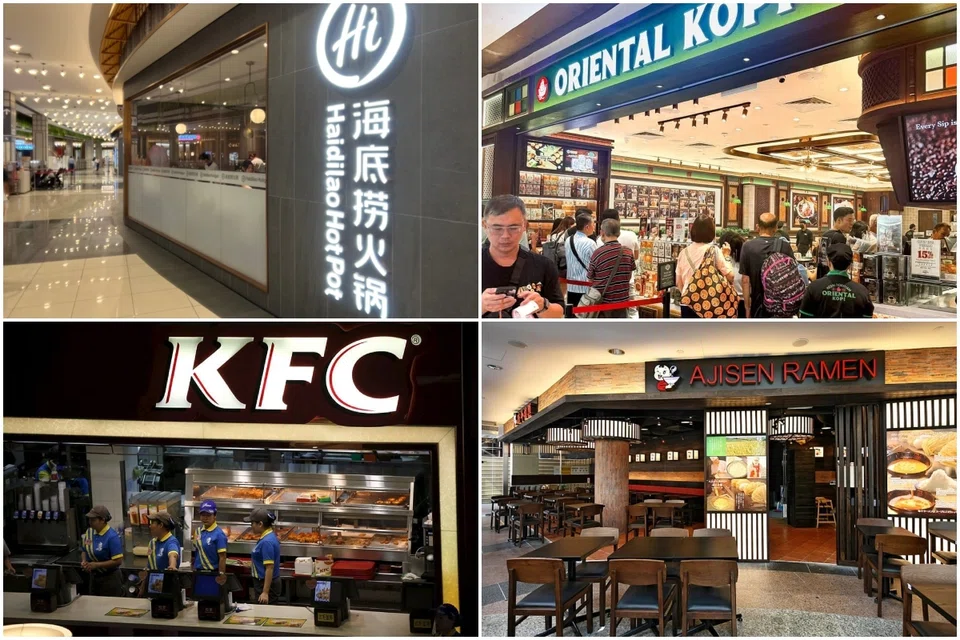
[SINGAPORE] Amid sticky inflation, fierce competition and cautious consumer spending, dining groups across the Asia-Pacific have been facing a shifting landscape over the years.
Here is a snapshot of how five major dining and beverage names – both home-grown Singapore champions and massive regional operators – are tracking their listing trajectories, and what analysts make of their latest results.
Haidilao
While dining guests experience the brand as one seamless hotpot ecosystem, Haidilao operates through two distinct, independently listed corporate entities.
Haidilao International listed on the mainboard of the Hong Kong Stock Exchange in September 2018 to manage all restaurant operations across Greater China.
In December 2022, it completed a spin-off via a distribution in specie of Super Hi International, which holds and manages all international outlets outside Greater China. Super Hi subsequently completed a dual listing on Nasdaq in May 2024.
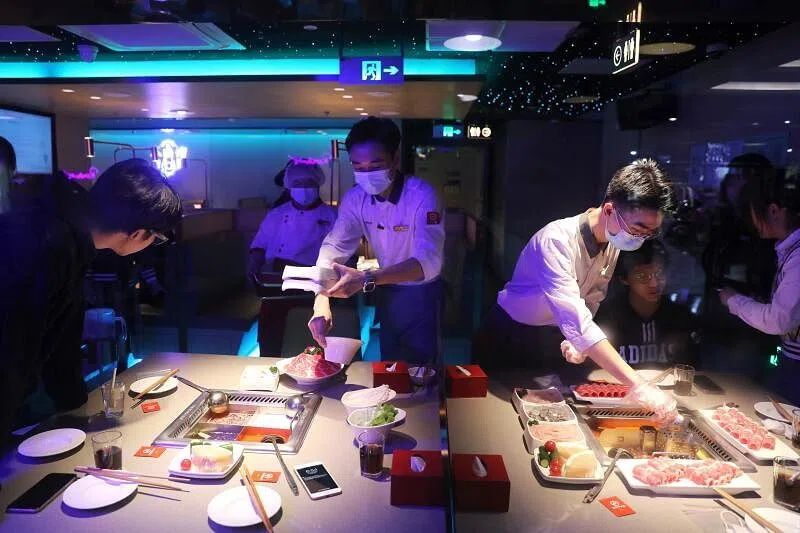
In the year to date as at Monday (Sep 14), Haidilao International has lost 30.9 per cent in market value, and Super Hi has shed 29.3 per cent.
In its financial report for the first half of 2026, Greater China-focused Haidilao’s revenue grew 7.9 per cent year on year to 22.3 billion yuan (US$3.3 billion), while net profit edged up 0.5 per cent to 1.8 billion yuan.
The driver of top-line expansion was Haidilao’s delivery segment, which surged 121.2 per cent year on year to 2.05 billion yuan – now representing 9.2 per cent of the total group revenue. This growth in the delivery business came on the back of increased sales of single-serve meal items such as rice-bowl takeaways.
Multi-brand restaurant concepts under its “Pomegranate Plan”, which launched in 2024 to drive product diversification, also jumped 113.1 per cent year on year to 1.27 billion yuan.
Meanwhile, international counterpart Super Hi reported operational gains for the second quarter of 2026, with revenue climbing 10 per cent year on year to US$218.8 million.
Operating profit more than doubled (118.9 per cent increase) to US$8.1 million and table turnover improved to 3.9 turns per day, compared with 3.8 times in Q2 2025.
However, Super Hi posted a net loss of US$1.9 million for the quarter (compared with a US$16.4 million profit a year prior), heavily weighed down by US$20.6 million in net foreign-exchange losses stemming from local currency depreciations against the US dollar.
Over the last five years, Haidilao’s drastic post-pandemic restructuring led to hundreds of underperforming units closed.
Now, analysts say the main Haidilao brand is expected to maintain steady expansion, and the sub-brands will soon enter the replication stage.
“Looking ahead, the Haidilao brand will maintain a steady store-opening pace at mid-single-digit growth this year, while new brands, food stall hotpot and sushi, will enter the replication stage. The delivery business is expected to sustain rapid growth at a high double-digit rate in H2 2026, but its profitability is lower than that of dine-in,” analysts from UOB Kay Hian said on Aug 27.
Oriental Kopi
Oriental Kopi, which started in Johor Jaya in 2020, completed its high-profile initial public offering on Bursa Malaysia’s ACE Market in 2025.
Oriental Kopi, famous for its signature egg tarts, traditional white coffee and Nanyang comfort staples, recorded top-line growth in the third quarter ended Jun 30, 2026. Quarterly revenue jumped 34.2 per cent year on year to RM156.6 million (US$38.5 million), driven by rapid store expansions and high table turnover rates at its queue-dense mall locations.
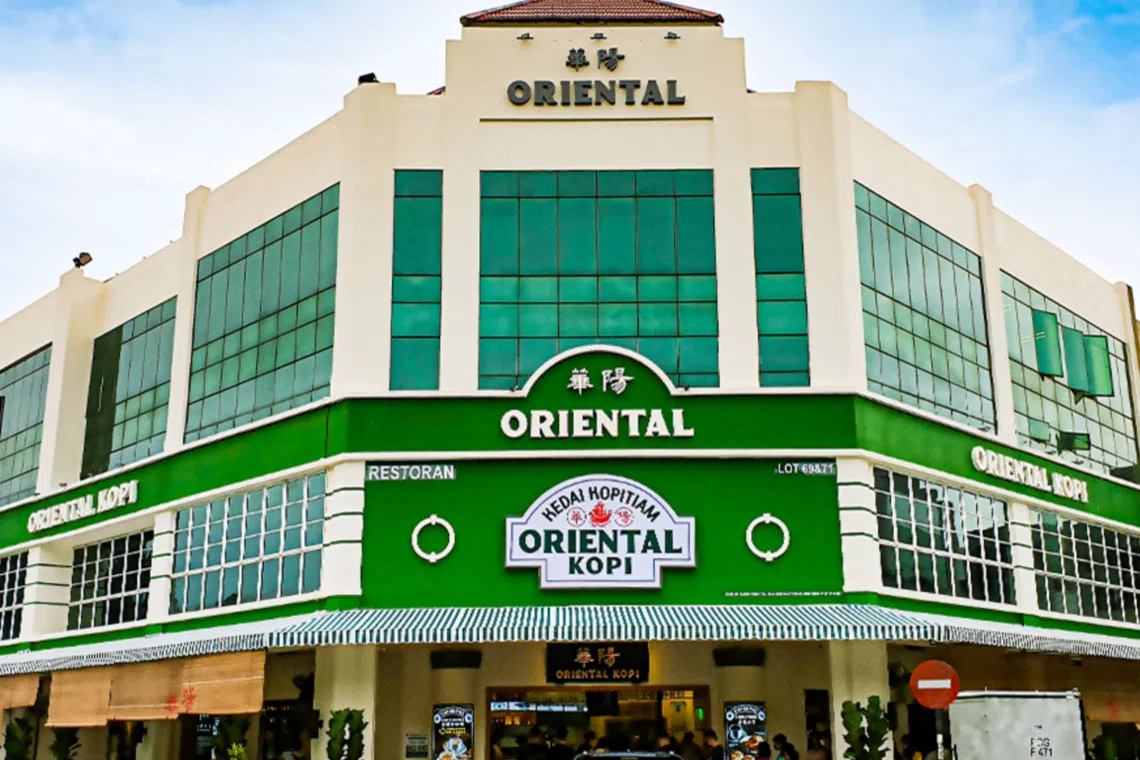
However, this quarter was weaker than expected, leading analysts to cut their outlooks for the stock.
Quarterly net profit fell 5.3 per cent year on year to RM17 million, as a result of an increase in cost of sales and a higher effective tax rate being adopted in Q3.
Oriental Kopi has lost almost 36 per cent of its market value in the year to date, as investors and analysts were disappointed by the results, with its margins continuing to shrink from its aggressive expansions.
However, analyst outlooks remain mixed. RHB said that it expects “sales growth to remain healthy, albeit with a more gradual ramp from the enlarged outlet base as newer stores may take time to reach optimal productivity”.
Oriental Kopi intends to further expand its international presence. In August, it expanded into Indonesia through a strategic joint venture.
Yum China
Yum China, which was spun off from parent Yum! Brands and independently listed on the New York Stock Exchange in November 2016, later completed a secondary dual-primary listing on the Hong Kong Stock Exchange in September 2020.
The group’s dining portfolio is anchored by KFC, which operates nearly 13,800 outlets as the core profit centre.
In August 2026, after operating the brand in the market for 36 years, Yum China also fully acquired the brand of Pizza Hut in mainland China from Yum! Brands at a cash consideration of US$1.2 billion.
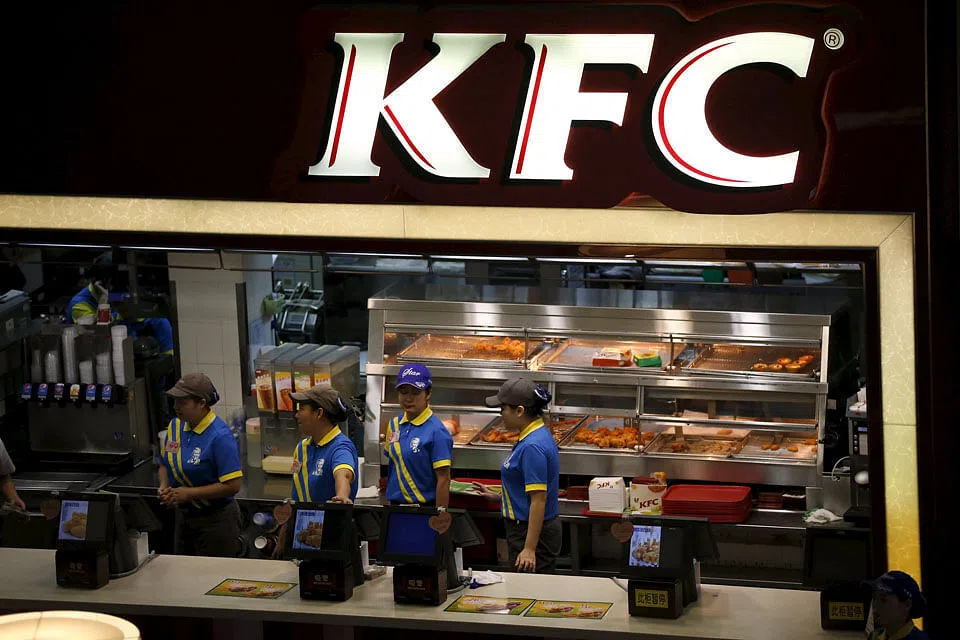
Yum China and analysts both expect the savings in licence fees to support margin expansion, with Pizza Hut’s restaurant margin approaching KFC’s.
In Q2 2026, Yum China’s solid financial results were in line with positive market expectations.
Total quarterly revenue rose 13 per cent year on year to US$3.1 billion (up 6 per cent excluding foreign-exchange effects).
Operating profit climbed 14 per cent on the year to US$348 million, a Q2 record high.
System sales grew 6 per cent on the year, anchored by a 7 per cent sales increase at KFC and a 6 per cent rise at Pizza Hut; and same-store sales turned positive at 1 per cent.
Store expansion hit a Q2 record, with 560 net new stores added in three months – a 67 per cent increase from the prior year – bringing total store count to 19,297 locations across mainland China. This includes its other emerging brands, such as Taco Bell and Lavazza.
“We expect continued new store openings and margin improvements to drive FY2026-2028 net profit growth. We expect the acquisition of the Pizza Hut brand in mainland China to improve earnings per share slightly in FY2026 and by mid-single-digits in FY2027 due to licence fee savings,” CGS International analysts said on Jul 31 after the release of the Q2 results.
Japan Foods
Japan Foods reported a narrowed net loss of S$6.7 million for the 12 months ended Mar 31, 2026, from S$7.9 million in the previous financial year.
The Japanese dining specialist, listed on the Singapore Exchange (SGX) Catalist board in February 2009, is behind familiar brands such as Ajisen Ramen and Menya Musashi.
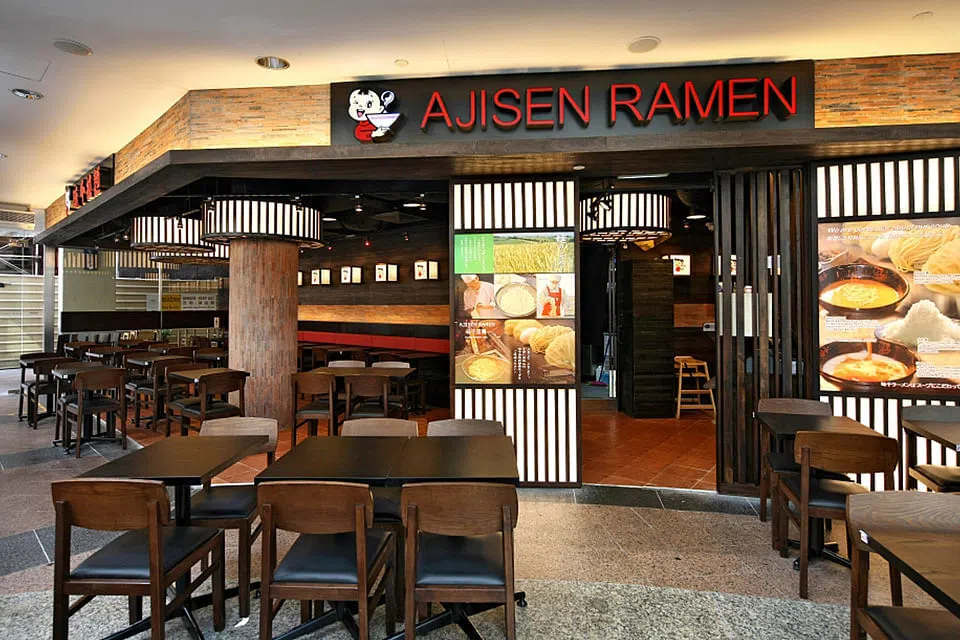
Its market value has decreased by nearly 74 per cent over the past five years, due to intensifying competition from local and foreign operators, persistent cost inflation and softening discretionary consumer spending in Singapore.
However, the group said in its FY2026 report that its profit recovery strategy is starting to “bear fruit”.
Japan Foods systematically closed underperforming outlets, reducing its Singapore self-operated restaurant network from 78 outlets in FY2025 to 58 in FY2026 while pivoting heavily into halal-certified dining concepts such as Tokyo Shokudo, expanding its total addressable market.
In line with the smaller network, and also due to lower sales generated by the remaining restaurants, total revenue declined 16.7 per cent year on year to S$69.6 million in FY2026.
As its halal segment has remained the group’s main growth engine, Japan Foods said it intends to continue investing in and selectively growing this segment.
Tung Lok Group
Listed on the SGX Catalist board in March 2001, Tung Lok Group is a heritage Chinese restaurant operator in Singapore.
Founded in 1980, the group manages more than 35 dining locations across Singapore, China, Indonesia, Vietnam and the Philippines under well-known brands such as TungLok Signatures, TungLok Seafood and Dancing Crab.
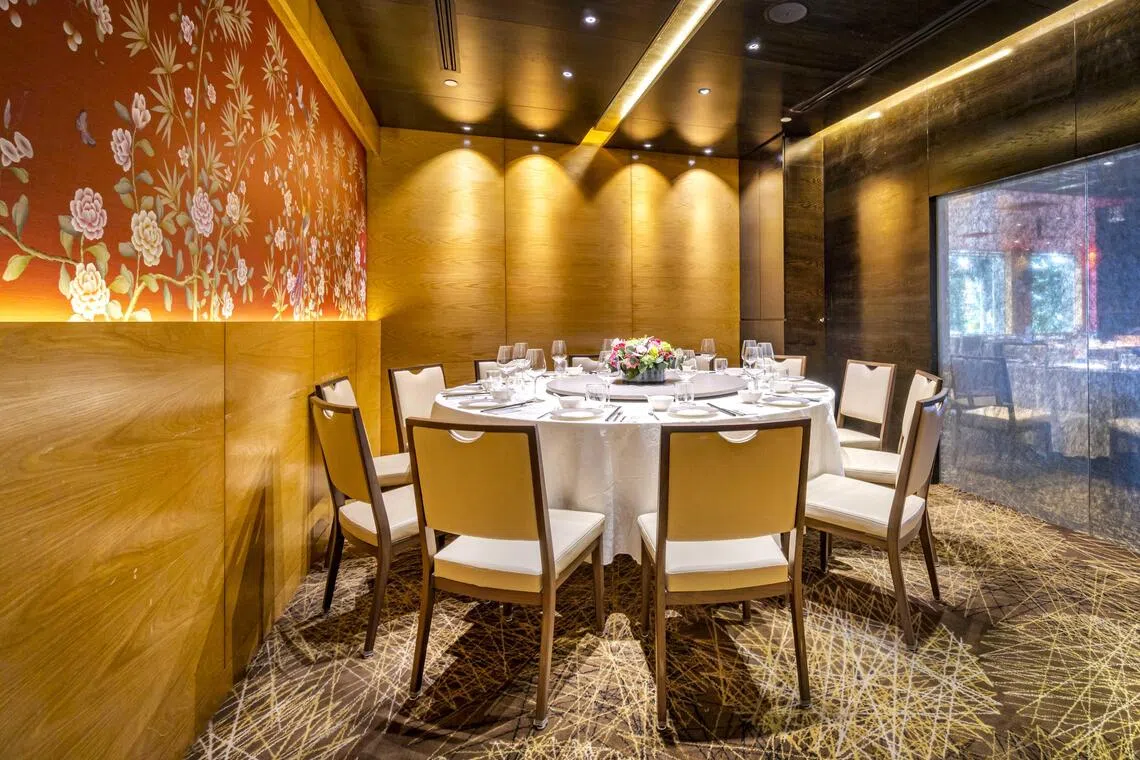
For the full financial year ended Mar 31, 2026, Tung Lok reported revenue of S$79.6 million, down 3.1 per cent year on year from S$82.1 million in FY2025. This was attributed to lower revenue from existing outlets, the closure of two outlets and lower mooncake sales.
Despite top-line pressure, operational discipline helped narrow net losses to S$1.7 million for FY2026 from S$1.8 million in FY2025.
Tung Lok’s share price has stayed flat year to date.
Decoding Asia newsletter: your guide to navigating Asia in a new global order. Sign up here to get Decoding Asia newsletter. Delivered to your inbox. Free.
Copyright SPH Media. All rights reserved.
TRENDING NOW

S$8 billion wiped off OCBC value as shares slide 5.8% in heavy trade

Grab CEO’s wife Chloe Tong on life with Anthony Tan and finding her purpose

Brookfield denies accusation it cut Soilbuild out of Mapletree deal

8 public officers referred to police over property buys near unannounced MRT stations: Chan Chun Sing

