

High costs, cautious shoppers: DFI, Food Empire in favour as Sheng Siong, Delfi face margin squeeze
Consumer stocks have had a subdued year, but some names are better positioned than others

[SINGAPORE] As the dust settles on the latest earnings season, the outlook for Singapore Exchange consumer stocks hinges on how companies will navigate elevated operating costs and cautious spending over the coming quarters, said market observers.
Over the past month, major consumer stocks – including Sheng Siong, DFI, Food Empire and Delfi – released their third-quarter earnings.
Performance across the sector was largely mixed.
Food Empire’s revenue climbed 5.8 per cent. DFI also delivered strong growth, with underlying subsidiary profit from continuing operations rising 17 per cent over the same period.
However, not all players fared as well; Delfi, for instance, posted a 5.5 per cent drop in net sales, largely affected by weaker regional currencies and political uncertainty in the Middle East.
While Sheng Siong’s Q3 net profit edged up 1.9 per cent year on year, it disappointed investors and sparked a series of analyst downgrades and target price cuts.

Overall, the consumer sector had a subdued year, said experts.
High oil prices and weak currencies are stoking inflation. This has led to shrinking consumer spending, particularly in emerging markets, said Paul Chew, head of research at Phillip Securities Research.
Pricey staples lose their shine
Within the sector, investor preference is shifting from premium-valued defensive staples into reasonably priced companies that offer clear earnings visibility and margin resilience.


Analysts have observed this shift in investor preference in consumer staple names such as Sheng Siong .
Despite the increase in its Q3 profit, the supermarket operator warned that an increasingly competitive grocery landscape, volatile energy prices,and the commencement of the Johor Bahru-Singapore Rapid Transit System Link next year could cloud its earnings outlook.
Some, such as Chew, believe that Sheng Siong’s strong market share and resilient consumer spending may anchor its performance.
However, others believe its domestic risk exposures may lead to valuation pressure.
Chee Zheng Feng, research analyst from DBS Group Research, observed that Sheng Siong’s premium valuation of close to 30 times price-to-earnings “has become harder to sustain amid slowing earnings growth and the significant increase in utility costs next year”.
Attractive valuations win
As capital rotates away from expensive staples, companies with attractive valuations are stepping into the spotlight.
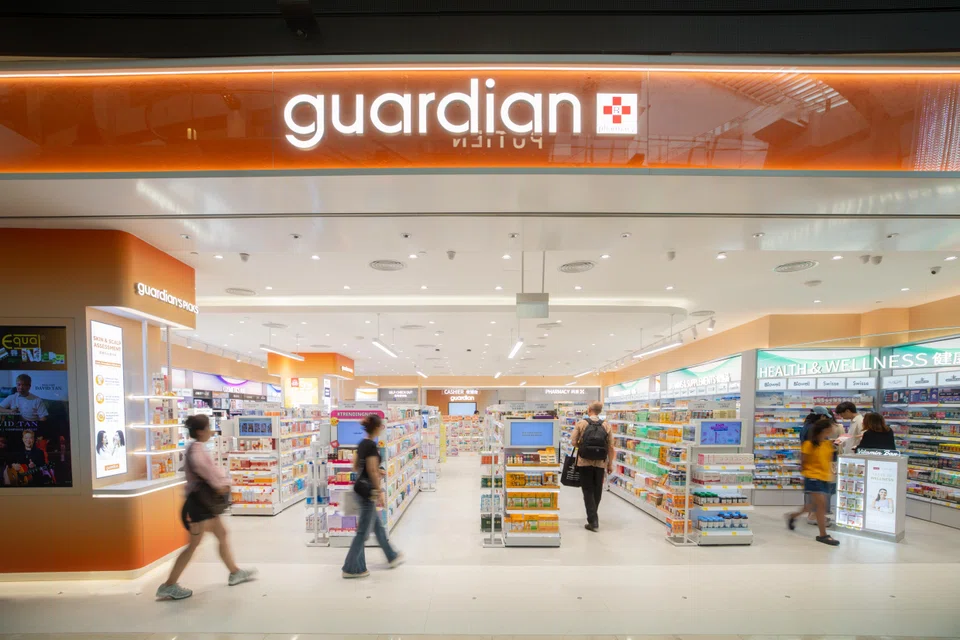
DFI Retail , which is behind brands such as Guardian and 7-Eleven, is among the “better-positioned” names, said DBS’ Chee.
He pointed out that its key Hong Kong market is benefiting from an improving consumer environment and the return of Chinese tourists.
The group also has “meaningful scope” to improve its profitability through tighter cost discipline, operating efficiencies and a better product mix, he added.
Similarly, Food Empire , the manufacturer and distributor best known for its coffee mixes, is drawing attention as it expands its manufacturing capacity.
John Cheong, head of small mid-cap research at UOBKH, highlighted that Food Empire is trading at a 46 per cent discount to its peer average, despite remaining on track for its sixth consecutive year of record revenue.
“Management is increasingly prioritising profitability over aggressive revenue growth,” the analyst said.
He added that the company’s established brands, diversified geographical presence and a new Kazakhstan facility will help mitigate logistics pressures and defend margins.
Vulnerable discretionary products
Analysts see companies selling discretionary products as particularly vulnerable, especially those exposed to weaker consumer markets and rising input costs, including commodities.
“More commoditised consumer categories such as edible oil, flour and rice face a greater risk of margin compression,” said Phillip’s Chew.
“There is less ability to raise prices in (the) current high inflationary environment,” he added.
Specifically, analysts flagged chocolate manufacturer Delfi to be at risk.
“Chocolate remains relatively discretionary, while its high exposure to Indonesia leaves it more sensitive to weaker consumer spending,” Chee said.
He noted that similar businesses with limited pricing power may struggle to pass on higher commodity and energy costs without affecting volumes.
As a baseline defence against such volatility, RHB Singapore senior research analyst Alfie Yeo pointed out that midstream consumer companies – manufacturers that process raw ingredients into packaged goods – would have already locked in their input costs for the next six to 12 months, which could provide near-term margin certainty.
“Beyond that, it will depend on their hedging strategy,” he said.
Moving forward, he noted that packaged food companies such as Delfi and Food Empire can actively reduce their product portions to protect their margins.
Retailers may ultimately pass higher costs to consumers via lower discounts or higher shelf prices, said Yeo.
Decoding Asia newsletter: your guide to navigating Asia in a new global order. Sign up here to get Decoding Asia newsletter. Delivered to your inbox. Free.
Copyright SPH Media. All rights reserved.
TRENDING NOW

LNG, stronger regional power links key to Asean’s energy resilience: Shell

Keppel CEO on telco merger: S$34 million StarHub dividend beats M1’s S$3 million contribution

OCBC opens 100-tonne gold vaulting facility to meet growing institutional demand

As Indonesia picks new vice-president to succeed Gibran, investors see risks and opportunities

