Sheng Siong has fallen from its highs. Can its defensive appeal endure?
Its pullback offers an attractive entry point for investors seeking greater exposure to the domestic market

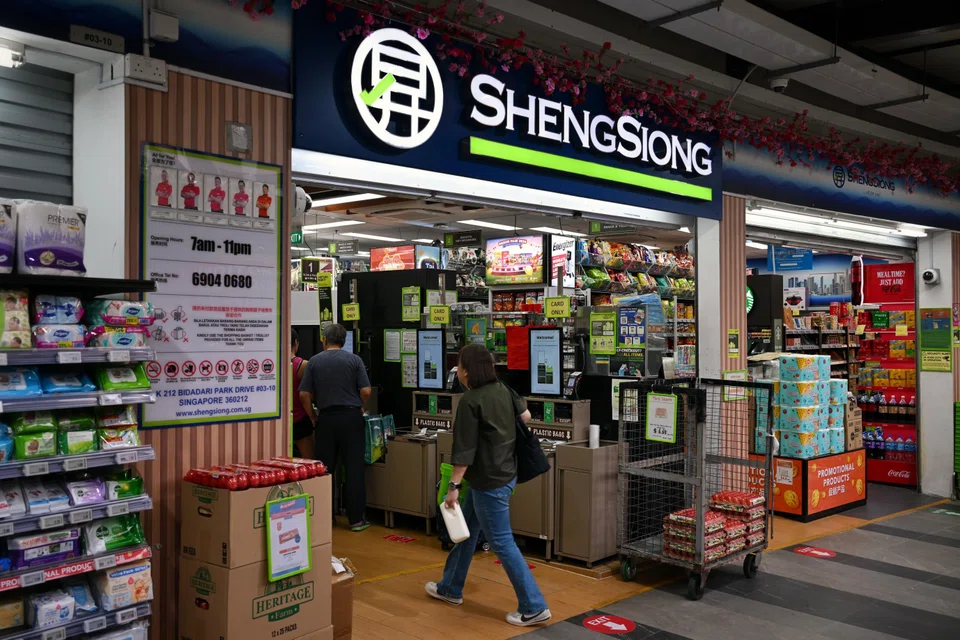
[SINGAPORE] Sheng Siong is going through a rough patch. The supermarket operator’s share price has tanked in the past week, hitting close to a one-year low of S$2.42 on Nov 2.
The trigger for the counter’s continuous slide since September was the company’s Q3 earnings update two weeks ago, when management warned that an increasingly competitive grocery retail landscape would cloud its earnings outlook for 2027.
Sheng Siong’s woes
This was despite a modest improvement in its Q3 net profit, which rose 1.9 per cent year on year to S$44.6 million for the period ended Sep 30.
Among the challenges cited by the supermarket operator were cost pressures on several fronts.
These included geopolitical uncertainties and volatile energy prices, which could affect food supplies and procurement costs. The operator also expects consumers to remain value-conscious amid elevated living costs.
Another concern is the expected commencement of the Johor Bahru-Singapore Rapid Transit System (RTS) Link in February 2027, which could increase price competition from across the border.
Sheng Siong also faces higher overheads. Wage increases under the Progressive Wage Model, higher transport costs due to rising diesel prices, and potential increases in electricity prices could weigh on its bottom line.
Analysts have also flagged the reduced contribution from Community Development Council (CDC) vouchers to Sheng Siong’s earnings, given that consumers will receive the final lot of these vouchers in December.
But while the counter may have peaked, its recent pullback could offer an attractive entry point for investors looking to strengthen their longer-term Singapore stock portfolios, particularly those with greater exposure to the domestic market.
The case for buying in
The factors that propelled Sheng Siong to its highs in July this year may not recur. Much of the counter’s performance over the past year has been fuelled by its appeal as a defensive stock.
As geopolitical tensions and elevated oil prices fuelled volatility in global markets, Sheng Siong’s Singapore-centric business model, coupled with its continued expansion of stores within the city-state, made it a darling among investors.
While its valuation remains relatively high, Sheng Siong retains some appeal as a defensive stock.
For one, groceries are a household staple. While there are concerns that the RTS Link could encourage more Singaporeans to cross the Causeway for their shopping, consumers are unlikely to abandon the convenience of their neighbourhood supermarkets altogether.
Sheng Siong also continues to compete on price locally, an advantage that could become more important as households remain cautious about their spending.
There is also room for the supermarket operator to expand as new residential estates are developed in Singapore in the longer run, even if fewer store openings are expected in 2027.
The operator has 92 stores in Singapore, and six in China. It plans to open over 120 stores across Singapore, once its new headquarters and distribution centre in Sugei Kadut is completed in 2029.
While the tapering effect of CDC vouchers presents another headwind, this is likely to have been largely priced into the stock. Ultimately, underlying demand for groceries will continue to underpin the performance of a company with an established presence in the local market.
A place in Singapore-centric portfolios
Investors should, however, temper their expectations. The factors that buoyed Sheng Siong to its July highs may not return anytime soon. Part of the excitement around the stock came from investors seeking refuge in domestic-focused businesses as geopolitical tensions rattled global markets.
Those who bought in at higher prices may have missed their opportunity to sell at the peak.
But for investors looking to shore up their domestic-centric portfolio, the recent pullback offers a more comfortable entry point.
This is especially so as S-Reits remain weighed down by higher-for-longer interest rates, and globally-exposed tech stocks face a correction after a strong run.
One indicator of Sheng Siong’s resilience is its rising dividends. Over the last three years, the counter’s annual dividend per share has increased from S$0.0625 in FY2023 to S$0.064 in FY2024, and to S$0.07 in FY2025.
However, investors must be prepared to accept slower earnings growth, at least in the coming year.
Ultimately, Sheng Siong may no longer be the market darling it was in July. But with its defensive business model and exposure to an essential consumer staple, it still has a place in a diversified Singapore portfolio.