

IHH Healthcare partners some Integrated Shield insurers to rein in private hospital bills
The services of iXchange as a third-party administrator have dampened bill size growth to the low single digits

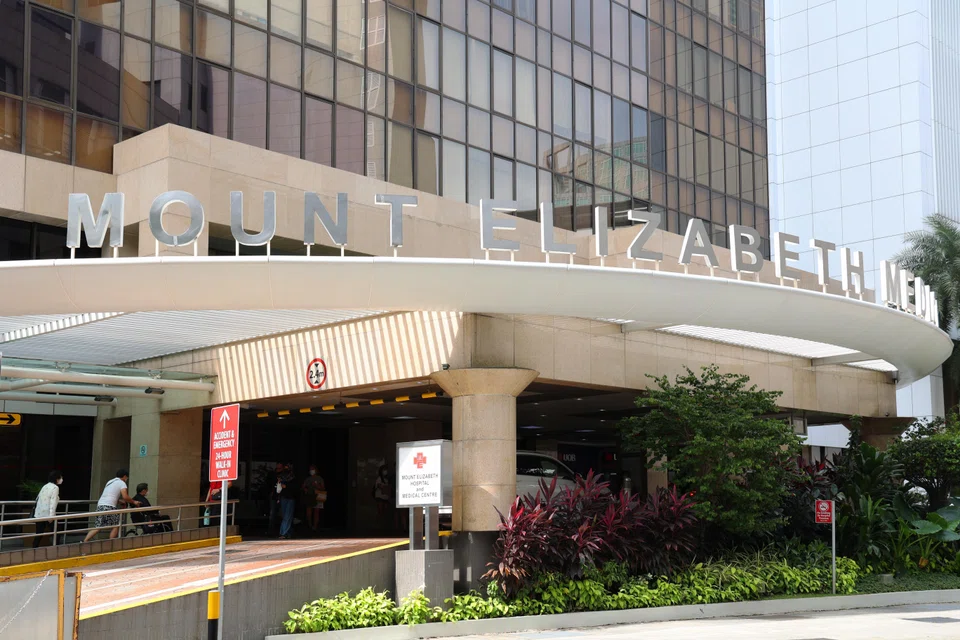
A PARTNERSHIP between IHH Healthcare and some Integrated Shield Plan (IP) insurers could well be a way to rein in escalating costs and claims from private hospital IPs.
The partnership taps the services of iXchange, the third-party administrator (TPA) of IHH Healthcare, which provides end-to-end cost management and other solutions for insurers or payers.
As a TPA, iXchange is a gatekeeper, helping to facilitate letters of authorisation (LOAs), for instance, which IP policyholders typically seek prior to hospital admission.
The process is complex and multi-pronged, but iXchange’s central proposition is its access not only to the hospital system, but also to doctors. Doctors on the IHH network are not employees, but are under contract to IHH.
This two-pronged access gives it a comprehensive view of cost drivers and enables it to intervene at various phases from pre- to post admission.
It is relatively early days. The first two insurers to enter this arrangement were Singlife and Income Insurance in 2023; they have both renewed their contracts for two more years.
Based on performance indicators tracked by iXchange, the partnership is bearing results. The most gratifying must be that the growth in bill sizes is now in the “very low single digits”, unlike in the past.
IHH Healthcare operates four hospitals under the Gleneagles, Mount Elizabeth and Parkway brands. The hospitals are understood to account for 60 to 70 per cent of private hospital IP claims.
Insurers may appoint iXchange to provide TPA services only for admissions into IHH hospitals. They may also use the company for their entire IP portfolio.
IHH Healthcare Singapore chief commercial officer Jeffrey Law said: “We started the conversation with all IP insurers. It’s also a new model for us and we had to allay the doubts in their minds… We’re likely to have agreements with almost all insurers within this year.”
iXchange chief executive Loh Chek Chai said: “As a TPA, I manage and work with doctors through a contract arrangement. Because we have a close relationship with the doctors, we can link the insurer with the hospital team to manage costs across the entire bill.
“I can manage how the doctor charges. I also work closely with the hospital side on how they are charging, and come up with packages to manage the bill size.
“That’s why we can do it extremely well, in contrast to what people say that we have a conflict of interest. Because we are in the system, we know the processes and the doctors. We’re able to exert a lot more control and we have more visibility into how doctors work and their charging behaviour. We can intervene a lot sooner.”
iXchange holds a 30 per cent share of the TPA market, comprising the corporate, international private medical insurance, and IP TPA segments.
Performance indicators
Loh said the partnership tracks several performance indicators. These include the right-siting of care, which refers to the split between day surgery and inpatient cases; pre-authorisation submission rates; the average number of TOSP (table of surgical procedure) codes per case; and average length of stay.
Generally, a higher pre-authorisation rate indicates “better cost containment”, he added. A greater proportion of day surgery, shorter stays and fewer surgical codes all translate into lower bills.
IHH’s Law said: “The programmes managed by iXchange have shown much lower increase in the average hospital bill size than other programmes not under iXchange’s management… The key is to flatten the cost curve as much as we can.”
The growth in the bill size of iXchange’s IP partners is understood to be in the “very low single digits”, compared to seven to 10 per cent previously.
For one insurer, the average length of stay has dropped to around 2.6 days from three days when the programme began. The number of surgical codes has also dropped from 1.7 to 1.4.
Loh said iXchange also monitors doctors’ adherence to “agreed fee arrangements”. “Where there is a medically necessary deviation from the contracted rates, our medical team reviews the case and seeks appropriate justification, supported by clinical documentation and explanations from the treating doctor.”
He noted that the various insurers and IP programmes may have their own fee arrangements contracted with iExchange and/or their respective panel doctors. The agreed rates are typically based on a specified percentile of the Ministry of Health fee benchmarks.
iXchange employs doctors and nurses in its team to facilitate discussions. “They are valuable assets because we need to speak to doctors on almost equivalent terms… We try to defuse tensions by having the right people in our system.”
Better outcomes
Income’s underwriting results for 2025 has shown a dramatic turnaround, from a loss of S$49.4 million in 2024 to a profit of S$18.8 million. Singlife’s results also improved, even though it remains in the red. Its underwriting loss narrowed from S$59.6 million to S$15.1 million.
Dr Christina Low, Income vice-president and head of health strategy, said the partnership with IHH is “part of our broader effort to keep healthcare affordable while ensuring our members continue to receive quality care”.
“We work together to support appropriate care, strengthen clinical collaboration and enhance cost predictability across treatment pathways.
“We’ve seen encouraging improvements in care utilisation and will continue working closely with our partners to deliver better outcomes while maintaining long-term cost sustainability, with patients’ needs firmly at the centre.”
Singlife group head of products Helen Shen said the IHH partnership has contributed to its overall improvement, particularly in helping to manage the growth in the average bill size.
“While it is difficult to attribute the improvement to any single initiative, we have seen that closer collaboration and better communication with healthcare partners, through measures such as joint monitoring of complex and high-cost cases, has helped to manage costs.”
It has also yielded other benefits, such as access to a larger pool of doctors – over 700 in 2025 from 500 in 2023, prior to the partnership.
There is also no need for separate pre-authorisation for eligible panel admissions. This reduces administrative hassle such as form filling. Complex and high-cost cases are jointly monitored “to support appropriate care and billing”.
She said Singlife aims to deepen its collaboration with IHH Healthcare through its hospitals and preferred specialists.
“We believe this model of closer payer-provider collaboration can help moderate private healthcare costs over time.”
But she added a caveat: “It’s still too early to predict how the partnership can keep costs down. While we strive to keep costs slightly below market growth, it is important to note that claim costs are affected by various factors such as healthcare inflation, which will persist as Singapore continues to age.”
Alex Lee, president of the Singapore Actuarial Society, said of the IHH partnerships: “Given the general trend in input costs of healthcare service, whether those for manpower, raw materials or transportation, health insurance premiums will continue to rise.
“Any effort to slow down the pace of increase is welcome. It is also good to see private providers act in enlightened self-interest to control bill size growth.”
TRENDING NOW

Britain’s mansion tax shows the difficulty of targeting wealth

Once staunchly pro-China, Malaysian Chinese businesses are now distancing themselves from Beijing

The only common thing in S-E Asia is that we all eat rice: Cisco’s Asean president

Singapore data centre operator DayOne opts for US IPO at likely US$20 billion valuation

