

Intel plunges after PC slump and supply snags hurt outlook
This comes amid shortages of some raw materials and a shutdown of a factory in Israel
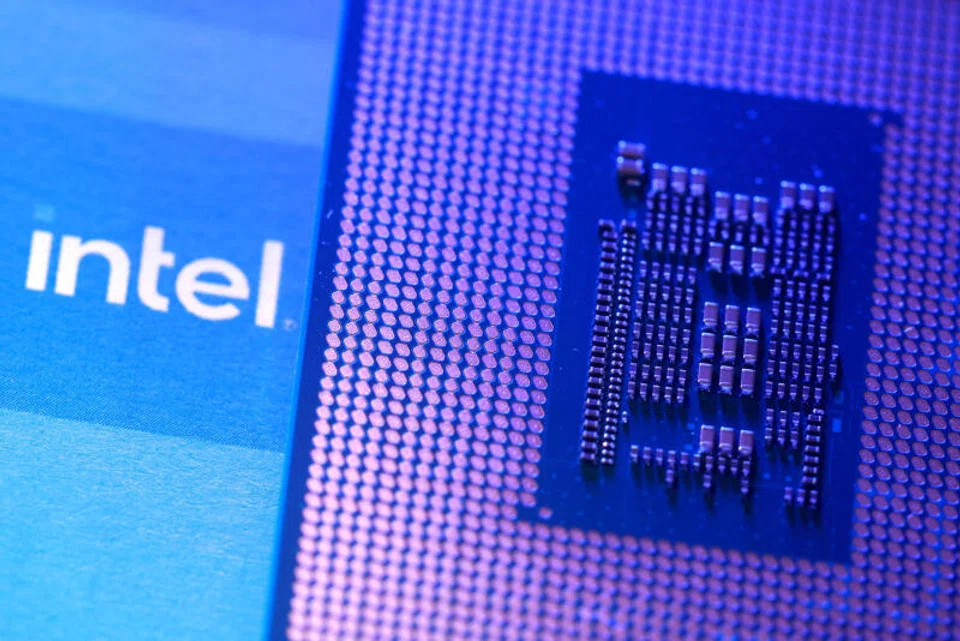
[SAN FRANCISCO] Intel plunged in late trading after its revenue forecast missed analysts’ estimates, hurt by sputtering demand for PC processors and supply chain problems with its lucrative data centre components.
Sales in the fourth quarter will be US$15 billion to US$16 billion, the company said on Thursday (Oct 29) in a statement.
Analysts, on average, estimated US$17 billion and some projections topped US$18 billion, according to data compiled by Bloomberg. Profit will be US$0.25 a share in the quarter, excluding certain items. Wall Street was projecting adjusted earnings of US$0.43 a share.
Intel is contending with a severe slump in the PC market. Makers of laptops and desktops – key customers – are struggling with shortages of memory semiconductors and surging component prices.
That has cut into PC shipments and hurt demand from users. In addition, chief executive officer Tan Lip-Bu said his company’s data centre unit would have done even better if it had not suffered from shortages of some raw materials and a shutdown of a factory in Israel – supply snags that the company is working hard to fix.
“I am a bit disappointed in terms of how we cannot fulfill the customer requirements,” Tan said in an interview.
As to the PC market, “one of the main challenges, basically, is memory”, he said.
“Memory pricing went up a lot. I think my prediction is that in 2027 it is going to be a very severe issue to all of us. We are not alone – it’s just the whole market is impacted.”
Intel projects the PC market slump will persist through at least the first half of 2027, and decline 10 per cent in 2027, following a 12 per cent slide in 2026.
SEE ALSO




Still, longer term, the company is optimistic about demand for its products and is increasing its spending on new equipment to boost production. It is growing more confident it will attract orders from other chipmakers that want to use its factories to build their components, Tan said.
Intel shares fell about 15 per cent in late trading after the report was released.
The stock had more than doubled in 2026 through the close, with investors betting that the company will emerge as a key artificial intelligence beneficiary.
The increasing deployment of AI services has created demand for Intel’s general purpose chips, allowing it an entry into a market dominated by the technology of Nvidia.
“Intel’s earnings highlight the challenges the company faces in pushing its recent turnaround into a sustained recovery,” Emarketer senior analyst Asa Hiken said in a note.
Though demand for server processors is booming, “Intel’s disappointing outlook shows that strong demand alone isn’t enough to overcome its near-term challenges, particularly ongoing weakness in its traditional PC business”, he said.
Intel has been pursuing a turnaround under Tan, who took the helm in March 2025.
He has improved the chipmaker’s finances, cut jobs and attracted major outside investors – including Nvidia and the US government. More recently, the company offered new stock to further support its comeback.
But Intel still is working to restore its technological leadership, something that once made it the envy of Silicon Valley. The company also is seeking major customers for its chip foundry business, which relies on its factories to make products for outside clients.
Third-quarter sales rose 21 per cent to US$16.5 billion, in line with analysts’ average estimate. Earnings were US$0.52 a share in the period, which ended Sep 26. Analysts projected US$0.41.
Intel’s data centre and AI unit had revenue of US$7.3 billion, a gain of 78 per cent. Sales in the client division, which makes chips for PCs, declined 5 per cent to US$8.1 billion.
The mixed picture shows the effect that the AI boom has had on Intel’s business.
Though data centre infrastructure is fuelling demand for Intel processors, it also has led to a shortage of memory chips – a type of semiconductor made by Samsung Electronics, SK Hynix and Micron Technology.
That, in turn, has forced up the price of laptops and desktops, and reduced demand for the Intel chips that go into those products.
Intel’s foundry unit had sales of US$6.7 billion, an increase of 58 per cent from the period a year earlier. That business is trying to compete in a market dominated by Taiwan Semiconductor Manufacturing.
The hope is to win enough outside customers to offset the massive cost of building chip factories and make Intel’s facilities more profitable.
Intel’s third-quarter gross margin, the percentage of revenue remaining after deducting the cost of production, was 43 per cent. That benchmark shows the health of a company’s chipmaking operations in a costly and competitive industry. Intel projected the margin will narrow to 38 per cent in the current period.
Though Intel now has enough of a financial cushion to weather downturns, such as the current PC market slump, it still needs to invest in its technology to stay competitive in the long run.
It has lost market share to Advanced Micro Devices in PC and server chips while also struggling to crack the lucrative AI accelerator category dominated by Nvidia. BLOOMBERG
Decoding Asia newsletter: your guide to navigating Asia in a new global order. Sign up here to get Decoding Asia newsletter. Delivered to your inbox. Free.
Share with us your feedback on BT's products and services
TRENDING NOW

If Europe goes to war, the fallout will be felt in East Asia

Singapore government slaps loan curbs on individual private-hire car buyers

Wider talent pools, smoother operations: What these S’pore firms gain from inclusive hiring

Philippines’ FDI slowdown exposes uneven investment prospects across S-E Asia

