

Just what the doctor ordered: Foundation Healthcare, backed by Temasek’s Seatown, eyes regional push
It will consider new equity for expansion via acquisitions or greenfield projects

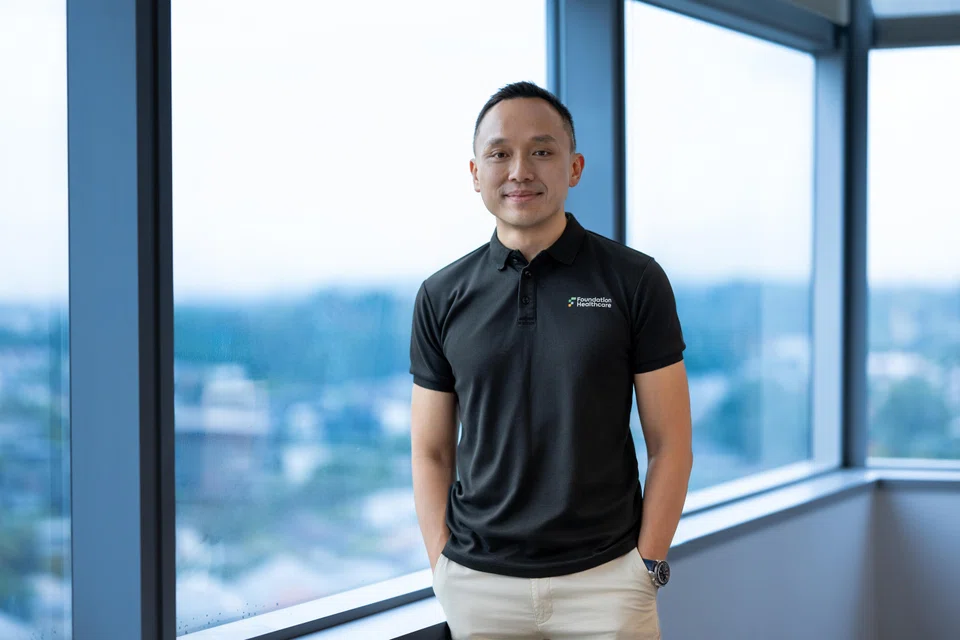
[SINGAPORE] An overseas foray could be the next dose of growth for Foundation Healthcare Holdings (FHH), as the Temasek-backed private healthcare group scans the region for “opportunistic” expansion.
Markets under consideration include Kuala Lumpur and Hong Kong, where insurance penetration is high and many of FHH’s existing insurer partners already operate.
However, such an expansion could require fresh capital.
“I think with overseas expansion – depending on how aggressively we want to expand – we may potentially require new equity,” said FHH co-founder and chief executive officer Liaw Yit Ming in a recent interview with The Business Times.
“If we do look into new equity, we will evaluate based on market conditions,” he said.
His remarks follow earlier media reports on FHH’s fund-raising plans, including an October 2025 Bloomberg report that said the group was in talks to raise as much as US$300 million at a valuation of more than US$1 billion. The company has not publicly confirmed these reports.
A potential Singapore listing will add to what some analysts expect to be a strong year for initial public offerings on the local bourse, with some analysts forecasting 15 to 20 new listings in 2026.
In 2024, FHH – which has been profitable since inception – recorded a profit after tax of S$33.2 million on revenue of S$198.9 million, based on filings with the Accounting and Corporate Regulatory Authority.
While there remains headroom for growth in Singapore – where FHH accounts for 5 per cent of more than 2,200 specialist doctors – the group is casting its net regionally too.
“We intend to expand regionally on an opportunistic basis, particularly in markets that share similar demand fundamentals and demographic trends in Singapore,” said Liaw. “There is no specific timeline – we are actively looking into it, and it can be through acquisitions or greenfield projects as well.”
Building a platform
Founded in 2023, FHH was backed by a S$150 million investment from SeaTown, an investment manager indirectly owned by Temasek Holdings. (* see amendment note below)
The idea for the business took shape in 2022, when Liaw – a veteran of the healthcare sector with experience at hospital operator IHH Healthcare and Malaysian state investor Khazanah – and his co-founder, Dr Lee Hong Huei, sought to consolidate Singapore’s fragmented specialist clinic landscape.
The strategy was to acquire independent specialist clinics, many run by solo practitioners, and bring them under a single platform to achieve economies of scale, while relieving doctors of administrative burdens.
Cost efficiencies come from pooling resources, such as sharing clinic space and purchasing medications in bulk. Administrative functions – including claims processing, insurance, marketing, and staff and supplier management – are also centralised, allowing doctors to focus on clinical work.
Raising capital for the venture proved challenging at the outset. More than 20 private equity firms were approached, but most were reluctant to back a concept without existing cash flow generating assets.
“There were a lot of people who showed me the door five minutes into the meeting,” Liaw quipped.
SeaTown, however, was willing to fund the venture.
Under the agreement, the founders were required to assemble a “sizeable” platform of specialist doctors before capital could be deployed for acquisitions.
Within months, they brought together 19 practices comprising close to 50 specialist doctors, forming the foundation of FHH in 2023. “A lot of the practices you see in the market are solo practitioners – they practise for maybe 20, 30 years,” Liaw said. “At that point, it can be challenging to ensure continuity and growth of the practice.”
The initial S$150 million investment was fully deployed into acquisitions. Since then, business expansion has been funded through a combination of internal resources and debt. (* see amendment note below)
Lowering costs
Beyond scale benefits, FHH is also leveraging ambulatory care facilities as a key cost advantage – a model that has drawn interest from insurers.
Ambulatory care refers to outpatient services that do not require overnight stays and are typically delivered through facilities such as day surgery centres, medical imaging centres and fertility clinics.
FHH operates two day surgery centres in Singapore, located in Orchard and Novena, as well as a medical imaging centre and a fertility clinic.
“If you look at our specialist vertical – close to 110 specialists – the majority of them (perform procedures), meaning that they need to have an operating theatre to perform some of the procedures,” said Liaw.
“That is why our two verticals (specialists and ambulatory care facilities) are highly complementary.”
By running its own day surgery centres, FHH allows its more than 100 specialist doctors across 16 medical specialities to access facilities at lower cost than in hospital settings.
Hospitals typically charge higher facility fees due to the need to maintain intensive care units and meet stricter staffing requirements. Day surgery centres face fewer such obligations, allowing them to offer lower costs for patients and insurers.
This cost savings aligns with Singapore’s broader push to rein in private healthcare costs, Liaw added.
* Amendment note: An earlier version of this article referred to a US$150 million investment. It should have said S$150 million.
TRENDING NOW

Britain’s mansion tax shows the difficulty of targeting wealth

Once staunchly pro-China, Malaysian Chinese businesses are now distancing themselves from Beijing

The only common thing in S-E Asia is that we all eat rice: Cisco’s Asean president
Singapore data centre operator DayOne opts for US IPO at likely US$20 billion valuation

