

Labubu maker Pop Mart pushes back on one-hit wonder fears
Sales of non-Labubu items account for about 50% of total revenue in the US this year
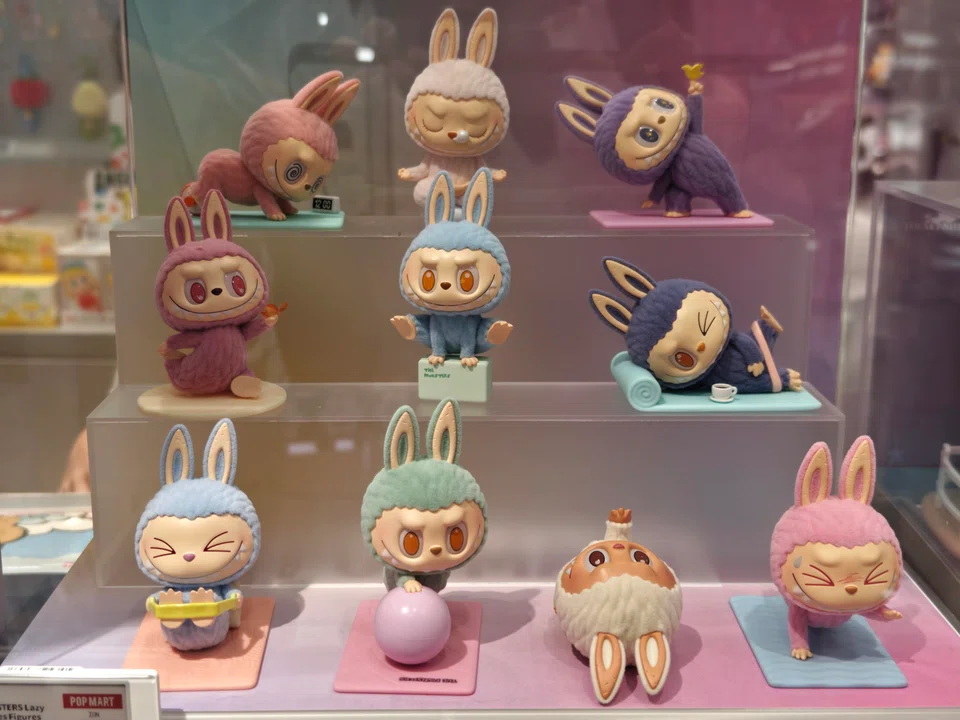
[BEIJING] Pop Mart International Group pushed back against concerns that its overseas business is too reliant on a one-hit wonder, arguing that Labubu’s explosive growth last year has taken attention away from the strong performance of its other toys.
Sales of non-Labubu items accounted for about 50 per cent of total revenue in the US last year, chief operating officer Si De said in an interview with Bloomberg News, revealing for the first time a breakdown in Pop Mart’s biggest single overseas market. In places like Japan, South Korea and South-east Asia, non-Labubu characters already make up the majority of its sales, he said.
“There was an overemphasis on how important Labubu is last year,” said Si, who joined the company in 2015, just before it pivoted from a lifestyle retail chain to focusing on art toys.
“Pop Mart’s other intellectual properties also achieved strong growth and gained a significant number of users and fans, but they were simply overshadowed by Labubu,” he said, giving the example of Twinkle Twinkle, a collection of star figurines and toys that’s one of the company’s fastest-growing characters in Asia.
Labubu are a rare instance of a Chinese product sparking a consumer frenzy in Western markets, with the toys selling out in seconds in a juggernaut that reached its peak last year. But shares have slumped by about half since hitting a record in August, wiping roughly US$29 billion from Pop Mart’s market capitalisation, on deepening investor anxiety about whether the company can make the snaggle-toothed monster an enduring hit or if it is just a short-lived craze.
Signs of a slowdown have been building after the blistering 185 per cent surge in revenue in 2025, including a 300 per cent jump in overseas markets.
Pop Mart’s sales in the US, a key growth engine, dropped 42 per cent in April after a 45 per cent decline in March, according to Bloomberg Second Measure data. And while total revenue probably climbed as much as 80 per cent in the first quarter, the company has guided for at least 20 per cent growth this year.
Just hype
Some analysts are more pessimistic, though. Morgan Stanley expects sales growth of 13 per cent this year and HSBC Holdings forecasts 9.6 per cent expansion. Meanwhile, Deutsche Bank predicts a 2 per cent decline, citing the vulnerability of Pop Mart’s business model to the Labubu craze ending.
“We believe there is just hype surrounding Labubu and it has already entered a sharp downcycle in overseas markets,” said Deutsche Bank consumer analyst Sammi Xu. “If Labubu’s popularity wanes and it ceases to be a traffic magnet, the loss won’t just be in one IP’s sales, but in the overall units per transaction and brand engagement, leading to a much steeper deterioration in total revenue.”
SEE ALSO
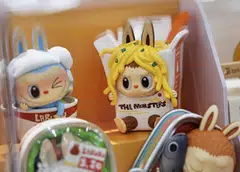
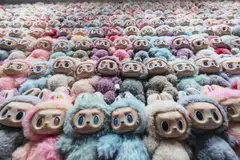

Still, Pop Mart has at least one high-profile supporter. Influential Chinese investor Duan Yongping has boosted his stake in the company to about 6.04 per cent, likely making him the largest shareholder outside Pop Mart’s founder and management, according to Morgan Stanley.
While Pop Mart’s domestic business is proving robust, delivering 105 per cent growth in the first quarter, the firm wants to ultimately become a global company.
Si estimates that overseas employees will account for about 50 per cent of Pop Mart’s total workforce in a few years, from 20 to 30 per cent currently. He predicts that the company can replicate its domestic success, which took a decade to build, in just a handful of years given it now has a more complete product mix, stronger cash pool and brand awareness.
The US is still core to that goal, despite the slowdown in recent months. Pop Mart has added more than a dozen stores there in the first five months of this year, according to Bloomberg News calculations based on company announcements, taking its total to about 80. It wants to have more than 100 in the US this year, including flagship stores at Times Square and Fifth Avenue in New York in the fourth quarter.
While Pop Mart is looking to cultivate demand for characters like Skullpanda and Hirono to help diversify, billionaire chief executive officer Wang Ning has described Labubu as a gold mine – highlighting the company’s focus on extracting more value from its viral hit.
It is working with Sony Pictures Entertainment to make a Labubu movie, which Si says may be released as early as summer 2028. The monster characters will also appear at high-profile events this year including the Fifa World Cup and the 100th Macy’s Thanksgiving Day Parade.
New Labubu are on the way, too. The company will launch a fresh series of the character and an artist collaboration in the second half.
“We are happy about the growth last year. We suffered, but we’re happy,” Si said. “Although things have somewhat reverted this year, it has given us stronger confidence. Once you’ve seen how big the opportunity is globally, it naturally drives greater conviction and a willingness to invest more resources.” BLOOMBERG
Decoding Asia newsletter: your guide to navigating Asia in a new global order. Sign up here to get Decoding Asia newsletter. Delivered to your inbox. Free.
Share with us your feedback on BT's products and services
TRENDING NOW

DBS, OCBC, UOB rout lops billions off STI as inflation, rate concerns spook investors

Grab CEO’s wife Chloe Tong on life with Anthony Tan and finding her purpose

OCBC sheds S$8 billion in value as shares close nearly 6% down; analysts cautious on banks

Deal between tycoon friends sparks scrutiny of Philippine power sector

