London player Colt targets data centre migration to expand Singapore market share

It views global connectivity as its competitive advantage, and identifies opportunities in SGX data centre migration

Summarise
Young Zhan Heng
Published Fri, Jan 9, 2026 · 07:00 AM
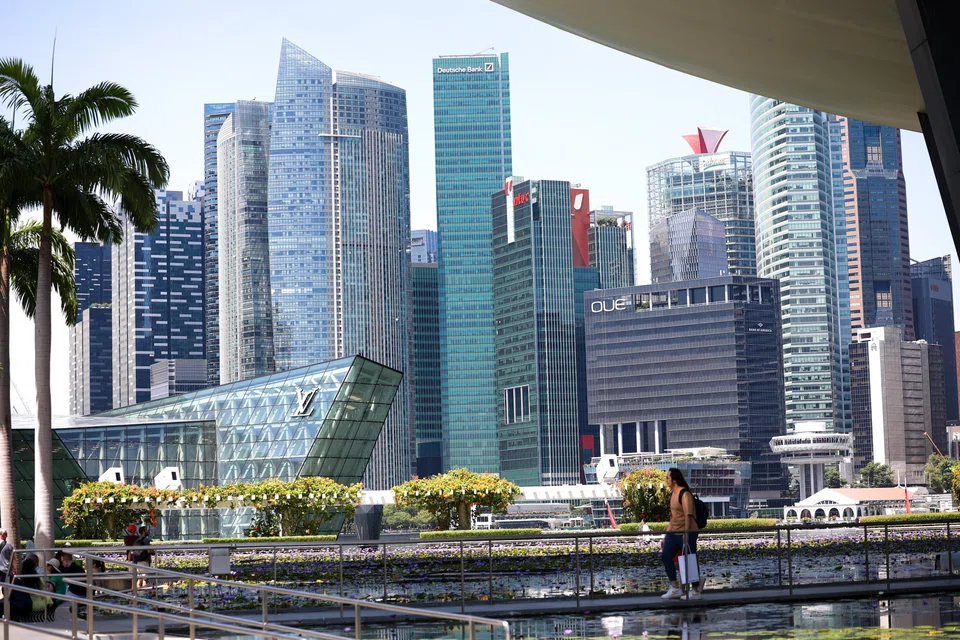
    • Colt's infrastructure is found mainly in the CBD, alongside that of incumbents Singtel and StarHub.
    • Colt's infrastructure is found mainly in the CBD, alongside that of incumbents Singtel and StarHub. PHOTO: BT FILE

    [SINGAPORE] Data centre migrations are an opportunity for global challengers to consolidate and solidify their position in the industry.

    While domestic incumbents such as Singtel and StarHub hold a strong advantage in the enterprise connectivity space, London-based Colt Technology Services views its ability to offer global connectivity as its competitive edge.

    “Our global scale is pretty evident, if you actually look at us on a map,” said Buddy Bayer, chief operating officer of the privately owned digital infrastructure company. Its network spans more than 40 markets, including key financial hubs Japan and South Korea.


    The firm operates mainly by providing underground and subsea fibre cables that connect financial institutions and data centres directly. Unlike its competitors in Singapore, Colt focuses only on the business customer and does not serve the retail market.

    It was granted a licence to provide facilities-based operations by the Infocomm Media Development Authority in 2015, allowing it to build and operate telecommunications infrastructure in Singapore.

    Its infrastructure is found mainly in the Central Business District, alongside that of Singtel and StarHub.

    SGX data centre migration a key test

    Colt’s strategy of focusing on big clients in the CBD may pay off, as the Singapore Exchange (SGX) prepares to relocate its data centre.

    The migration – slated for completion in the third quarter of 2027 to an undisclosed location – gives the local bourse a rare opportunity to optimise and upgrade its existing infrastructure.

    In an industry where milliseconds determine profits and losses, the spotlight is on the 900 per cent increase in connectivity speed.

    Customers who opt for Tier-1 racks – the most expensive and well-connected rack option – in the data centre can expect an improvement in connectivity speeds from 1 gigabit per second (Gbps) to 10 Gbps, SGX said.

    To put this into perspective, 10 Gbps connectivity speed translates to 1,250 megabytes a second – equivalent to downloading an ultra-high-definition 4K movie in just 20 seconds.

    In addition to higher speeds, the new connections within the SGX data centre will provide lower latency – which refers to the period of time before the transfer of data begins, following an instruction for its transfer.

    Lower latency will mean a shorter delay, making trades even more instantaneous.

    As SGX readies for the move, financial institutions are using this chance to re-evaluate their connectivity providers.

    “This is going to be a significant event for everybody,” said Wesley Elder, capital markets product director at Colt, noting that the company already has some customers connected to SGX through it.

    The way he sees it, the migration grants Colt an opportunity to consolidate and upgrade its current infrastructure as well as connectivity with existing customers.

    It is also a chance for Colt to garner more market share, he said. “We want to try and grab (customers), and tell them to come to Colt instead.”

    But he acknowledged that challenging the incumbents will remain an uphill battle. “Local firms may tend to go for the local (telcos) because they know them better.”

    Still, he believes that Colt’s strategic bet of global connectivity will appeal to a certain portion of the Singapore market, especially companies that are aiming for international expansion.

    Once these firms begin setting up in other countries, they tend to reach out to global network players such as Colt, he said.

    Singapore as a hub

    Colt considers SGX’s data centre migration as another example of Singapore’s push for more connectivity.

    “If (data centre providers) are building new data centres, we are there to support that data centre,” said Bayer.

    But beyond just these facilities, Colt is also noticing a large influx of companies establishing their global headquarters in the Republic – a chance for the digital infrastructure player to broaden its connectivity services, Elder said.

    “(Companies) are going to need a lot of connectivity to the rest of the world,” he added, citing the rapid rise in demand for artificial intelligence (AI) in Singapore as a reason these firms are choosing the city-state for their headquarters.

    “Singapore is like the AI hub for South-east Asia right now,” Bayer said, noting that Colt will continue to build on its assets here and “expand outwards” to other nations in the region.