‘Lost their life savings’: Tokenize Xchange users sue founder and wife for over S$60 million in lost crypto assets

The firm owes its customers about S$266.3 million but has only S$2.6 million in realisable assets, interim judicial manager report reveals

Summarise
Deon Loke
Published Fri, Nov 28, 2025 · 07:57 PM
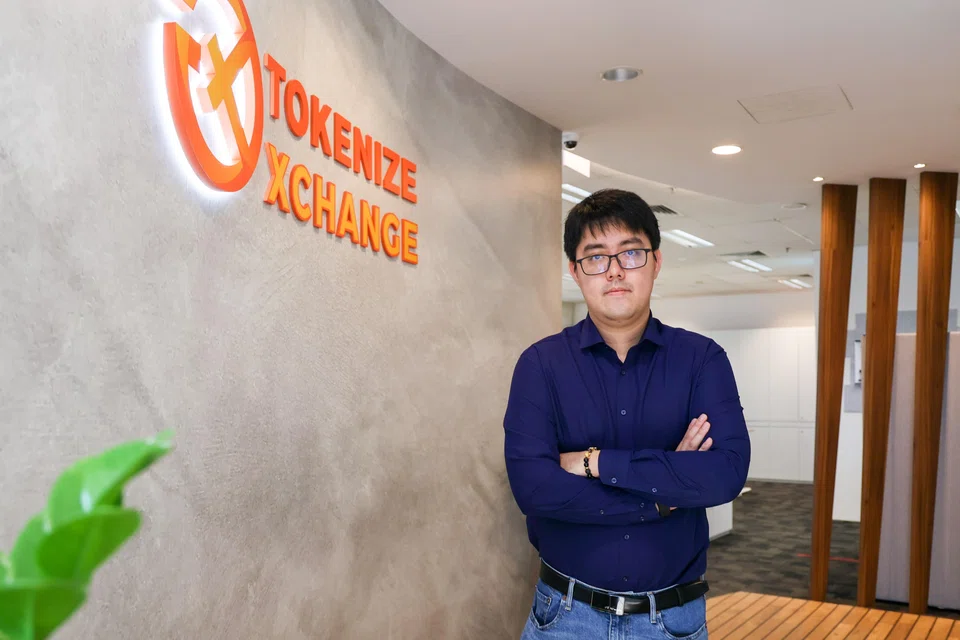
    • Hong Qi Yu is the founder and CEO of AmazingTech, the operating entity behind Tokenize; the claimants argue that he has misled them on various licence statuses.
    • Hong Qi Yu is the founder and CEO of AmazingTech, the operating entity behind Tokenize; the claimants argue that he has misled them on various licence statuses. PHOTO: BT FILE

    [SINGAPORE] More than 200 former customers of the now-defunct cryptocurrency trading platform Tokenize Xchange are collectively suing the founder of the company to claim S$60.5 million in damages for fraudulent misrepresentation.

    According to court documents seen by The Business Times, the group of investors commenced a representative action in the High Court against Hong Qi Yu, the founder and chief executive of AmazingTech, the operating entity behind Tokenize.

    The suit also names Hong’s wife, Erin Koo Kee Hoon, as a defendant. According to the document, Koo served as the company’s chief operating officer.


    The lawsuit is being led by six representative claimants who are Singapore residents: Low Jun Hong, Sean Joseph McKendrick, Lum Marn Chi, Chim Tat Hong, Peter McCorkindale and Chen Yuanjing.

    They represent a total of 272 customers who held accounts with the exchange.

    According to a report filed by court-appointed interim judicial managers in September, AmazingTech owed its customers approximately S$266.3 million, while its realisable assets were estimated at a mere S$2.6 million.

    The claimants allege that the S$263.7 million difference had been fraudulently misappropriated by the defendants, Hong and Koo.

    The S$60.5 million in damages represents the total value of the assets the claimants held on the exchange either as at Jul 31, 2025, or the date they attempted to withdraw them.

    Suresh Divyanathan, the managing director of Dauntless Law Chambers and the lead lawyer in charge of the case, told BT: “The interim judicial managers’ report that AmazingTech appears to be holding less than 1 per cent of customers’ total assets came as a deep shock to my clients.”

    “They are incensed that practically all their assets on Tokenize Xchange have disappeared. Some of them have lost their entire life savings,” he said.

    The collapse of AmazingTech

    The legal action follows the swift unravelling of AmazingTech earlier this year.

    Incorporated in Singapore in 2016, AmazingTech previously operated Tokenize Xchange under an exemption from the Payment Services Act 2019. This allowed the platform to operate while it awaited the Monetary Authority of Singapore’s (MAS) assessment of its application for a Major Payment Institution licence.

    On Jul 4, 2025, MAS rejected AmazingTech’s application for the licence. AmazingTech was then required to cease providing payment services. It was also asked by the authorities to wind down its business in an orderly manner, and ensure that all monies and digital payment tokens received from its customers were returned.

    On Aug 1, MAS and the police said that the Commercial Affairs Department was investigating AmazingTech and its related companies. They noted indications that AmazingTech did not have sufficient assets to meet customer claims, and flagged potential breaches regarding the segregation of customer funds.

    Hong was charged in court on Jul 31 with fraudulent trading under the Insolvency, Restructuring and Dissolution Act.

    The company was wound up by the High Court on Sep 30, 2025.

    The case for fraudulent misrepresentation

    The statement of claim filed outlines a series of alleged deceptions orchestrated by the defendants.

    The suit alleges that Tokenize Xchange did not facilitate trading through a central limit order book, which matches customer buy and sell orders in real time. Instead, the platform allegedly conducted trades directly between itself and its customers.

    The case claims that the central limit order book that was displayed on Tokenize Xchange was taken from Binance, another cryptocurrency exchange platform, with a slight mark-up on the spread.

    The trades shown on Tokenize Xchange’s central limit order book hence allegedly reflected the trades done on Binance, not Tokenize Xchange.

    The claimants argue that Tokenize Xchange created a false image to customers that it had a voluminous order book.

    The suit alleges that despite contractual promises that customer assets would be segregated and held in trust, the funds were mixed with the company’s own accounts.

    The claimants also argue that Hong and Koo continued to mislead users on various licence statuses.

    Specifically, the suit cites an announcement made in July 2025, after MAS’ rejection letter, that AmazingTech had officially obtained a licence in Labuan and was in the “final phase” of securing a licence in the Abu Dhabi global market.

    The interim judicial manager’s report noted that the acquisition of the Labuan entity with the licence was not completed due to Hong’s fraud allegations, and the Abu Dhabi licensing plan did not progress beyond the preliminary stage.

    What’s next

    Dauntless Law Chambers’ Divyanathan said that the defendants had yet to respond as at Nov 28, 7pm.

    Responding to BT, Nichol Yeo and Clement Julien Tan of Nine Yards Chambers confirmed that they have accepted service of the lawsuit on behalf of Hong. Koo is believed to be separately represented.

    “We will be filing... Hong’s defence in due course to contest the claim,” they said.

    The High Court has scheduled a case conference on Dec 30 to give directions on the future conduct of the proceedings.