Manulife US Reit prioritises debt extensions, seeks lender waivers to exit restructuring
Its Q3 distributable income rises 30.3% to US$6 million
[SINGAPORE] Manulife US Reit ( MUST ) is prioritising extensions of its upcoming debt maturities and seeking waivers of certain loan reinstatement conditions as it works towards exiting its master restructuring agreement (MRA) by the end of 2026.
Speaking at an earnings briefing on Wednesday (Nov 4), chief financial officer of the manager Mushtaque Ali said extending debt maturities would be the most immediate option, followed by asset divestments.
Equity raising remains an option but is unlikely under current market conditions, given the substantial discount of MUST’s unit price to its book value, he added.
The MRA was established in 2023 after the real estate investment trust (Reit) breached a financial loan covenant amid severe headwinds in the US office property sector.
Under the restructuring agreement, MUST suspended distributions to unitholders and was required to divest assets to meet minimum sale proceeds targets. Lenders have also granted extensions to asset disposal deadlines and temporarily relaxed financial covenants relating to unencumbered gearing and the bank interest coverage ratio (ICR).
MUST’s manager is currently negotiating with lenders to waive certain reinstatement conditions under the agreement, including a requirement for the ratio of consolidated total liabilities to consolidated deposited properties to be no more than 50 per cent.

The Reit’s aggregate leverage stood at 54 per cent as at end-September, compared with 54.1 per cent three months earlier, while its ICR was 1.6 times.
“What this whole negotiation would do is it will create a path for the Reit to go back to its normal functioning,” Ali said.
He added: “Once the deleveraging is achieved, we will be basically more focused on growth opportunities to grow our portfolio into our preferred asset classes.”

Discussions with lenders are at an advanced stage, with management targeting an agreement before the end of 2026, subject to approvals.
Further divestments
On potential asset sales, John Casasante, CEO and chief investment officer of the manager, said further divestments could be feasible within the next six to eight months, although this would depend on market conditions, liquidity and the pool of interested buyers.
He noted that the buyer pool for US office properties remains largely made up of family offices, private buyers and owner-occupiers, with institutional buyers yet to make a significant return.
MUST has no remaining debt due in 2026, after using proceeds from the sale of its Figueroa property in June to repay about US$35.6 million of debt due in 2026 and US$36.8 million of debt maturing in 2027.
About US$10 million of the proceeds was retained for capital expenditure. Its next debt maturity is about US$133.4 million in 2027.
Q3 distributable income rises
MUST posted a 30.3 per cent year-on-year increase in distributable income to US$6 million for the third quarter ended Sep 30, up from US$4.6 million in the corresponding period the year before.
The increase was mainly driven by a US$2.2 million rise in cash net property income (NPI), arising from lower rent-free incentives at its Exchange and Michelson properties and the recognition of a one-off restoration fee income from a tenant at Figueroa following the sale.
This was partially offset by higher finance expenses, mainly due to higher interest rate costs after the expiry of interest rate swaps in April this year.
Income available for distribution per unit rose 30.8 per cent to US$0.0034, from US$0.0026 a year earlier, although the Reit has suspended distributions to unitholders since 2023 under its recapitalisation plan and MRA.
Asked about the resumption of distributions, Ali said the first step would be successful negotiations with lenders on exiting the MRA and determining what conditions, if any, MUST would have to meet to resume payouts.
The Reit would then assess “a sustainable level of payout”, taking into account its capital expenditure requirements, balance-sheet strength and growth plans, he added.
Revenue in Q3 fell 8.9 per cent to US$24.9 million, from US$27.3 million previously. NPI rose 8.9 per cent to US$12.2 million in the quarter, from US$11.2 million.
For the nine months ended Sep 30, distributable income fell 9.3 per cent on year to US$17.7 million. Revenue for the period declined 12.4 per cent to US$76.8 million, while NPI fell 14.7 per cent to US$35.3 million.
However, same-store cash NPI rose 8.7 per cent to US$43.6 million for the nine-month period.
Occupancy outlook
As at the end of September, the Reit’s portfolio occupancy stood at 67.8 per cent, down from 70.4 per cent as at end-June, due to tenant exits.
Asked why MUST’s portfolio occupancy continued to decline despite stronger leasing momentum in the broader US office market, Casasante said demand was concentrated in specific buildings and micromarkets. He noted that while the Reit was seeing leasing interest, this did not always translate into completed transactions.
He added that the manager remained focused on leasing deals with quicker payback periods and higher yields, which would also support the value of MUST’s properties and potentially create opportunities for divestments or refinancing.
Asked whether occupancy could bottom out over the next three to six months, he said: “I think it’s going to be relatively constant. I don’t know if it’s going to dramatically improve.”
But Casasante noted that leasing activity remained consistent, with several deals in the pipeline that had yet to be completed. These include a two-floor deal in the final stages of discussions, which would involve a 10-year lease, as well as a separate full-floor deal with a new tenant.
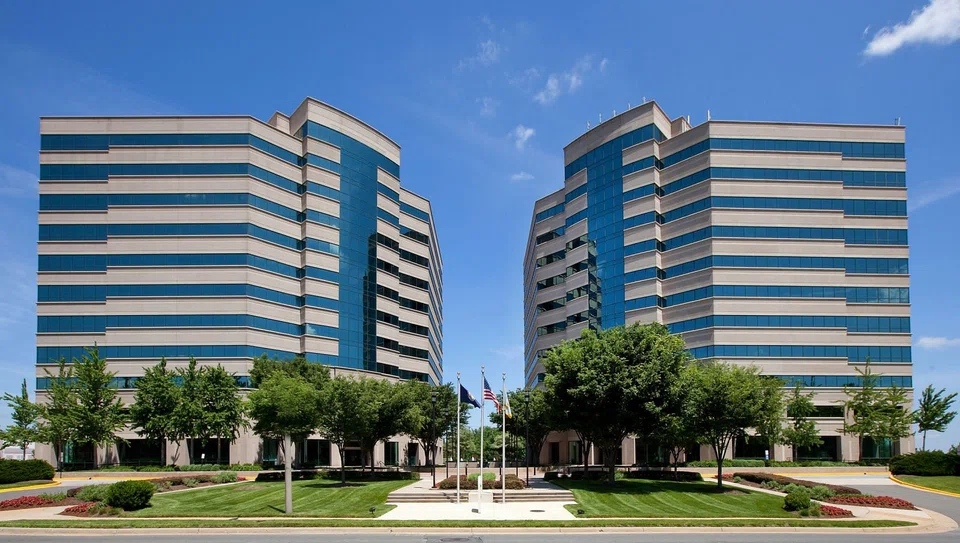
The Reit had six office properties in the US, with a combined net lettable area of about 2.8 million square feet as at Sep 30.
Units of MUST were trading 3.1 per cent or US$0.001 higher at US$0.033 as at 1.42 pm on Wednesday.
Decoding Asia newsletter: your guide to navigating Asia in a new global order. Sign up here to get Decoding Asia newsletter. Delivered to your inbox. Free.
Copyright SPH Media. All rights reserved.