

Market ‘underestimating’ fuel impact on aviation sector: DBS
The brokerage provides its pecking order for Singapore aviation stocks

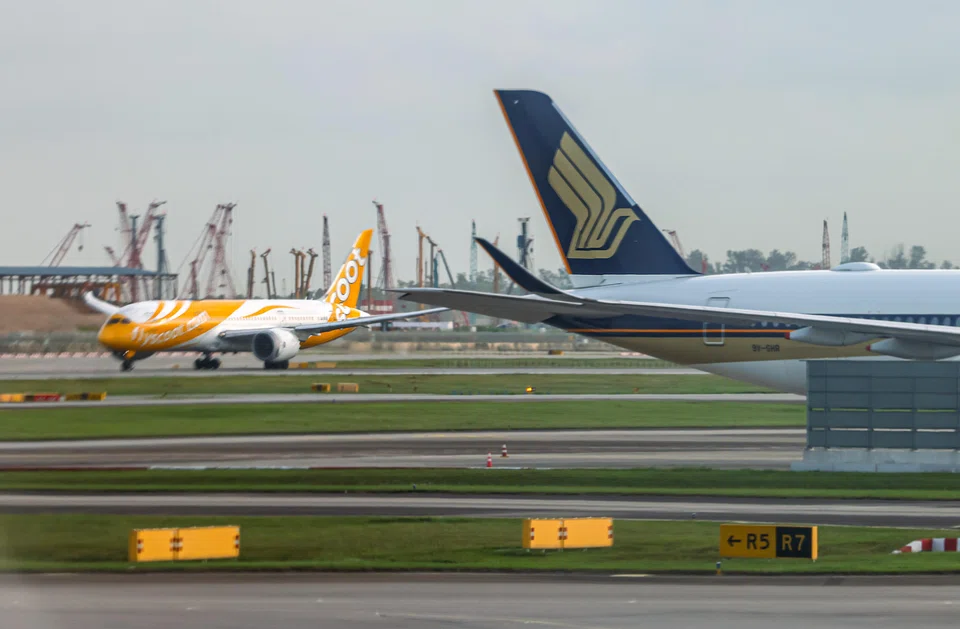
[SINGAPORE] The market is currently underestimating both the magnitude and duration of margin pressure on the aviation sector following an unprecedented spike in jet fuel prices, DBS Group Research said.
It noted in a report released on Thursday (Apr 30) that jet fuel prices surged by more than 100 per cent within weeks, after the Middle East conflict started.
“The current episode combines elements of multiple past cycles and is both more severe and more abrupt than prior fuel shocks. While travel demand is holding firm, the rapid and sharp rise in jet fuel and crack spreads, alongside a more mature demand base and higher low-cost carrier (LCC) penetration, is likely to drive more acute and prolonged margin compression among airlines,” DBS analysts said.
“Despite a transit windfall for Asia-Pacific airlines, we believe the market is underestimating both the magnitude and duration of margin pressure,” they added.
They warned that required network-wide fare hikes are unlikely to be fully absorbed by consumers.
“Increased flows through the Strait of Hormuz should ease near-term physical tightness, but full normalisation of supply and prices is likely to take months given infrastructure damage, logistical bottlenecks and an embedded geopolitical risk premium.”
Furthermore, the brokerage noted that fare pass-through remains lagged due to pre-booked seats, while existing fuel hedges are set to roll off into 2027, leaving carriers increasingly exposed to elevated spot prices.
“Consequently, we remain broadly negative on the airline sector, as margins are likely to remain under pressure through 2027 given the magnitude and persistence of the fuel shock.”
Singapore aviation pecking order
Despite the current situation DBS said that the commercial aerospace sector, which includes service providers, is a bright spot as “earnings are anchored to passenger traffic and capacity requirements and have proven durable through past cost shocks”.
Sats is ranked at the top of the brokerage’s Singapore aviation pecking order. Despite a potential slowdown in growth, global air passenger traffic and cargo volumes are still expected to expand in 2026.
“Although (cargo) volumes likely declined mid-to-high single digits in March 2026, underlying demand indicators remained intact, with manufacturing activity broadly steady and goods being accumulated, which should support a rebound once airspace conditions normalise,” DBS said on Sats.
ST Engineering , ranked second, is viewed as a defensive play with less than 3 per cent revenue exposure to the Middle East and a “strong structural tailwind” from increased global defence spending.
China Aviation Oil , ranked next, is positioned to benefit from a “favourable trading environment” driven by elevated volatility and dislocated fuel flows, DBS said.
Following that is SIA Engineering , which has been upgraded to a “buy” rating with a revised target price of S$3.80 from S$4, as operating indicators remain supportive and aircraft retirements stay below historical levels for now.
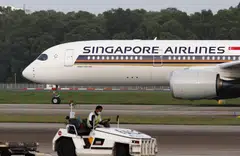
Singapore Airlines is ranked last within the Singapore picks with a “hold” rating. Still, DBS said that “within airlines, we favour a long/short approach given significant dispersion, with network carriers like Singapore Airlines best positioned, while LCCs and Chinese carriers remain structurally disadvantaged”.
Singapore Airlines is “leveraged to transit traffic and can capture displaced demand as Gulf capacity is constrained, supporting load factors and yields”, it added.
Manufacturers and lessors over airlines
DBS’ pecking order for aviation moves from aircraft original equipment manufacturers (OEMs) to aircraft lessors, then service providers, and lastly airlines with a preference for long/short approaches.
The brokerage noted that the current shock is accelerating the global aircraft replacement cycle.
“With economics now strongly favouring fuel-efficient, new-generation aircraft against an ageing global fleet, we prefer aircraft OEMs such as Airbus and Boeing at this stage of the cycle,” the report stated.
DBS maintains a “buy” rating on Boeing with a target price of US$280 and Airbus at 240 euros. Aircraft lessors are the next preferred exposure, as airline balance sheet pressure increases reliance on leasing for new-generation fleets.
Conversely, the outlook remains negative for LCCs and Chinese airlines.
LCCs are exposed to price-sensitive consumers who limit the ability to offset higher fuel costs, while Chinese carriers remain “structurally disadvantaged” due to domestic weakness and limited hedging, noted DBS.
Decoding Asia newsletter: your guide to navigating Asia in a new global order. Sign up here to get Decoding Asia newsletter. Delivered to your inbox. Free.
Copyright SPH Media. All rights reserved.
TRENDING NOW

Prima to move out of historic Keppel Road flour mill building in 2028

Temasek-related Azalea, SeaTown, Seviora Capital to merge in 2027

Family offices see more tailored products, leverage ‘collective firepower’ for direct deal access

Singapore room rates soar, but hotels seeing mixed demand from F1 race and events

