

MAS listing grant backs 85 SGX debuts since 2019 as Singapore steps up equity market revival
Grant for Equity Market Singapore scheme helps improve economics of listing, say market participants

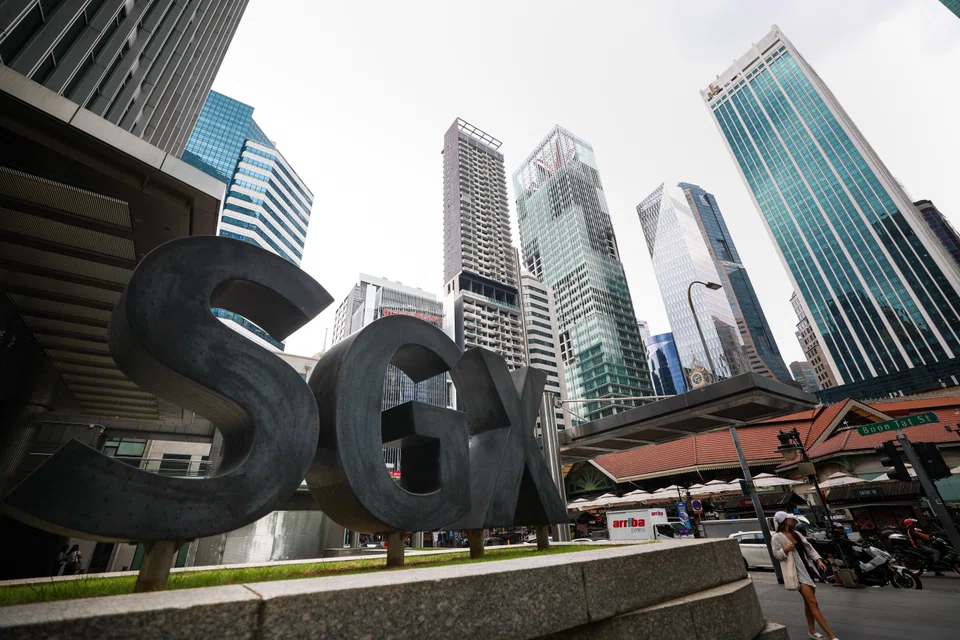
[SINGAPORE] A listing grant administered by the Monetary Authority of Singapore (MAS) has supported 85 listings here since its launch in 2019, based on figures disclosed for the first time by the financial regulator.
This includes 12 mainboard listings in 2025 and the first half of 2026, spanning a broad range of sectors from technology to real estate and healthcare, as Singapore steps up efforts to revitalise its equity market.
As at June, the scheme also supported 52 Catalist listings, nine exchange-traded funds (ETFs) and two depository receipt (DR) listings.
The Grant for Equity Market Singapore (Gems) scheme’s listing grant co-funds eligible listing expenses for companies seeking to list on the Singapore Exchange (SGX), including underwriting and placement commissions, legal and audit fees, independent market research and listing fees.
While market participants said listing incentives are rarely the deciding factor in whether a company goes public, they said the grant has helped improve the economics of listing by offsetting part of the costs, especially for small companies.
“The costs of initial public offerings is one of the factors that potential IPO companies consider when evaluating a listing,” said a spokesperson for MAS, adding that the scheme complements other measures put in place in the past year to strengthen market competitiveness.
The Gems scheme was enhanced in July 2025 and extended until Dec 31, 2028.
It now co-funds up to 70 per cent of eligible listing expenses for mainboard IPOs, capped at S$2 million for companies with a market capitalisation of at least S$1 billion and S$1 million for smaller issuers.
Meanwhile, Catalist applicants can receive co-funding of up to 20 per cent of eligible expenses, capped at S$300,000.
SEE ALSO





Based on data from recent IPO prospectuses, SGX listing and application fees alone can amount to about S$200,000 for a mainboard IPO and about S$68,000 for a Catalist listing. One Catalist issuer also disclosed professional fees and other listing-related expenses of around S$1.2 million.
The grant supports a broad range of listing structures, including IPOs, special purpose acquisition companies, real estate investment trusts, business trusts, secondary listings, reverse takeovers, ETFs and DRs.
Meanwhile, SGX noted that initiatives such as the Gems Listing Grant are helping to strengthen both investor demand and the IPO pipeline.
“Our focus remains on working closely with the ecosystem to create a conducive environment for companies to list and grow with confidence,” said an SGX spokesperson.
Complementing equity market revival
Market participants said the subsidy has supported, rather than driven, the recent revival in IPOs.
Jerry Chua, CEO and managing partner of Evolve Capital Advisory, said that listing costs can be significant for growth-stage companies. The grant helps by defraying a meaningful share of professional fees, often enough to “change the economics of the decision” and make an IPO more financially viable, he added.
His firm has guided several clients through applications for the Gems scheme as part of their broader IPO preparations.
“The grant is seldom the reason a company chooses to list, but it makes the public markets more accessible, and we proactively encourage eligible companies to take advantage of it,” he added.
Kamal Samuel, managing director of Financial PR, whose investor relations firm advises clients exploring the Gems scheme, echoed this view.
“In our experience, listing incentives are important, but they are not usually the key decisive factor in boardroom discussions,” he said.
Instead, companies typically weigh more fundamental considerations, including the valuation they can achieve, market liquidity, the quality of the investor base, expected analyst coverage and regulatory requirements, he added.
Who stands to benefit?
The economics of an IPO are often evaluated as a package rather than as standalone cost.
Foo Siang Sheng, Singapore head of investment banking at CGS International Securities Singapore, said listing costs for primary listings are typically assessed alongside IPO valuation and the overall size of the fundraising.
“From our experience, issuers are generally willing to incur higher listing costs if these are offset by higher valuations and raising larger amounts of capital,” he said, noting that all of his firm’s clients that are eligible have applied for and utilised the Gems scheme.
Adding on, Chua believes the grant is particularly relevant for founder-led and family-owned businesses approaching succession or an institutional transition.
Among the companies that tapped the Gems scheme is family-owned company Dezign Format . Its executive director Jonathan Chong told The Business Times that his company first learnt about the grant through official programme information and discussions with its sponsor during its IPO preparation.
“Listing is a major milestone, but it also comes with significant professional costs,” he said. “The grant helped offset part of those expenses, easing the impact on our cash flow and profit and loss during the listing year so we could stay focused on growing the business.”
Even so, Chong said the company’s decision to list was always driven by its long-term strategy rather than the availability of the grant.
Nevertheless, he encouraged companies that are ready to go public to tap the scheme, saying it “eases some of the financial burden and shows that there is support available for businesses looking to grow through Singapore’s capital markets”.
As listing costs continue to rise, Chong added that support for Catalist listings could be increased from 20 per cent to 30 per cent to provide greater encouragement for growing companies.
The suggestion reflects a broader industry view. Chua believes the grant’s value lies in making the economics of listing work better for smaller companies.
“Where Gems earns its place is in the economics of the process, particularly for smaller and mid-sized companies where upfront costs weigh more heavily,” he noted. “It can be the factor that moves a company from contemplation to commitment.”
Decoding Asia newsletter: your guide to navigating Asia in a new global order. Sign up here to get Decoding Asia newsletter. Delivered to your inbox. Free.
Copyright SPH Media. All rights reserved.
TRENDING NOW

Government to bring forward raising of retirement age, give employers more financial support to create flexi-load jobs

If Europe goes to war, the fallout will be felt in East Asia

Indonesia stocks suffer worst plunge in nearly 30 years as MSCI proposes standalone status

Vietnam’s northern provinces, not Hanoi or Ho Chi Minh City, are powering near 10% GDP growth

