MAS, SGX RegCo propose rule changes to pave way for SGX-Nasdaq dual-listing bridge
The amendments aim to enable earlier engagement of retail investors and align IPO timelines across Singapore, US

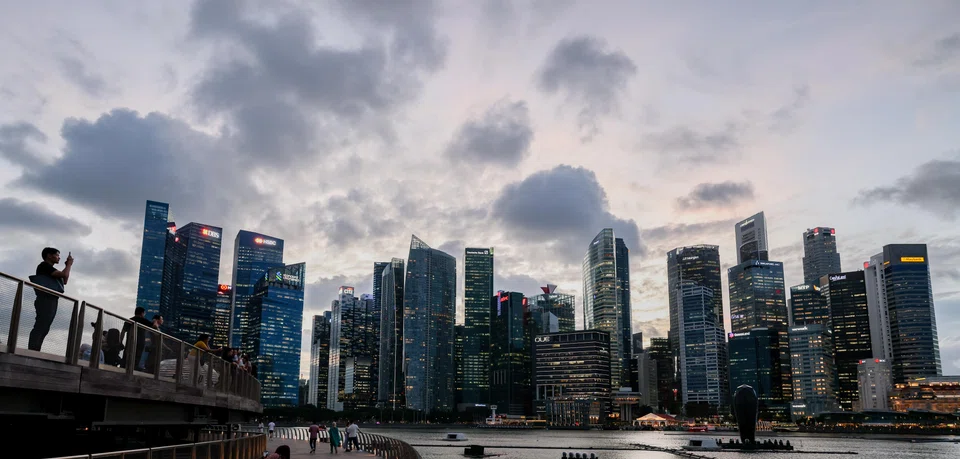
[SINGAPORE] In a key step towards establishing the Singapore Exchange (SGX) and Nasdaq dual-listing bridge, the Monetary Authority of Singapore (MAS) on Friday (Jan 9) proposed various legislative and regulatory changes to facilitate the process.
Dubbed the Global Listings Board (GLB), the dual-listing pathway was announced last November as part of measures to strengthen the competitiveness of Singapore’s equities market.
In its consultation paper, MAS said that it is seeking feedback on the use of a single prospectus for a dual listing.
It also proposes an amendment that will enable earlier engagement of retail investors following the lodgement of an initial public offering (IPO).
These changes will grant MAS the flexibility to adopt streamlined regulatory frameworks for dual listings similar to those of jurisdictions that have disclosure requirements in line with the International Organization of Securities Commissions’ standards.
Currently, in Singapore, companies are allowed to engage retail investors only after the IPO prospectus has been registered with MAS, which requires seven working days after the lodgement.
This mitigates the risk of retail investors relying primarily on the preliminary document, which is subject to changes.
Under MAS’ proposed amendment, companies seeking an IPO through GLB will be able to engage retail investors earlier in the listing process – after the preliminary prospectus has been lodged, and with certain safeguards in place.
These safeguards are based on public feedback, and include alerting retail investors that there could be changes to the preliminary prospectus, and that no offer is made based on that initial document.
SEE ALSO

The changes will apply to both SGX-only listings and dual listings via GLB. They are intended to support bookbuilding efforts, as well as give investors more time to understand companies and their IPOs.
For the dual listings specifically, the move will align the retail engagement timings of the US and Singapore.
Under the proposed changes, such an IPO prospectus need not be lodged at least seven working days before registration; instead, the document can be registered in Singapore as soon as the US registration statement is granted.
This would also bring a company’s Singapore IPO timeline in line with the US one.
Securities and Futures Act amendments
To permit companies to issue one IPO prospectus for a GLB dual listing, MAS is proposing amendments to the regulations that would include certain US requirements for companies utilising the platform.
Such changes will allow companies to use the same prospectus that is lodged and registered in the US in Singapore.
The authority is also proposing three “safe harbours” for GLB that are aligned with US regulations. These are: forward-looking statements, share repurchases, and pre-determined trading plans that do not contravene the Securities and Futures Act (SFA).
MAS noted that these safe harbours do not provide a valid defence against fraud or dishonesty, and will apply only if certain conditions are met.
It also stressed that while GLB companies will be listed on both SGX and Nasdaq, the final decision on all listings and prospectus registrations in Singapore will be made by MAS and SGX.
MAS noted that it will continue to work with the relevant authorities in Singapore to investigate and take action against breaches of disclosure requirements and market misconduct occurring in the Republic, in accordance with the SFA.
Writing the rule book
Separately, SGX Regulation (SGX RegCo) is also consulting the public on the listing rule book for GLB. Among its proposed admission requirements for issuers are that they must:
- Have a market capitalisation of at least S$2 billion;
- Appoint a Singapore resident independent director and/or a Singapore-based compliance adviser;
- Appoint an issue manager to manage the listing application on GLB.
SGX RegCo’s ongoing requirements for issuers to remain listed on GLB include the timely disclosure of statements made in the US on SGX, as well as the maintenance of their listing status on Nasdaq.
SGX RegCo will still exercise its discretion in admitting GLB issuers.
There has been interest in the dual-listing bridge since it was announced in November. With the proposed changes, industry players expect more inquiries from customers.
Timothy Pitrelli, partner at law firm Cooley, said that with the consultation paper, there are more details and clarity, which is a positive step.
“But it is probably still too early, given that this is only a consultation and not the final rules for companies to make... strategic decisions,” he told The Business Times.
Companies already listed on Nasdaq could also tap the bridge via a follow-on offering, Pitrelli noted, although they would still need to meet the admission requirements of GLB. “There is a huge universe of companies that could take advantage of this,” he added.
Global head of investment banking at DBS Clifford Lee said that GLB gives companies an additional option to reach a global investor base without having to go through more onerous documentation.
“If it’s an Asian company seeking a listing on the Nasdaq, (it) can choose to also have a concurrent listing in Asia, so (it benefits) from both sets of investor base,” he explained.
While some details still need to be worked out, the direction that MAS and SGX are taking with GLB is clear – making it as easy as possible for companies to list using the same documents and disclosures will help pave the way for companies to utilise the dual-listing bridge, Pitrelli said.
The crucial starting point is between Nasdaq and SGX, added Lee, due to the significance of Nasdaq.
The SGX-Nasdaq dual-listing bridge, once implemented, will offer a direct pathway for companies to access capital and liquidity across North America and Asia simultaneously.
The bridge aims to attract quality growth companies in Asia, which have a regional nexus and global ambitions. Such companies will be able to raise capital from investors in both markets.
Both MAS and SGX RegCo are accepting feedback on their proposals until Feb 8.
Decoding Asia newsletter: your guide to navigating Asia in a new global order. Sign up here to get Decoding Asia newsletter. Delivered to your inbox. Free.
Copyright SPH Media. All rights reserved.