

MAS weighs changes to corporate governance code for boards’ roles, will monitor Value Unlock programme outcomes
It will examine how the principles of the code could be supplemented with practical guidance on value creation
 Add BT as a preferred source
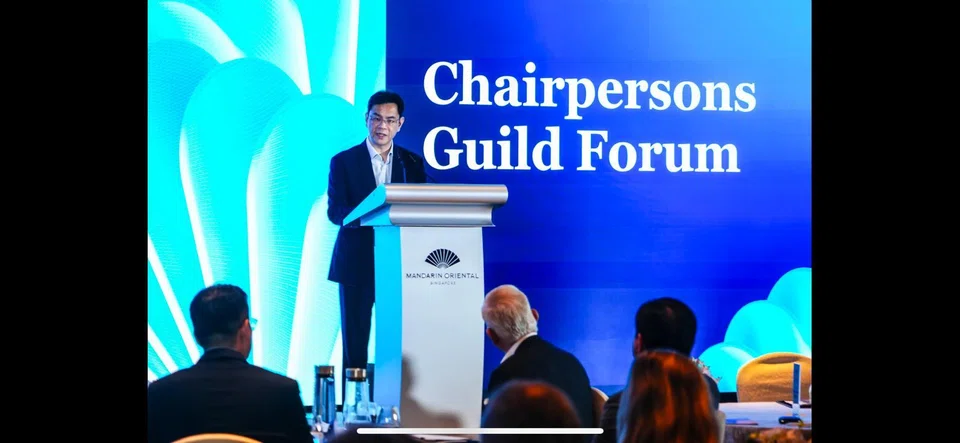
[SINGAPORE] The Monetary Authority of Singapore (MAS) will closely track the progress and outcomes of the Value Unlock programme and gather feedback as it seeks to establish broader industry norms for value-creation practices, said its managing director Chia Der Jiun at the inaugural Chairpersons Guild Forum on Friday (Mar 6).
He added: “We believe the best results are achieved when listed companies own the process, outcomes and work in partnership with us.”
Chia stressed that the Value Unlock programme is about “bringing about transformation in corporate practices and concrete outcomes”.
He also pointed out that MAS is reviewing the corporate governance code to raise market-wide expectations for boards’ roles in value creation and investor engagement.
The review, conducted with the Singapore Exchange (SGX) and Corporate Governance Advisory Committee, will consider possible changes from two angles.
One focus will be on how the corporate governance code can place greater emphasis on boards’ responsibilities for shareholder value creation and investor engagement, Chia said.
For instance, MAS will examine how the principles of the code could be supplemented with practical guidance on value creation. “Guidance could be given as to how boards provide strategic oversight and challenge to management on issues such as capital efficiency and whether market valuation adequately reflects the company’s earnings potential,” he noted.
The second focus, he added, is exploring ways to strengthen provisions relating to corporate culture, board effectiveness and risk management.
Disclosure requirements form the third plank of the approach, complementing the first plank of building capabilities through the Value Unlock programme and the second plank of raising governance and value-creation norms through the corporate governance code.

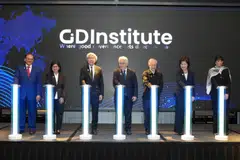
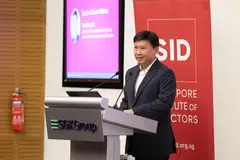
Chia also said that SGX will consider mandatory disclosures relevant to shareholder value, such as dividend policy, investor relations policy, and the link between remuneration and value creation.
Raising governance standards
Chia noted that an SGX investor fair is expected to take place by the end of the year or early next year. The event will provide a dedicated platform for companies, including grant recipients, to showcase improvements in corporate governance and long-term value creation.
Addressing the audience, Chia urged chairpersons, directors and senior leaders to lead the transformation within their companies. He noted that many firms have expressed interest or applied for the Value Unlock programme, while some companies are already seasoned practitioners of shareholder value creation and have built strong investor trust.
The inaugural Chairpersons Guild Forum followed the launch of the Chairpersons Guild by the Singapore Institute of Directors on Jan 16. The platform offers a professional community for board chairs of SGX-listed companies to access expert insights and networking opportunities.
It complements national efforts to strengthen the development of Singapore’s equities market.
At its launch, Chee Hong Tat, minister for national development and deputy chair of MAS, announced that the Value Unlock programme is open for applications under its two grant schemes.
Unveiled as part of the Equities Market Review Group’s measures last November, it aims to help listed companies strengthen investor engagement and sharpen their focus on shareholder value creation.
The Equip Grant helps companies build foundational capabilities in corporate strategy, financial management and investor relations.
Meanwhile, the Elevate Grant provides deeper and more tailored support, particularly for companies with greater ambitions. This includes companies that are scaling up from catalyst-stage firms seeking institutional-grade liquidity or pursuing significant growth opportunities.
This grant also provides access to experienced consultants who can help refine strategy, sharpen market positioning and strengthen shareholder communications.
Geopolitical uncertainty
The Chairpersons Guild Forum comes at a time when companies are grappling with heightened geopolitical tensions, including the US Supreme Court ruling against President Donald Trump’s tariffs and the escalating conflict involving Iran.
During a panel discussion, Dominic Barton, chairman of Rio Tinto and LeapFrog Investments, identified fragmentation as the top geopolitical risk for boards. He said that it has fundamentally changed the operating environment over the past five years, and that geopolitical considerations are now embedded in capital allocation and strategy decisions rather than treated as abstract discussions. “Geopolitics is embedded in the actual numbers and the decisions; it is not an after-effect.”
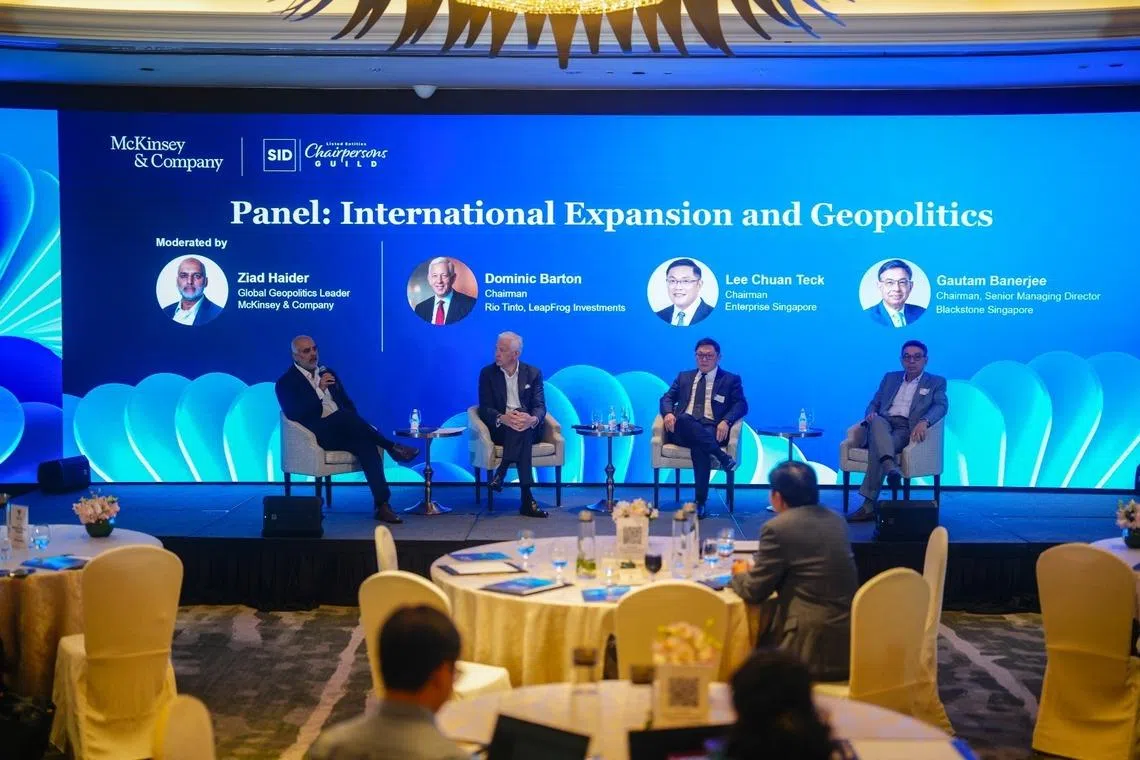
Lee Chuan Teck, chairman of Enterprise Singapore, noted that the boundaries of government intervention have broadened, prompting many firms to reconsider how they organise operations. “We are having many more of these conversations now with large, growing companies, who want to segment and have an independent entity in Singapore,” he said.
He pointed out that some are looking to restructure supply chains outside their home countries, particularly in South-east Asia and India, to remain resilient amid global fragmentation.
Decoding Asia newsletter: your guide to navigating Asia in a new global order. Sign up here to get Decoding Asia newsletter. Delivered to your inbox. Free.
Copyright SPH Media. All rights reserved.
TRENDING NOW

ComfortDelGro’s Zig to buy S$10 million worth of BYD cars for private-hire fleet
Singapore telco price war squeezes earnings, strengthens case for StarHub-M1 deal, say analysts
Sats slides 13.6% as investors dump shares on profit-margin squeeze

When every phone becomes a satellite phone, what happens to Asia’s telcos?

