

Memory titans test AI demand while bubble fears transfix markets
How these firms handle back-to-back earnings disclosures and investors’ questions will shed light on the broader industry’s outlook
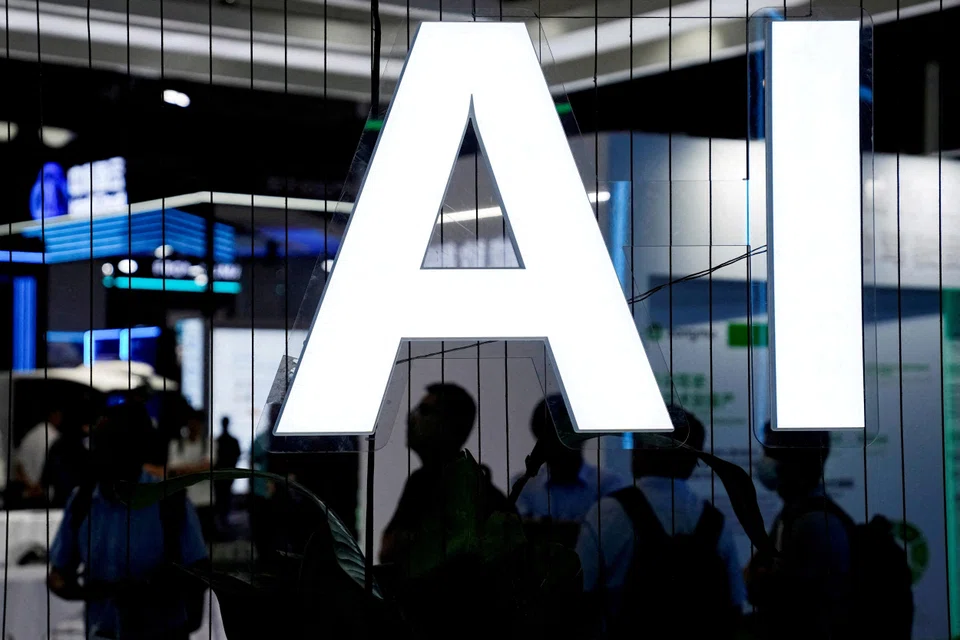
FROM South Korea to Japan and China, the world’s biggest memory chipmakers will this week seek to quell fears that artificial intelligence spending is outpacing future demand.
How they handle back-to-back earnings disclosures and investors’ questions will help determine the trajectory for markets and shed light on the broader outlook for the AI industry.
On Wednesday, SK Hynix kicks off a string of earnings reports critical for the near-US$1 trillion memory chip market, followed by Samsung Electronics, Japan’s Kioxia Holdings and China’s fast-rising CXMT.
Together, they command more than US$2 trillion in market value and supply the components that make up a third of big tech providers’ data centre spending.
On the surface, the four are expected to reveal astounding numbers including manifold growth in revenue and profit, the consequence of a shortage of semiconductors that is expected to persist for years to come.
Yet they are encountering a higher level of investor caution than at almost any point in time since OpenAI debuted ChatGPT to global acclaim in 2022. SK Hynix and its peers are grappling with a market that’s zeroed in on rising borrowing costs and fears that massive spending plans will outpace future returns.
Investors have grown increasingly nervous in past weeks since Oracle invoked a force-majeure provision to protect itself against delays at a New Mexico data centre, with bond spreads widening across the sector.
Yields also soared on data centre specialist CoreWeave’s debt as its stock tumbled. Nvidia-backed Firmus Grid pulled plans for an initial public offering that was supposed to usher Australia into the AI era.
And British IPO hopeful Nscale’s planned debut came under pressure after Microsoft withdrew from the startup’s UK data centre project.



“Memory is the best real-time read on AI demand,” said Billy Leung, an investment strategist at Global X Management. “Pricing moves every day and you can’t fake it.”
While the results may not settle the AI bubble debate, they should help establish whether or not the boom is underpinned by genuine orders, he said.
The Asian chipmakers’ results coincide with earnings from some of the world’s biggest AI spenders, including Alphabet, Microsoft and Amazon.
Together, their disclosures offer a broad test of AI tech providers’ faith that the enormous sums poured into data centres and computing equipment would generate sufficient returns to justify hardware makers’ expanding capacity.
The concern is not that AI demand will evaporate, but that revenue may struggle to keep pace with the cost of building the infrastructure needed to support it.
All four Asian memory makers have enjoyed an unprecedented run-up in prices because of a chip scarcity that has squeezed industries from autos to smartphones.
Continued surges in prices and orders would confirm the clients with the deepest pockets – like Alphabet and Meta Platforms – are pressing ahead with expansion despite mounting questions.
Yet investors are pricing in the next downturn, judging by the companies’ modest trading multiples, according to Dave Mazza, chief executive officer of Roundhill Investments, and focus is less on last quarter’s results. “The numbers themselves are almost beside the point,” he said.
For memory investors, the uncertainty in the bond and IPO markets has revived memories of past boom-and-bust cycles and fears that the industry is approaching a cyclical peak. Shares of Samsung and SK Hynix have fallen by roughly half from their June highs.
Phillip Wool, head of portfolio management at Rayliant Global Advisors, whose funds remain invested in both companies despite taking profits before the recent sell-off, said the era of “unbridled bullishness” is giving way to greater scrutiny of fundamentals. “The easy money in this theme has been made,” he said.
Some analysts dismiss the recent sell-offs as premature, pointing to possible buybacks, dividends and other measures to boost shareholder returns as potential catalysts in the months ahead.
Samsung Securities analyst Jongwook Lee expects a possibility of share prices rebounding to new highs in the second quarter of 2027.
Macquarie analysts see a structural shortage rather than an approaching glut, while Citigroup analyst Peter Lee expects the memory supercycle to last nine years, longer than previously anticipated.
The global race to build computational resources is delivering windfalls to Samsung and SK Hynix, which together control roughly 60 per cent of global dynamic random-access memory (DRAM) revenue and more than 80 per cent of high-bandwidth memory revenue.
KB Securities’s Jeff Kim estimates the two companies will generate a combined 1,571 trillion won (US$1.2 trillion) in operating profit over 2026 and 2027 – roughly double their cumulative profit over the previous 26 years.
Much of the anticipated growth is already reflected in order books. More than 70 per cent of the Korean chipmakers’ planned memory production in 2027 is covered by five-year supply agreements with major tech companies, leaving less than 30 per cent available to other customers, including smartphone and PC makers, Kim said.
That is creating an opening for CXMT, which is expanding aggressively in conventional DRAM in pursuit of knowhow to compete head-on with Samsung, SK Hynix and Micron Technology.
CXMT recently unveiled architecture aimed at increasing memory density in a bid to narrow the technology gap with overseas rivals, although the Beijing-based company would need to address factors such as production yields to be a serious contender.
One area investors will scrutinise is the memory companies’ plans for capacity expansion.
CXMT’s preliminary third-quarter results highlight the limits of any boom in an industry that requires ever-more investment to stay ahead.
Although CXMT has captured roughly 10 per cent of global DRAM revenue, it remains far behind in the advanced memory that Nvidia and other accelerators require, limiting its participation in the most lucrative AI memory segment.
Despite strong year-on-year gains, sequential revenue growth slowed and profit growth nearly stalled at the Chinese chipmaker, reflecting moderating rises in some conventional DRAM contract prices.
“The more immediate risk is in commodity DRAM, where China’s capacity ramp could weigh on pricing well before it threatens the AI end of the market,” Global X Management’s Leung said.
Macquarie, however, argues that Chinese producers are still struggling to satisfy domestic demand, making a China-driven global glut less likely than investors fear.
For Kioxia, which specialises in NAND flash memory, attention is on the Japanese company’s reluctance so far to dramatically raise prices and capitalise on soaring demand for enterprise solid-state drives.
The Tokyo-based company, which runs a joint production venture with Sandisk, is expected by analysts to report a more than 20-times rise in operating profit in the September quarter.
The focus is on its ability in securing longer-term agreements to shield it from NAND’s brutal price volatility.
Long-term commitments do not eliminate the risk of slowing AI infrastructure spending, particularly if financing becomes more expensive or customers struggle to earn adequate returns. Nor do they guarantee that today’s shortages will not eventually give way to excess capacity.
But concrete evidence of strong demand and capital spending discipline will help buy time, according to Roundhill’s Mazza.
“If the big four can show the backlog is contracted rather than hoped for, the peak memory debate gets pushed out a year,” he said. BLOOMBERG
Decoding Asia newsletter: your guide to navigating Asia in a new global order. Sign up here to get Decoding Asia newsletter. Delivered to your inbox. Free.
Share with us your feedback on BT's products and services
TRENDING NOW

Government to bring forward raising of retirement age, give employers more financial support to create flexi-load jobs

Indonesia stocks suffer worst plunge in nearly 30 years as MSCI proposes standalone status

If Europe goes to war, the fallout will be felt in East Asia
Natural gas to stay for the long haul beyond 2050: Singapore International Energy Week panellists

