


More products, more risks? South Korea’s leveraged ETF crisis has lessons for S’pore’s retail fund push
MAS in July had proposed a more flexible framework that could allow retail investors to access new fund types

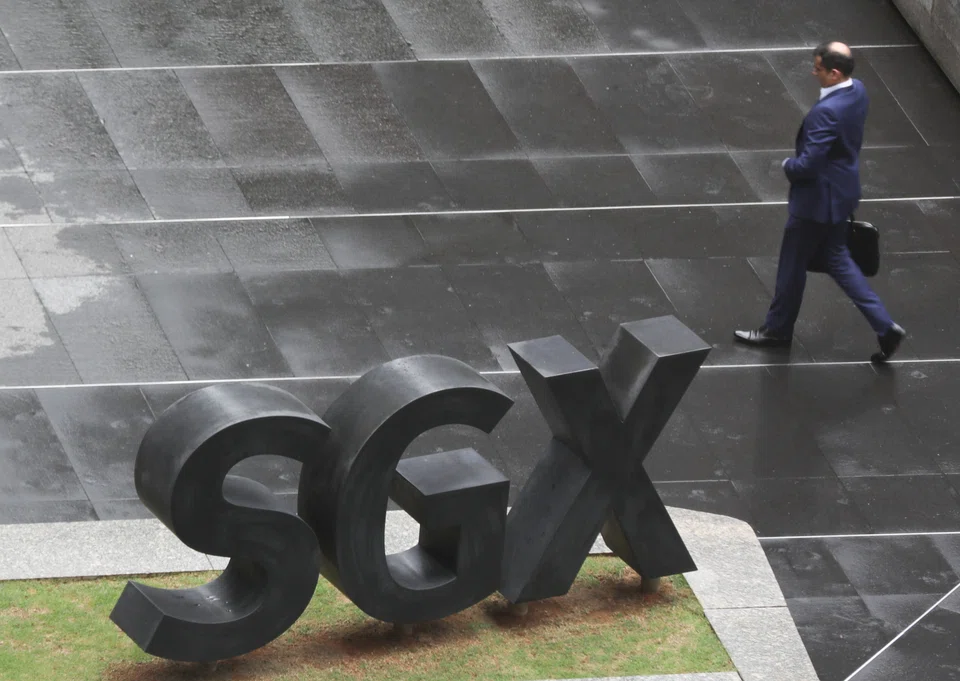
[SINGAPORE] Singapore’s push to broaden the range of investment products for retail investors could deepen markets, but South Korea’s recent experience with leveraged exchange-traded funds (ETFs) highlights the risks that Singapore will have to manage, observers said.
While the Republic is less prone to the concentrated retail speculation seen in South Korea – where wild market swings left retail investors bearing the brunt of losses – more sophisticated products will need to be accompanied by stronger investor education and safeguards, they said.
“Availability on the Singapore Exchange (SGX) should not be taken as an endorsement of suitability for retail investors – the two issues are quite separate,” said David Gerald, founder, president and CEO of the Securities Investors Association (Singapore).
The Monetary Authority of Singapore (MAS) in July proposed a more flexible framework that could allow retail investors to access new fund types, including futures-based single-commodity funds and a wider range of single-country government bond funds.
While single-stock leveraged ETFs were not singled out, observers said the framework could potentially pave the way for such products in the future.
In an interview, SGX CEO Loh Boon Chye said the bourse was “focused on trying to create a wider choice” of ETFs, with representation across the region, asset classes and sectors.
South Korea offers a recent example of how such ETFs can play out.
In May, it launched single-stock leveraged ETFs tied to Samsung Electronics and SK Hynix, to retain domestic retail interest as investors could already access similar products overseas. These products use derivatives to deliver a multiple of an underlying asset’s daily return.
Strong demand subsequently caused extreme swings and triggered several market circuit breakers, with analysts estimating retail investors lost around 58 trillion won.
SEE ALSO

Gerald said: “When parts of a market become highly speculative and retail investors enter late using leveraged products, a correction in the underlying market can result in disproportionately large losses, making it a painful experience for investors and potentially wiping out less careful ones.”
With about 92 per cent of holders being retail investors, South Korean regulators announced a temporary halt on new listings of such products on Jul 16, and brought forward rules for a minimum account balance on Jul 31.
New retail investors also have to complete simulated trading before buying such products.
Singapore less prone to concentrated speculation
To be sure, observers see a lower risk of such significant losses by retail investors in Singapore.
Singapore’s equity market is smaller and more institutionally anchored, said Grace Chong, head of financial services regulation at Drew & Napier.
It is also less prone to the concentrated retail speculation that characterised Korean trading in the two semiconductor counters, she said.
Samsung and SK Hynix together represent more than 50 per cent of the benchmark Kospi index. The tech counters saw strong interest amid the artificial intelligence boom.
In comparison, the Straits Times Index comprises mainly banks, property players and real estate investment trusts, giving it a different sector and investor composition.
Singapore has also consistently maintained that leveraged and inverse products are complex and subject to enhanced distribution safeguards, said Elaine Chan, co-head of financial services regulatory practice at WongPartnership.
These products are classified as specified investment products (SIPs) in Singapore. The brokers must conduct a customer account review to assess whether the retail customer has the relevant education, work or investment experience before the client transact in them.
Furthermore, in introducing new fund types, MAS will likely implement further enhancements to allow efficient access for sophisticated, self-directed investors, while protecting less experienced investors, Chan added.
They have already announced plans to enhance product highlights sheets to flag key risks more clearly, and introduce pre-transaction alerts when a product is complex, she noted.
More products could deepen market, but beware of risks
Gerald noted that no market is immune to excessive optimism or speculative behaviour.
The more important issue is whether the regulatory framework affords sufficient protection to investors during periods of heightened volatility, rather than only under normal market conditions, he said.
Investors also need to understand the risks involved, he added.
There are already leveraged products available on SGX, such as daily leverage certificates (DLCs), that may not fit the investment objective and risk tolerance of every investor.
DLCs, which are primarily meant for short-term trading, can magnify both gains and losses. They are classified as SIPs in Singapore.
Gerald said: “Leverage should never be used to compensate for insufficient capital, diversification or patience.
“The fact that a product is listed on SGX does not make it appropriate for every investor.”
Nevertheless, introducing leveraged and inverse single-stock ETFs in the Singapore equities market could also help to increase liquidity and allow SGX to enjoy higher trading volumes, Chong said.
Gerald added: “If investors can already access these products through overseas brokers, there is a reasonable case for Singapore’s regulatory framework to evolve alongside international markets.
“From the perspective of Singapore as a financial hub, having a broader range of products available on SGX can improve the depth and competitiveness of our capital markets.”
Decoding Asia newsletter: your guide to navigating Asia in a new global order. Sign up here to get Decoding Asia newsletter. Delivered to your inbox. Free.
Copyright SPH Media. All rights reserved.






