

Morgan Stanley sees US$5.5 trillion Asia energy investment boom driven by AI, energy security
Projected opportunities could include power generation and fuel refining; coal and natural gas could make a comeback
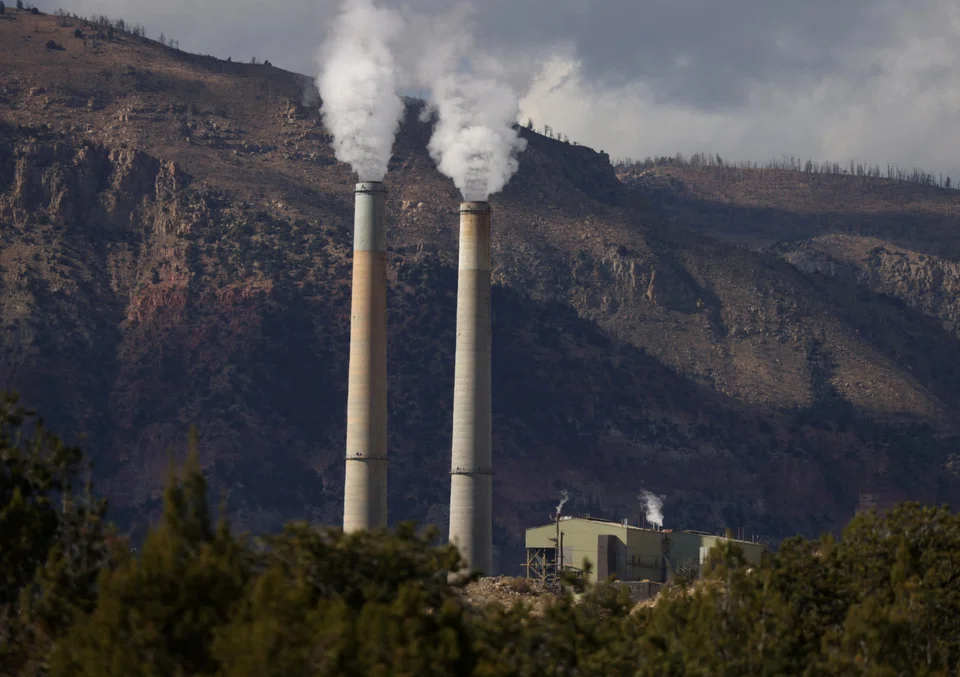
[SINGAPORE] Asia is on the cusp of a US$5.5 trillion energy investment supercycle over the next five years, as companies and governments ramp up spending to bolster energy security and meet artificial intelligence-driven energy needs, according to Morgan Stanley.
The bank estimates that the capital injection could reduce Asia’s energy imports from 36 per cent of total consumption to 29 per cent by 2030.
More broadly, the surge in spending could unlock up to US$9 trillion in investment opportunities across the energy value chain.
This encompasses power generation, grids, energy storage, fuel refining, fertilisers, shipbuilding and industrial equipment.
Mayank Maheshwari, India and South-east Asia energy and utilities analyst at Morgan Stanley, told The Business Times: “You have energy security, you have AI and you have increased energy consumption as reshoring of manufacturing picks up. All three are kind of coming together to inflect the investment supercycle.”
Equities to watch
Against this backdrop, Morgan Stanley recommends owning energy security assets because they are “inextricably tied to AI”.
'%3e%3cpath%20d='M12.1475%2025.5262C13.7713%2025.4295%2014.94%2023.913%2014.94%2021.8832C14.94%2019.5359%2013.474%2018.093%2011.5917%2018.093C11.3745%2018.093%2010.9582%2018.093%2010.8393%2018.1413V25.2086L11.8891%2025.5745C11.8891%2025.5745%2012.207%2025.5262%2012.1475%2025.5262ZM11.4934%2017.6281C13.2567%2017.6281%2014.3843%2016.4292%2014.3843%2014.4501C14.3843%2012.372%2013.275%2011.2973%2011.4339%2011.2973H10.8393V17.6305H11.4934V17.6281ZM6.66078%2025.6482L7.39265%2025.5492C8.02617%2025.4502%208.26403%2025.3053%208.26403%2025.1097V11.6149C8.26403%2011.4193%208.1451%2011.3709%207.23484%2011.249L6.68137%2011.173L6.6219%2010.7588H11.9508C15.7153%2010.7588%2017.0624%2012.0797%2017.0624%2014.1578C17.0624%2015.9666%2015.7748%2017.1909%2013.4969%2017.6305V17.7041C16.111%2017.948%2017.6571%2019.5382%2017.6571%2021.7636C17.6571%2024.3318%2015.8937%2026.0417%2012.1109%2026.0417H6.60132L6.66078%2025.6482Z'%20fill='%232B2B2B'/%3e%3cpath%20d='M20.6287%2025.6505L21.5596%2025.5515C22.1725%2025.4779%2022.4104%2025.3076%2022.4104%2025.112V11.249H21.9346C20.073%2011.3479%2018.982%2013.0095%2018.408%2014.6227L18.1907%2015.5018H17.6555L18.1701%2010.7588H29.3837L29.6421%2015.4787H29.1664L28.9491%2014.6227C28.3728%2012.8645%2027.3047%2011.2743%2025.5002%2011.249H24.9856V25.1856C24.9856%2025.3812%2025.1251%2025.4548%2025.9965%2025.5515L26.7695%2025.6505L26.829%2026.0417H20.5693L20.6287%2025.6505Z'%20fill='%232B2B2B'/%3e%3c/g%3e%3cdefs%3e%3cclipPath%20id='clip0_5242_21648'%3e%3crect%20width='24'%20height='16.8'%20fill='white'%20transform='translate(6%2010)'/%3e%3c/clipPath%3e%3c/defs%3e%3c/svg%3e)
The report highlighted 70 global equities across the coal equipment supply chain, fuel refiners, petrochemical producers and natural gas exporters which Morgan Stanley expects to benefit from the uptick in energy investments.
The bank also identified three key areas where earnings and dividends “could surprise the most” in Asia: fossil and nuclear-based power generators, the energy storage supply chain (including power grids) and fertilisers.
Among the bank’s top global stock picks are Mitsui & Co, Venture Global, CATL, Keppel Corp, Kansai Electric Power, Cummins and Doosan Enerbility.
Expecting a plateau
While spending on renewables more than doubled over the past decade, Morgan Stanley expects a plateau ahead.
This is because power grids will need around US$1 trillion of new investments for upgrades before the adoption of renewables increases further.
South-east Asia invested US$17 billion in renewable energy last year – the highest since 2015, based on a report from the International Energy Agency.
Meanwhile, the bank expects coal and gas power generation to remain “highly relevant” in Asia for the rest of the decade, to ease near-term bottlenecks and improve energy-system reliability.
“Expanding home-grown renewable energy capacity…is widely seen as vital to further fortify Asia’s power systems against fuel shocks; however, it is not enough,” noted the bank.
This is because the intermittency and reliability of renewables remain a key risk to energy security.
In this context, the report said that coal and natural gas are likely to “make a comeback in Asia’s energy security story”. Morgan Stanley expects annual spending on fossil fuels and dependable energy sources to double compared to recent years.
Maheshwari defines dependable energy sources as those that can supply round-the-clock power and energy supply. Common examples include coal, natural gas and nuclear energy.
“What we are seeing in the renewable energy space reflects a clear shift towards reliability and system resilience: as demand for dependable power grows, renewables are increasingly being integrated with coal and gas to ensure consistent, scalable supply,” said Maheshwari.
Morgan Stanley estimates 500 million tonnes per annum of new coal consumption needs and 100 million tonnes per annum of gas consumption in Asia by 2030, driven by transport, AI and household needs for cooking and power.
This comes as Asia’s energy consumption is projected to rise by 38 exajoules by 2030, equivalent to what the entire Middle East currently consumes.
About two-thirds of this will be met with domestic sources such as renewables, coal and domestic natural gas, while the rest will need to be imported, noted the report.
Maheshwari added: “What we have increasingly seen is corporates basically getting a mix of power in their entire portfolios, rather than trying to choose just one or the other few, thereby making their operations a lot more resilient to energy shocks.”
“You need stable, dependable, resilient and reliable energy in the system,” he said.
“How can you bring that in the quickest and fastest fashion to the grid? Coal will play its part…but we are also saying simultaneously…that battery storage is as important, which will have to work together with renewables.”
He cited the example of rooftop solar panel installations becoming more popular in Asian countries.
However, given that solar energy is intermittent, batteries are needed to stabilise volatility in the grid, noted Maheshwari.
On how energy players are likely to respond to increasing demand for coal, he noted that they will continue to “pull their weight” in supplying the most affordable form of energy.
“Energy consumers are very smart. I can tell you that they will always gravitate to the cheapest source of supply (that is reliable),” he said. “Whether it is a combination of renewables, nuclear, coal, gas or batteries, they’ll make the choice.”
With governments and hyperscalers underwriting the cash flows for power and energy storage producers, Morgan Stanley estimates that 75 per cent of investments will be funded by the balance sheets of energy companies through a combination of operating cash flow and debt.
The remaining funding is expected to come from government and global sovereign support.
Additional reporting by Young Zhan Heng
Decoding Asia newsletter: your guide to navigating Asia in a new global order. Sign up here to get Decoding Asia newsletter. Delivered to your inbox. Free.
Copyright SPH Media. All rights reserved.
TRENDING NOW

DBS, OCBC, UOB rout lops billions off STI as inflation, rate concerns spook investors

Grab CEO’s wife Chloe Tong on life with Anthony Tan and finding her purpose

OCBC sheds S$8 billion in value as shares close nearly 6% down; analysts cautious on banks

Deal between tycoon friends sparks scrutiny of Philippine power sector

