



New Fed chief Warsh faces bumpy road as he leads tough first rate meeting
The US central bank is unlikely to cut rates this week, but all eyes are on the direction the new chair will take at his post-decision press conference
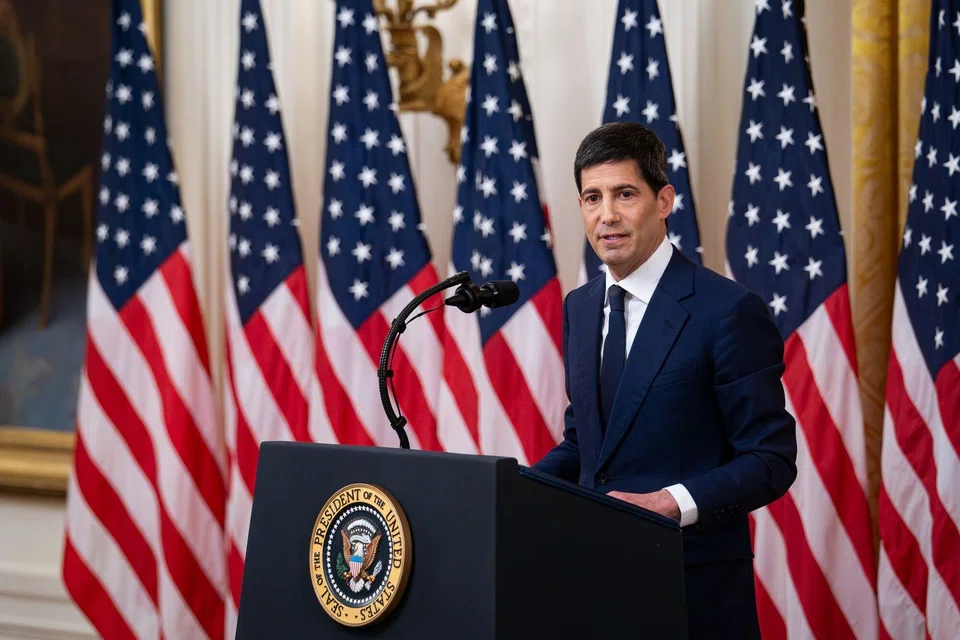
[WASHINGTON, DC] New US Federal Reserve chair Kevin Warsh will make his first policy decision as the central bank’s chief on Wednesday (Jun 17), and the markets are watching out for his debut call that could either lift spirits or bring the mood down worldwide.
While the expectations are that he will leave rates unchanged in a range of between 4.5 and 4.75 per cent at the end of the Fed’s two-day meeting, his reasoning behind the policy statement and at the post-decision press conference could set the tone for global markets in the second half of this year.
The breakthrough in negotiations between the US and Iran has alleviated a lot of the inflation pressure – and the pressure on Warsh, too – because it has resulted in a plunge in oil futures.
That, in turn, has brought down Treasury yields slightly. But energy strategists warn that the oil and liquefied natural gas shortages triggered by the closure of the Strait of Hormuz will not disappear at the stroke of US Vice-President JD Vance’s pen in Switzerland on Friday.
Iran could yet try to levy a toll on ships moving through the strait. Even if ships can pass through as easily, it will take some time to offset a global deficit of hundreds of millions of barrels of oil caused by the war. The self-fulfilling cycle of inflation may already have taken hold as consumers seek higher wages to absorb higher prices, and merchants keep raising prices to cover wage bills.
Warsh, who took over from Jerome Powell last month, is in a tricky position. He has to contend with President Donald Trump, who, despite his assurances that he sought no promises from Warsh before the nomination, has made it very clear that he wants the Fed to cut rates further.
Another Trump appointee, the former White House economic adviser Stephen Miran, has echoed the president’s calls for rate cuts at every opportunity in his first six months as governor.
Warsh has to also deal with the hawks on the rate-setting committee, who have called for the Fed to lay the groundwork for a rate increase.
Also joining the hawks, potentially, is Powell, who has vowed to remain on the board until Trump ends his legal attacks on the Fed.

And finally, Warsh has to contend with the bond market, where a hike in late 2026 is priced in.
The market, of course, can often be the toughest adversary of all. Should he revert to the Fed’s earlier stance of an easing bias, he could awaken the “bond vigilantes”.
If Treasury markets sense the central bank is becoming undisciplined in its fight against inflation, the market will take that fight up itself by driving up yields, even when the Fed is cutting or holding its benchmark rate.
Push for productivity growth
On Jun 5, the S&P 500 fell sharply after a surprisingly strong reading of May’s employment growth.
The unlikely reawakening of the job market, where the lift from data-centre development seems to be outweighing the drag from the replacement of artificial-intelligence workers, was seen as all but guaranteeing a rate hike, given that the combination of tight commodity and labour markets produces the ideal conditions for inflation. Economists at Standard Chartered (StanChart) said that as many as six rate-setting committee members could mark projected hikes on the so-called “dot plot”.
If, in the weeks following this week’s Fed policy meeting, voting members disclose their stance on future hikes, that could have a market impact, the economists said. Warsh himself is likely leaning towards cuts, but is unlikely to push for that position at his first meeting, said the StanChart economists. Indeed, the statement may become decidedly neutral on the rate outlook.
But Warsh is likely to make his impact felt elsewhere, strategists say.
“A sentence like ‘the pickup in productivity growth, if sustained, could affect the trajectory of output, employment and inflation’ may be added,” the StanChart economists predicted. “Productivity growth is something that Warsh has emphasised, and this would be seen as Warsh nudging the debate in a slightly dovish direction.”
For the stock market, any nudge in this direction would likely perpetuate the relief rally in the wake of the US-Iran deal – that is, of course, if Warsh can somehow convince the bond vigilantes to go along.
Decoding Asia newsletter: your guide to navigating Asia in a new global order. Sign up here to get Decoding Asia newsletter. Delivered to your inbox. Free.
Share with us your feedback on BT's products and services






