

New IPO aspirants signal renewed listing activity on SGX
The flurry points to continued momentum buoyed by government measures to revitalise the local bourse

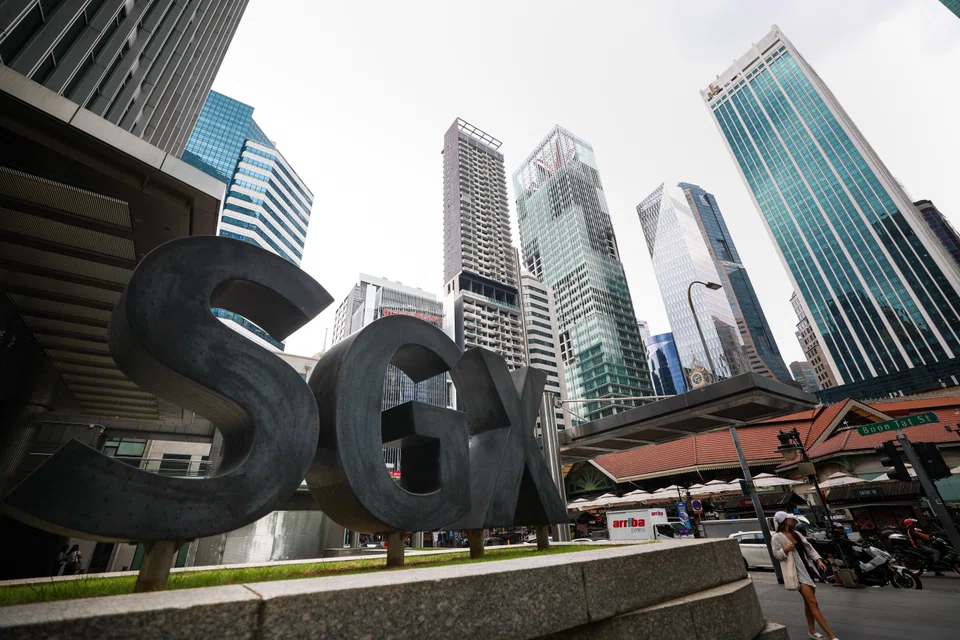
[SINGAPORE] A fresh burst of initial public offering (IPO) activity hit the Singapore Exchange (SGX) on Tuesday (Jun 30), with two companies filing preliminary prospectuses for mainboard listings.
Logistics solutions provider All-Link Air & Sea and electrical infrastructure specialist EGP Energy Corporation became the latest companies to kick-start the listing process, with Temasek-backed Foundation Healthcare registering its S$242 million IPO prospectus on Wednesday (Jul 1) evening.
The private healthcare group filed its preliminary prospectus a week ago and is set to make its trading debut on Jul 8.
There is a practical regulatory driver behind the clustering of these IPO filings. Companies with a Dec 31 financial year-end are generally spurred to lodge preliminary prospectuses by Jun 30, because lodgments made more than six months after the financial year-end require interim financial statements to be included as well.
Separately, Blackstone-backed data centre operator AirTrunk is reportedly preparing to file for a Singapore real estate investment trust listing as early as this week. The proposed US$1.5 billion offering, first reported in April, could be Singapore’s largest IPO since 2017.
This latest flurry of IPO activity points to continued momentum in Singapore’s equity capital market, supported in part by government measures to revitalise the local bourse, such as the S$6.5 million Equities Market Development Programme.
These latest offerings are part of a broader pipeline that has been building over the past several months, highlighted Ong Hwee Li, chief executive of SAC Capital. The investment banking firm was a sponsor, issue manager and underwriter for several SGX listings, including the recent IPO of co-living operator The Assembly Place.
He told The Business Times: “We expect more companies to file for listing in the months ahead. For investors, this means a more active and diversified IPO market this year, with companies across multiple sectors coming to market.”
Yet, a robust IPO pipeline does not necessarily translate into stronger price performance, as reflected in the lacklustre post-listing share prices of companies that debuted in the first half of the year.


Post-listing rally
More than 30 companies were estimated to have been exploring listing on SGX at the start of the year.
BT understands that IPO aspirants have been actively engaging institutional investors ahead of their market debuts, as cornerstone participation is increasingly seen as critical in anchoring deals and boosting retail confidence.
However, midway through the year, only two mainboard primary listings – JustCo and UI Boustead Reit – along with three Catalist listings – have materialised.
Mainboard-listed flexible workspace operator JustCo debuted at S$0.94 a share last month, closing its first trading day at S$0.775. It has since declined further below its IPO price.
Veteran fund manager Terence Wong, founder and CEO of Azure Capital, said a range of factors determine whether IPO aspirants can deliver a sustained post-listing rally, and investor engagement plays a key role.
He noted that post-listing, some companies go “radio-silent” and investors do not receive any updates.
“They should reach out to investors and update them on what is happening,” said Wong. “You need to keep the interest alive with updates on the company, perhaps once a quarter, or whenever there is something meaningful.”
He said maintaining visibility helps build credibility over time and supports longer-term liquidity. He has also observed that management teams often raise concerns post-listing when initial performance gains taper off and momentum fades.
“There are many companies out there vying for limited capital, so you do need to get out there to gain prominence,” he said.
Listing considerations
Commenting on JustCo’s post-listing performance, Wong said issuers may fear such an outcome, particularly for sizeable offerings.
However, they need to consider that recent market conditions and investor sentiment may also have contributed to the weaker performance, alongside company-specific factors.
Nevertheless, “there will be companies that will interest investors, which will allow them to do a lot better”, said Wong. “If you look at those companies that have a smaller float, they typically do better than those with the bigger ones, at least for this year.”
But some observers said the post-listing share price performance should not be overinterpreted.
Whether a company’s share price rises or falls after listing, or experiences a so-called “dead-cat bounce” following a strong debut, should not be of primary concern, said corporate finance lawyer Robson Lee, partner at Kennedys Law and director at Legal Solutions.
“The raison d’etre for seeking a listing must be the primary objective of raising public equity to fund the long-term growth of the business,” he said. He added that the growth and profitability of the company’s business must be sustainable.
However, there seems to be some hesitation to list, even as corporate finance houses are busier than a year ago. Wong attributed this partly to geopolitical uncertainty. He added that small caps have also not done well in recent months, and that more broadly, IPOs have underperformed.
Against this backdrop, once All-Link Air & Sea, EGP Energy and Foundation Healthcare, together with AirTrunk, come to market, their performance will be closely watched.
Decoding Asia newsletter: your guide to navigating Asia in a new global order. Sign up here to get Decoding Asia newsletter. Delivered to your inbox. Free.
Copyright SPH Media. All rights reserved.
TRENDING NOW

DBS, OCBC, UOB rout lops billions off STI as inflation, rate concerns spook investors

Grab CEO’s wife Chloe Tong on life with Anthony Tan and finding her purpose

OCBC sheds S$8 billion in value as shares close nearly 6% down; analysts cautious on banks

Deal between tycoon friends sparks scrutiny of Philippine power sector

