New Lippo Karawaci CEO to improve management, governance
Published Mon, May 20, 2019 · 09:50 PM

    Singapore

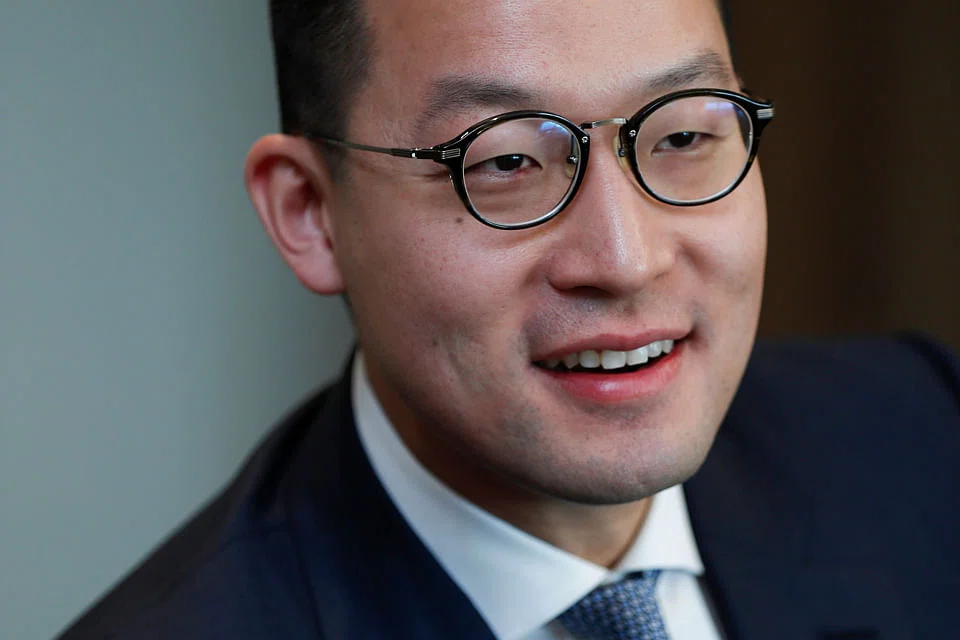
    NEWLY appointed CEO of Lippo Karawaci John Riady has, in a sense, been brought in to "clean house", after news last year of an investigation into an alleged bribery linked to the conglomerate's US$21 billion Meikarta development project, which the company has continued to deny involvement in.

    In a recent interview with The Business Times, Mr Riady, grandson of founder and chairman of Lippo Group Mochtar Riady, cited this incident as one factor that has driven him to take steps to improve the firm's management and governance since he took the helm in March this year.

    He said: "I want to build a company that has much stronger governance and transparency. Because we are the largest real estate company in Indonesia, we are held to a much higher standard. So I'm not going to argue about right and wrong and (ask to) show me the evidence. I want this case to blow, and the storm to pass. That's happened and I'm grateful, and I just want to look forward and ensure that we do the stuff that's within our control."

    This means providing more timely disclosures, something which he felt the company had failed to do adequately at the height of the bribery case.

    The parent firm, Lippo Group, is moving from its previous focus on five core industries (real estate, healthcare, retail, telecommunications and financial services) to just two core industries: real estate and healthcare, held through Lippo Karawaci. All its other businesses will be considered investments.

    Mr Riady said: "We think healthcare and real estate are the industries where we have the competitive advantage to continue to be market leaders."

    The developer is already among the largest land bank owners in Indonesia, with close to 1,300 hectares of ready land bank in the country, and 6,000 hectares of land bank in total.

    These industries are also "relatively isolated from digital disruption" in the next 10 to 15 years, he said.

    "There is today no industry that's completely protected from technology... In healthcare, my view is that given the structure of the way doctors provide the services and equipment, it's not so easy to 'uberise'.

    "If you take a look at things globally in the tech space, in the markets that are much more technologically advanced such as China, you have very successful fintech companies that have disrupted banks, very successful e-commerce companies that have disrupted retailing, but you don't have a single healthcare company that has profitably and successfully disrupted hospitals and have scaled up."

    In addition, malls, real estate investment trusts (Reits) and healthcare continue to be very defensive industries that generate consistent cash flows.

    Mr Riady also aims to pivot from the company's previous focus on growing market share to prioritising returns and operational excellence.

    The market share game is already quite clearly won in its hospital, mall, apartment and hypermarket businesses in Indonesia.

    "Over the last 20 years when the Indonesian economy was growing 7 to 8 per cent, it was the right thing to do. When growth is high, you want to focus on market share... Now with what people say is the new normal in growth rates globally, the focus has to be much more on returns and operational excellence."

    Earlier this month, figures out of Indonesia showed South-east Asia's largest economy expanding 5.07 per cent in the January-to-March quarter from a year earlier, the slowest pace in a year and falling short of estimates. Economists blamed it on the decline in investments and commodity prices.

    With all the land that Lippo Karawaci currently owns, Mr Riady also thinks that it is time to recycle capital to generate returns and cash flow.

    Liquidity has been a longstanding issue for Lippo Karawaci, aggravated by multiple credit rating downgrades last year in the wake of the bribery probe.

    "We have got too much land bank, so we are open to divesting non-core land bank or monetising land bank through partnerships, allowing other developers who don't have access to land to develop on our land bank, and in doing so, allowing us to monetise it as well," he said.

    Mr Riady also wants to focus on improving the company's management and governance, because he feels that management teams and organisational design have not grown in tandem with the complexity of operations and "exponential" topline growth of Lippo Karawaci over the last 15 years.

    "We are continuing to build stronger management teams, hiring people who have run larger corporations, and in some sense getting ahead of the curve and finding people for their skills and the sophistication of their business...that we want 10 years from now."

    Indeed, Mr Riady's appointment in March came with an entire overhaul of the company's board of commissioners and management team. More crucially, it accompanied a US$1.01 billion funding programme consisting of a US$730 million rights issue underwritten by the Riady family, and US$280 million proceeds from asset divestment plans - all to improve the company's debt maturity profile and near-term liquidity position.

    "We hope that the plan we have announced addresses all the major issues - liquidity, balance sheet, governance... It's going to take time to regain that trust and that's what I'm mandated to do," he said.

    The plan seems to be working. Following announcement of its fundraising plan, Moody's changed its outlook on the company to "stable" from "negative", while Fitch Ratings and S&P Global Ratings placed its long-term issuer default and credit ratings respectively on credit watch with positive implications.

    Its bond prices due in 2022 and 2026 also jumped to become the second and third best-performing junk dollar bonds in Asia outside Japan this month.

    An attempt in March this year to redeem its US$410 million 7-per-cent senior notes due in 2022 and US$425 million 6.25-per-cent senior notes due in 2026 garnered valid tenders of only US$8.67 million in principal amount.

    But Mr Riady thinks this only reflects bondholders' confidence in Lippo Karawaci's credit ratings.

    "If I had done the same thing three months ago, I guarantee you we'd have a 100 per cent take-up. This result shows that they prefer to hold our bonds, and if you take a look at how our bonds are trading today, I believe we are one of the best performing bonds in Asia this year."

    The company will still call its US$75 million 9.625-per-cent senior notes, due in 2020, in June this year. It has paid off another US$50 million of borrowings and will pay off US$50 million more of local borrowings gradually over the next two to four months.

    To be sure, Mr Riady said the CEO position was not one that he had actively sought after.

    "A couple of months before the announcement...I would never have thought about becoming the CEO of Lippo Karawaci, but after a lot of discussion and consultation with my grandfather, uncle, and father, I hope my joining as CEO provides the leadership that the market is expecting and wants to see as a reflection of our family's commitment to the company.

    "It's a pity because we did a lot of things wrong and we could do a lot of things better, so I think that if we can do the right things consistently over time, we could really build a great company."

    He also debunked the idea that he is just a puppet of his family's decision-making behind the scenes, saying he is a "professional reporting to (his) board", not "the grandson, nephew, or son of someone".

    "I want to do what's best for my shareholders, and the biggest shareholders happen to be my family... I wouldn't be here if I didn't think that I would be given the independence and mandate to make the right decisions," he said.

    READ MORE: Lippo Karawaci CEO wants LMIRT to own more non-Lippo assets