‘No other sector like it’: KKR sees no let-up in AI-driven infrastructure boom after STT GDC deal
Deep pools of private capital are chasing data centres, one of Asia’s most capital-intensive asset classes

[SINGAPORE] Digital infrastructure is soaking up enormous amounts of capital, with most of that money going to data centres, thanks to the insatiable demand for artificial intelligence.
Case in point: the KKR-Singtel acquisition of ST Telemedia Global Data Centres (STT GDC). The recently announced deal, which is for the interest that the companies do not already own, values STT GDC at S$13.8 billion.
This makes it one of the largest digital infrastructure transactions in South-east Asia.
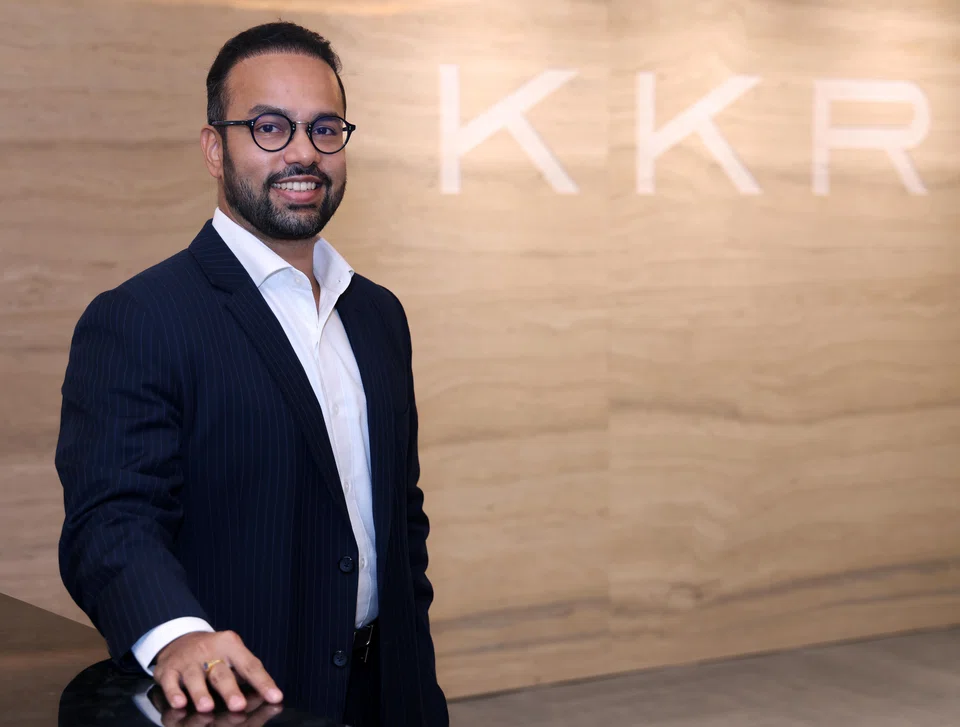
“Globally, there’s no other sector where you have such enormous capital needs, both in terms of building assets and recycling of assets through buying stabilised assets,” Projesh Banerjea, managing director and part of the Asia-Pacific infrastructure team at KKR, told The Business Times.
Data centres typically have multiple financiers, who can commit hundreds of millions of dollars a pop.
For the STT GDC acquisition, the next steps are completing the deal and then focusing on ensuring that the platform continues to deliver on its projects.
KKR has invested in other digital infrastructure assets in the region, such as sub-sea cable engineering company OMS Group, data centre platform Nxera – a joint venture with Singtel – as well as Philippine telecommunications tower business Pinnacle Towers.
The growth in the data space has been boosted by government policy moves, including the requirement that data collected from local customers must remain within the country’s geographical boundaries.
This has aided KKR’s other portfolio companies such as OMS, as more data centres being built requires more connectivity with sub-sea cables – especially as Asia’s geography is dominated by archipelagos.
The private equity giant has been building up its infrastructure expertise and portfolio over the past five years, first raising what was then the largest Asia-Pacific infrastructure fund at US$3.9 billion in 2021, followed by a second one at US$6.4 billion in 2024, which also topped the charts.
KKR is now raising a third Asia-Pacific infrastructure fund, which some media outlets reporting a fundraising target exceeding US$9 billion.
Digital infrastructure remains one of the most active sectors in the region. And data-centre investors are predominantly large funds due to the asset’s capital-intensive nature.
Every phase – from acquiring land to constructing and running the data centre – requires large amounts of capital.
Banajea said: “You need a lot of capital for every site, but then to keep growing, you need the next bit of capital. It takes a long time for your existing operations to pay for the growth.”
“Old-world infrastructure” still key
Even as digital infrastructure is the hot topic, KKR still keeps an active presence in the traditional infrastructure space, which includes assets such as power and roads.
Infrastructure makes up about US$100 billion in assets under management (AUM) at KKR. Digital infrastructure accounts for around US$34 billion of those AUM.
“There’s a lot that we do in more conventional old-world infrastructure, which is very cash-generative and key, so that is still a very large part of our portfolio and will continue to be,” said Banerjea.
Outside South-east Asia, the private equity firm owns power transmission assets in Australia and India, as well as roads in the latter. KKR also holds a stake in First Gen, a renewable and sustainable power company in the Philippines.
Still, being able to exit is key. Without the ability to monetise assets, the sea of opportunities would not be attractive for anyone.
In the last couple of years, KKR has orchestrated some exits in Apac.
Last June, it sold a minority stake in Pinnacle Towers to British Columbia Investment, a Canadian pension fund. Its other infrastructure exits were divestments to either listed companies or institutional investors in the asset’s domestic market.
“The reality is that for a lot of investors who look for high-quality assets, they themselves are unable to deal with the complexity of Asia,” Banerjea said.
“But once we have dealt with the complexity and can simplify the narrative, they’re very interested in the assets we have.”