No rush by SGX listcos to embrace forward guidance; ‘phased adoption’ likely: observers
They attribute this to factors such as legacy practices and concerns about regulatory risk

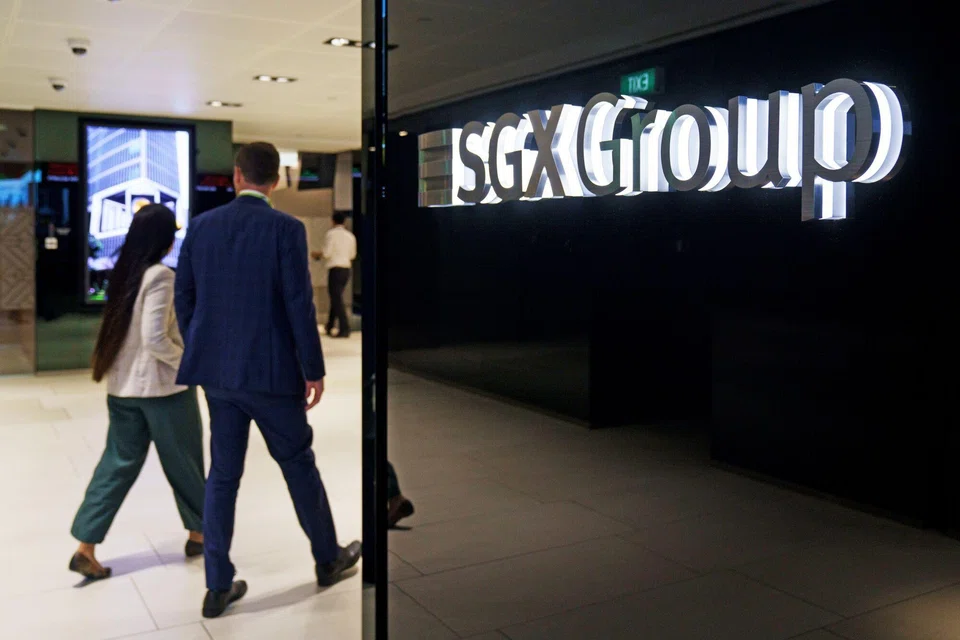
[SINGAPORE] Even as Singapore Exchange Regulation (SGX RegCo) is encouraging companies to provide forward guidance, many listed firms remain hesitant to act, going by the recent earnings season.
Forward guidance, commonly referred to as earnings guidance, can range from qualitative commentary on strategies to quantitative projections or earnings forecasts. They are usually issued during earnings calls, presentations to investors or official regulatory filings.
In the US, many listed companies have voluntarily provided quarterly earnings guidance since the 1990s, after the Private Securities Litigation Reform Act introduced a safe harbour for forward-looking statements with appropriate cautionary language.
But Singapore firms have been reluctant to include such details.
Market participants attribute this caution to legacy practices, concerns about regulatory risk, and limitations in internal forecasting capabilities.
“Forward-looking statements carry risk of regulatory infraction because boards are concerned about variance between actual results and their forward-looking guidance,” said June Sim, former Singapore securities regulator and council member at the Singapore Institute of Directors (SID).
However, the Monetary Authority of Singapore’s (MAS) launch of the broader Value Unlock programme – which seeks to help issuers strengthen strategy articulation, capital discipline and investor engagement – has foregrounded the subject of forward guidance.
“We hope to see issuers respond holistically and provide meaningful, well‑grounded disclosures alongside other value-unlocking initiatives,” SGX RegCo head of listing compliance Michael Tang told The Business Times.
Sim described the clarification as “very encouraging for regulators to move in to dispel the perception that forward guidance is something that they frowned upon”.


Previously, it was common practice for the regulator to query companies over statements about future prospects that were published in the media but not disclosed in official announcements.
The aim was to ensure fair and equal information disclosure and to avoid misleading the market, noted Ong Hwee Li, CEO of investment banking firm SAC Capital.
With market conditions having matured and investors becoming increasingly sophisticated, companies should “provide more colour for shareholders and investors to make more informed investment decisions”, he added.
Some larger companies, Ong observed, have “taken a more progressive approach by providing certain forward guidance to the market”.
He highlighted examples such as Singtel and ST Engineering , which have shared revenue growth targets or outlook ranges as part of their disclosures. Similarly, Sats has provided financial and profitability goals in its presentation to investors.
“Responsible disclosure and thoughtfulness”
One company that issued forward guidance last month alongside its FY2025 results was European logistics and data centre platform Stoneweg Europe Stapled Trust ( Sert ).
In its guidance, it projected that distribution per stapled security for FY2026 would be largely in line with FY2025, which would imply a distribution yield of 8.1 per cent for FY2026.
With a market capitalisation of S$838.6 million, Sert was listed on the SGX mainboard in November 2017, and its share price rose by 3.2 per cent over the past year. Units of Sert closed flat on Wednesday at 1.50 euros.
“Investors have consistently asked the Singapore real estate investment trust (Reit) industry for clearer visibility on forward-looking distributions,” said Simon Garing, chief executive officer and executive director of Sert’s manager.
Garing added that Sert’s investor base also influenced its approach.
About 40 per cent of its investors are based outside Singapore or invest in Reits listed in other markets such as Japan and Australia, where forward-looking guidance is more routinely provided.
“For these investors, visibility is standard practice, and offering it helps us communicate in a way that meets their expectations,” he said, adding that more informed engagement with both local and international investors is expected over time.
Other key metrics Sert is monitoring to assess the impact of its forward guidance include improved trading liquidity and total securityholder returns that outpace key benchmarks and peers.
Practical guidance
SGX RegCo issued a regulator’s column in January clarifying expectations for forward-looking statements and offering practical guidelines to boards.
Tang, who co-authored the column with CEO Tan Boon Gin, added that the guidance is intended to give “boards and management the confidence to provide the market with more and better information that supports value creation”.
The column also specifically clarifies that statements do not require absolute board certainty or full audit review.
Emily Choo, CEO of investor relations agency Gem Comm, noted that “many mid-cap and small-cap issuers feel they lack the sophisticated, real-time data analytics required to confidently project earnings multiple quarters out”.
Many companies are currently assessing their internal forecasting capabilities. This ensures that if they do provide guidance, it is “robust, defensible and aligned with SGX RegCo’s expectations”, she said.
Victor Lai, principal consultant at corporate advisory firm CitadelCorp and a board member of listed companies in Singapore and Malaysia, suggested that disclosures should move beyond generic statements.
They should instead provide meaningful information that both institutional and retail investors can use to assess a company’s prospects and make informed decisions.
“The issuers and directors are still ultimately responsible for accuracy and integrity in the statements,” he added.
“Cautious optimism”
Longstanding habits also continue to hold firms back from providing detailed forward-looking statements, noted Lai.
“In any forum, people will often point to cautious optimism,” he said, noting that the tendency is quintessentially Singaporean.
Companies tend to indicate optimism while remaining guarded, producing “boilerplate disclosures” that offer limited insight to investors.
SID’s Sim warned that such phrasing may “send the wrong signal to the market that the board and its management lack the competence, credence and conviction to share or articulate about their business and prospects”.
SAC Capital’s Ong similarly questioned the common phrasing, saying: “Why should one be cautious about optimism? The board should lay out the basis for its optimism; or if the board is not pessimistic, then simply remove the word ‘cautiously’.”
Phased adoption more realistic
But among market observers, the consensus was that Sert was an isolated example. They believe it will take time for forward-looking disclosures to be more widely adopted by companies.
Jess Lim, group managing director and member of the nominating committee at listed real estate management services company (*see amendment note) LHN , said: “In practice, issuers are likely to move from purely historical reporting to forward-looking statements, such as commentary on project pipelines or strategic priorities, before committing to hard numerical forecasts.”
She noted that adoption is unlikely to happen overnight. Instead, a “phased adoption” is more realistic, with companies gradually building the “internal comfort and capabilities” required to issue forward-looking guidance.
For LHN, enhanced disclosure carries strategic importance beyond governance.
“Providing forward-looking insights not only demonstrates accountability but also positions the company more favourably within the investment community,” said Lim.
LHN has been providing forward guidance, including elements such as its expected number of keys per year and profit guidance.
Amendment note: Article has been edited to reflect the correct designation of the newsmaker
Decoding Asia newsletter: your guide to navigating Asia in a new global order. Sign up here to get Decoding Asia newsletter. Delivered to your inbox. Free.
Copyright SPH Media. All rights reserved.