

Number of listed companies an ‘outdated metric’ of Singapore market’s success: SGX chairman
Koh Boon Hwee’s comments come as Singapore pushes ahead with measures to revitalise its equities market

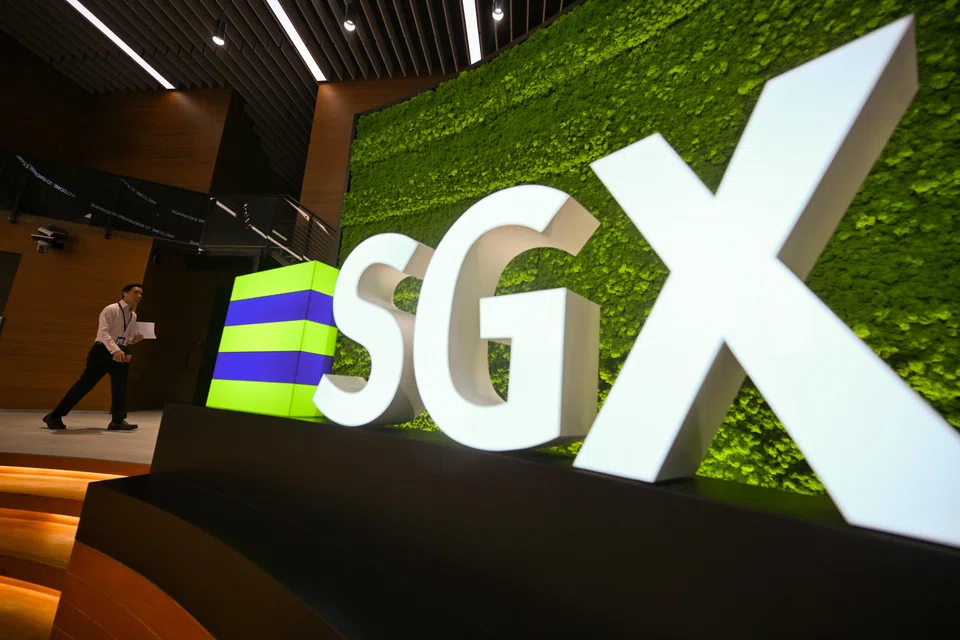
[SINGAPORE] The number of companies listed on the Singapore Exchange (SGX) is an “outdated metric of success”, said its chairman Koh Boon Hwee, arguing that privatisations can be a healthy part of the capital cycle rather than a sign of weakness.
Singapore’s listed-company count and wave of privatisations have been the subject of much discussion, but the growth of private equity and venture capital over the past two decades has changed how companies raise and recycle capital, he added.
“It serves little purpose for a company to remain listed simply so that an exchange can preserve its company count,” said Koh, in a letter accompanying SGX’s FY2026 annual report published on Tuesday (Sep 29).
“We must view mergers, acquisitions, listings and privatisations as temporary phases in a larger dynamic capital life cycle.”
Private-equity ownership is rarely the end of the funding cycle as companies may later be sold, acquired, or returned to public markets as larger, stronger enterprises, he noted.
“In my view, privatisation is not a tragedy; it is a rational and often healthy outcome,” said Koh. “It is evidence that capital is being recycled and that the larger capital market beyond an equities exchange has flow.”
For a listed company with limited growth prospects, low trading liquidity and persistently low valuations, he added, going private is a “sensible path”.
Encouraging progress
Koh’s comments come as Singapore pushes ahead with measures to revitalise its equities market following the conclusion of the Equity Market Review Group’s (EMRG) work.
The Equity Market Implementation Committee (EMIC) is overseeing initiatives including the S$6.5 billion Equity Market Development Programme (EQDP), the Value Unlock programme and the SGX-Nasdaq Global Listing Board, which enables dual listings on SGX and Nasdaq.


There are signs of greater activity on the initial public offering front. SGX’s pipeline has grown to about 50 companies in “various stages of engagement and preparation”, said the exchange’s head of global sales and origination, Pol de Win, at its FY2026 results briefing last month.
SGX recorded 21 new listings that raised S$4.1 billion in FY2026, which ended in June. This figure is up sharply from the six listings that raised S$25.7 million the year before.
Koh said the work of the EMRG and now the EMIC has helped “breathe new life into Singapore’s stock market”, with the EQDP being a constructive start.
“These initiatives have demonstrated what can be achieved when policy, capital and industry move in the same direction,” he added.
But he cautioned that “starts are easier than finishes” and that the true test lay in follow-through.
“We must closely examine what is needed to achieve a sustainable and constant flow of funding through our equities market,” said Koh. This includes investors participating and looking beyond the next quarter while companies focus on scaling and actively seeking capital.
SGX Group chief executive Loh Boon Chye struck a similar note in his own letter accompanying the annual report, saying the priority must now shift towards sustained execution and building a “self-reinforcing market ecosystem”.
Loh, who co-chairs the EMIC alongside Monetary Authority of Singapore (MAS) managing director Chia Der Jiun, said that he is working with industry partners to translate the reform into more liquid markets, broader participation and sustainable growth.
He noted that the progress so far is “encouraging”, pointing to the Straits Times Index reaching record highs, and securities daily average value exceeding S$2 billion in the final five months of FY2026. Fund managers under the EQDP also played an important role as anchor investors in several new listings on SGX, Loh added.
MAS on Tuesday announced that it would place a total of S$1.45 billion with five managers, bringing total commitments under the programme to S$5.4 billion spread across 14 managers.
“To sustain this trajectory, we must have an ecosystem that actively attracts both issuers and investors, ensuring that capital flows to enterprises at every stage of their development,” said Loh.
Prediction markets
As SGX looks to broaden its role beyond a traditional exchange, Loh said, it is studying developments in prediction markets to assess whether new types of markets can meet customers’ economic and risk-management needs.
“Prediction markets in other jurisdictions are one example of how exchanges and trading venues are developing new ways for participants to express views and manage uncertainty,” he said, adding that the boundaries of traditional marketplaces are expanding.
Prediction markets are emerging globally as alternative venues for trading on the outcome of events, from sports matches to geopolitical developments. This has raised questions on investor protection and market oversight.
“Our approach will be to remain open to innovation and calculated risk-taking, while maintaining the clear guardrails, integrity and investor protection expected of SGX Group,” said Loh.
Technology will be a key enabler of this next phase, with the exchange deploying artificial intelligence, noted Loh. This will help it to better understand and anticipate client needs, identify opportunities and sharpen commercial execution.
“Ultimately, AI’s value lies in its ability to better serve customers and deepen the relationships on which our markets depend,” he said.
Decoding Asia newsletter: your guide to navigating Asia in a new global order. Sign up here to get Decoding Asia newsletter. Delivered to your inbox. Free.
Copyright SPH Media. All rights reserved.
TRENDING NOW

Could stablecoins be the future of money?

Philippine power giant First Gen rebuffs foreign offers, plans up to US$2.6 billion in expansion
GIC-backed Bank Jago sees wealth management as next growth engine as Indonesian investor base grows
The middle power moment arrives in South-east Asia – but not for Asean

