

Oil, yields and gold: The three-way tug of war
GOLD’S problem is no longer simply geopolitics or the Fed. The missing link is oil. When geopolitical tensions push crude higher, gold initially benefits from the flight to safety. However, if higher oil prices begin to lift inflation expectations, Treasury yields and interest-rate expectations can move higher, eventually raising the opportunity cost of holding a non-yielding asset.
That makes Brent crude more than an energy-market indicator. It is increasingly becoming a gauge of how much geopolitical risk financial markets are willing to price in and, by extension, how much of that risk gold can withstand before inflation and yields take over.
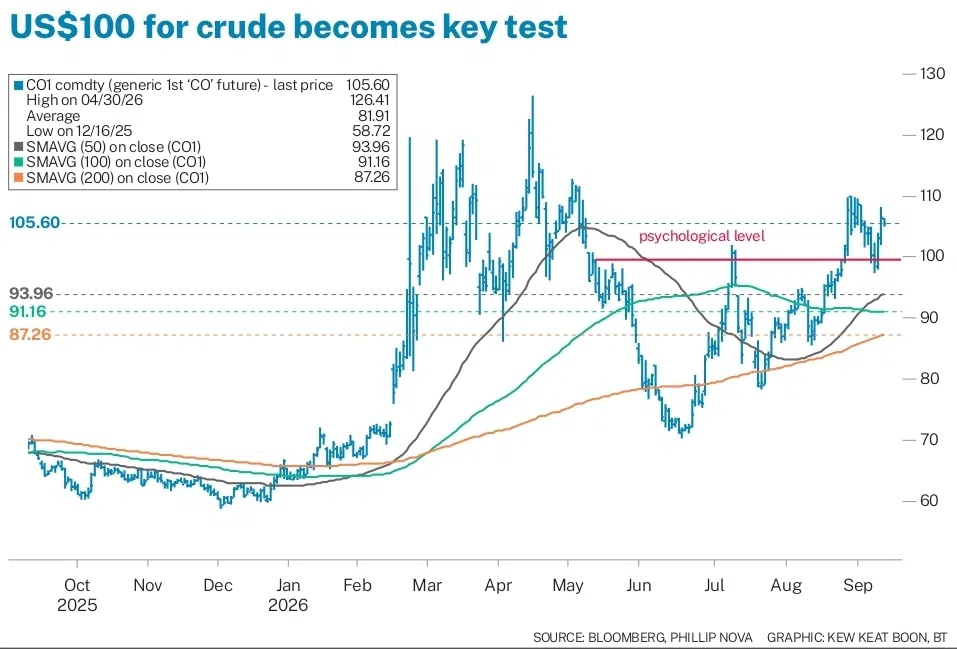
The latest moves in Brent illustrate the shift. Crude surged above US$100 a barrel as attacks on energy infrastructure and threats to oil flows through the Strait of Hormuz intensified. However, the risk premium has started to ease as Saudi Arabia moves to restore alternative export routes and hopes of diplomatic progress between the US and Iran have improved.
Technically, Brent is now at an important crossroads. The US$100 level has become both a psychological and technical threshold. Momentum has weakened, while the widening Brent-WTI spread highlights how much of the premium in international crude is still tied to Middle East supply risk. A sustained break below US$100 would suggest that the market is pricing a greater degree of supply normalisation. On the other hand, a firm hold above this level could signal that geopolitical risk remains embedded in prices. Beyond that, the US$110-US$113 area remains a significant resistance zone.
This creates a three-way tug of war between oil, yields and gold, with oil at the centre of the chain. Oil’s influence does not stop with energy prices. A sharp rise in crude can feed into transportation, production and consumer prices, forcing markets to reassess the inflation outlook and the path of monetary policy.
That tension has become more visible in the US Treasury market. The 10-year Treasury yield recently moved above 5 per cent, reaching its highest level since 2007, as higher energy prices added to inflation concerns. For markets, in a nutshell, the oil surge has helped flip the Fed narrative from easing at the start of 2026 to further tightening now. The Federal Reserve raised rates by 25 basis points to 3.75-4 per cent on Sep 16, its first increase since 2023, while 16 of 18 policymakers saw at least one further hike by the end of 2026.

For gold, this creates a difficult balancing act. Geopolitical uncertainty supports demand for a safe-haven asset, but the inflationary consequences of higher oil prices can push yields and rate expectations higher. The two forces can therefore work against each other, and recent price fluctuations have been a testament to it. As oil prices eased on diplomatic hopes, gold rebounded sharply, briefly approaching US$4,700. However, renewed concerns over a higher-for-longer rate environment and elevated Treasury yields have subsequently limited the upside.
Technically, gold is now caught between two closely watched moving averages: the US$4,350 50-day moving average and the US$4,400 100-day moving average. A decisive move above this zone would suggest that safe-haven and longer-term structural demand is regaining control. Failure to reclaim the zone, particularly if Brent and Treasury yields rise together, would leave gold vulnerable to renewed selling pressure.
The relationship between the three markets is therefore becoming increasingly important. Brent captures the immediate geopolitical risk; Treasury yields capture the inflation and monetary-policy response; and gold sits at the intersection of both. For investors watching gold, the next signal may not come from gold itself. It may come from Brent.
Decoding Asia newsletter: your guide to navigating Asia in a new global order. Sign up here to get Decoding Asia newsletter. Delivered to your inbox. Free.
Share with us your feedback on BT's products and services
TRENDING NOW

Once staunchly pro-China, Malaysian Chinese businesses are now distancing themselves from Beijing

Looking beyond looming CEO succession, should UOB potentially pursue a transformative merger?

Could stablecoins be the future of money?

Grab CEO’s wife Chloe Tong on life with Anthony Tan and finding her purpose

