



Petronas gears up for South-east Asia’s shift as net LNG importer
The company sees its facilities’ strategic location and diverse supply portfolio as key advantages

[BANGKOK] Even as the US-Iran war forces a global reckoning on liquefied natural gas (LNG), Malaysia’s Petronas remains optimistic that South-east Asia’s appetite for the fossil fuel is growing.
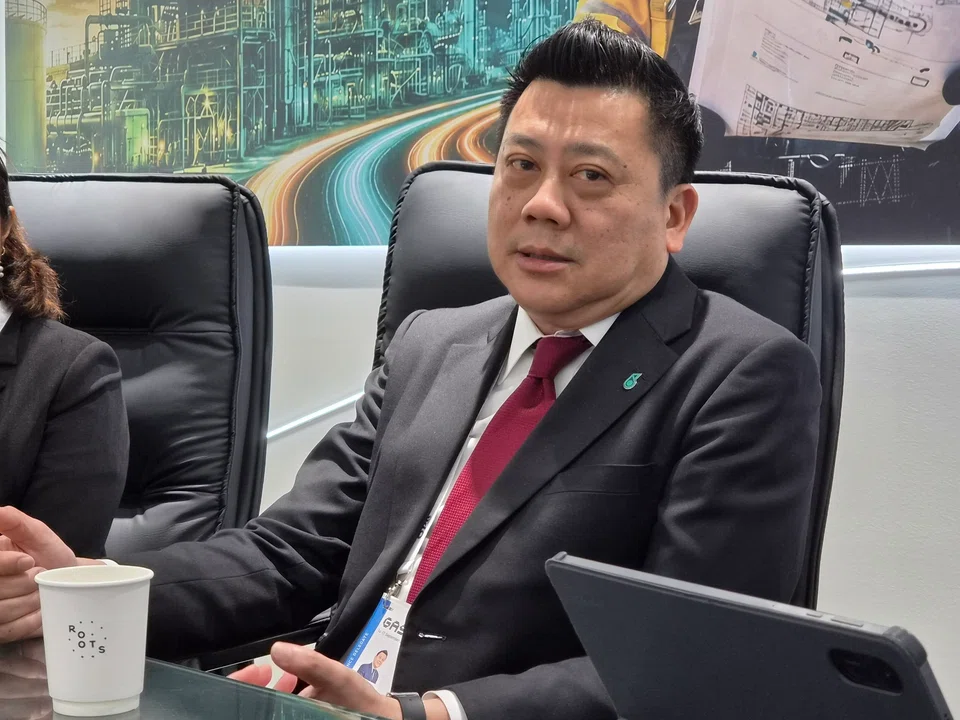
The company wants to serve rising demand from regional customers – leveraging the proximity of its production capabilities in East Malaysia, alongside its “new heartland” of Canada, said Rosdi Ab Rahman, CEO of Petronas LNG.
“The beauty of these two supply points is that they are pointing towards the Asia-Pacific, towards the big LNG demand; and of course South-east Asia is part of (it),” he told reporters on Sept 16.
He was speaking on the sidelines of the annual LNG-focused conference Gastech, held this year at the Bangkok International Trade and Exhibition Centre.
Petronas entered Canada in 2012 with the purchase of Progress Energy; in 2018, it bought a 25 per cent stake in LNG Canada, a Shell-led joint venture that is Canada’s first large-scale LNG project.
LNG Canada is also the first major North American LNG facility with direct access to the Pacific, shortening the voyages to Asia. It shipped its first LNG cargo to Japan last year.
South-east Asian growth
While Petronas’ major markets include Japan and South Korea, LNG demand there is “saturated”, noted Rosdi.
South-east Asia, in contrast, presents a growth story. The region is currently a net exporter of LNG, with key producers including Malaysia, Indonesia and Brunei.
But it could turn into a net importer of LNG from 2032, said Rosdi, citing industry forecasts.
He noted that LNG demand in South-east Asia is expected to grow from around 49 million tons per annum (MTPA) in 2028 to 80 MTPA by 2035 – translating to a compound annual growth rate of 10 per cent.
Two factors are driving this shift: declining production – with domestic gas reserves shrinking in Thailand – as well as surging demand for energy with the region’s hunger for artificial intelligence, data centres and the electrification of transport.
Growth markets for LNG include Singapore, Thailand, Vietnam and Cambodia, said Rosdi.
Petronas’ key asset is its 303-hectare production facility in Bintulu, Sarawak, with a capacity of 29.3 MTPA.
The company also has two floating LNG (FLNG) facilities off the coast of Sabah, with a collective LNG production capacity of 2.7 MTPA.
It is building a third FLNG with a production capacity of over 2.1 MTPA. This facility is expected to be ready by the second half of 2027, said Rosdi.
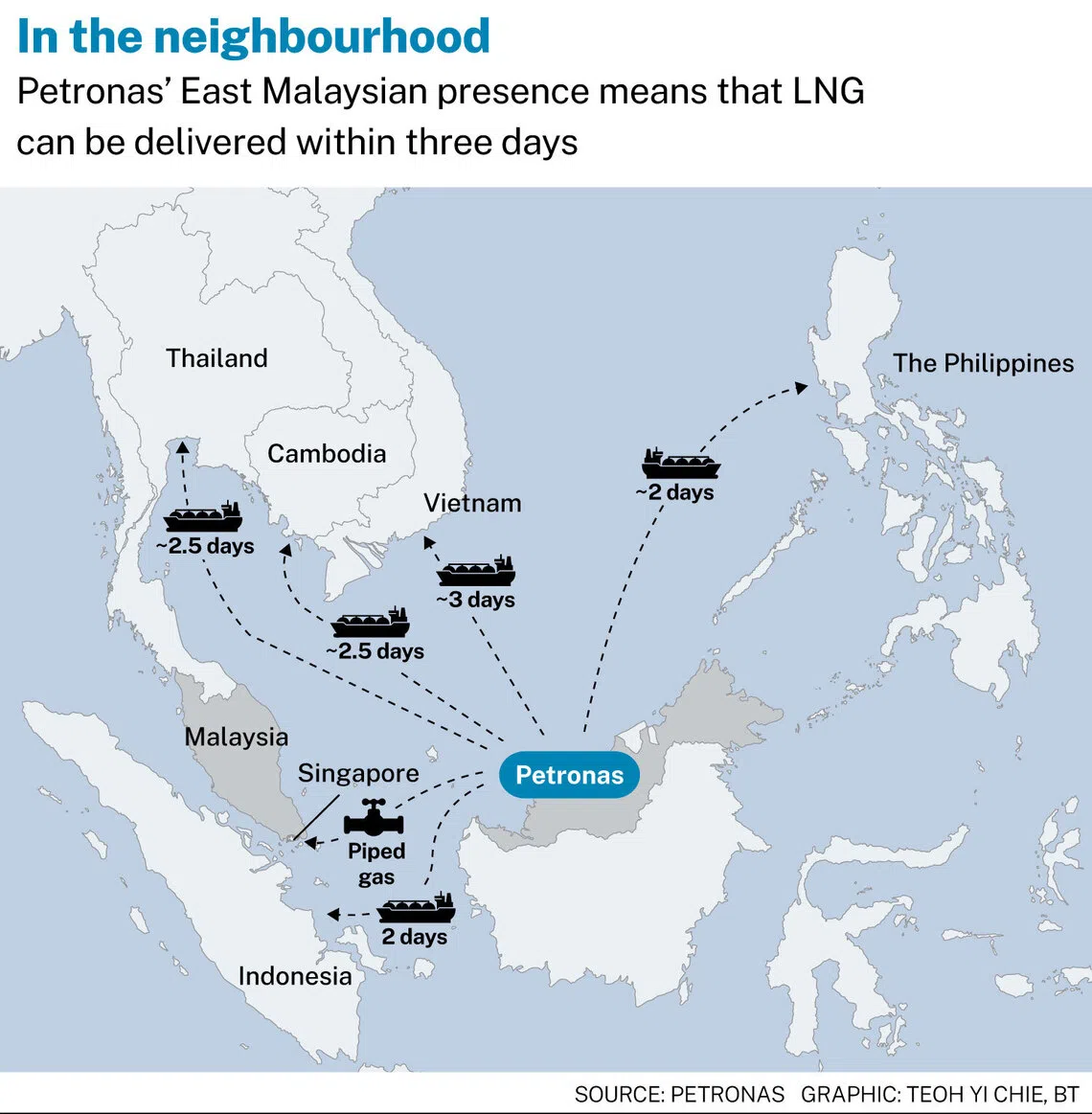
Highlighting Bintulu’s proximity to the rest of South-east Asia – cargoes can be delivered within three days – he added: “Petronas offers the nearest supply node to this emerging market (of) South-east Asia.”
The company has delivered over 200 LNG cargoes within the region since 2017 and is doing all it can to be a “reliable supplier” that fulfills rising demand, said Rosdi.
“We are trying to accelerate our upstream production to ensure that we have sufficient gas supply… (and) we are trying to rejuvenate the plant to make sure that (it) is always operating at the most optimum and efficient level,” he said.
Diversification for flexibility
Global diversification is another key focus: Petronas’ global LNG portfolio also includes joint ventures in Egypt and Australia, and supply from the US, UAE and Qatar.
With a diverse portfolio, the company hopes to offer customers more options amid the volatility of the Middle East conflict.
With the war, spot LNG prices “shot up” and some customers are questioning whether they should take on more long-term contracts, Rosdi noted.
Meanwhile, the duration of the conflict and trajectory of LNG prices remain uncertain.
Petronas is taking a flexible approach to negotiating prices and contract terms, Rosdi said, with an emphasis on what is commercially and operationally viable for both sides.
As he put it, the most important step is to understand customers’ needs and risk appetite, and “make sure that we both will survive for many more years to come”.
TRENDING NOW
Prima to move out of historic Keppel Road flour mill building in 2028
Temasek-related Azalea, SeaTown, Seviora Capital to merge in 2027
Family offices see more tailored products, leverage ‘collective firepower’ for direct deal access

Singapore room rates soar, but hotels seeing mixed demand from F1 race and events

