With Powell’s Fed ready to cut rates, a new era of cheap credit beckons
The Fed chairman could use his press conference to preach patience and reprimand policy speculators if the decision is a more modest quarter-point cut
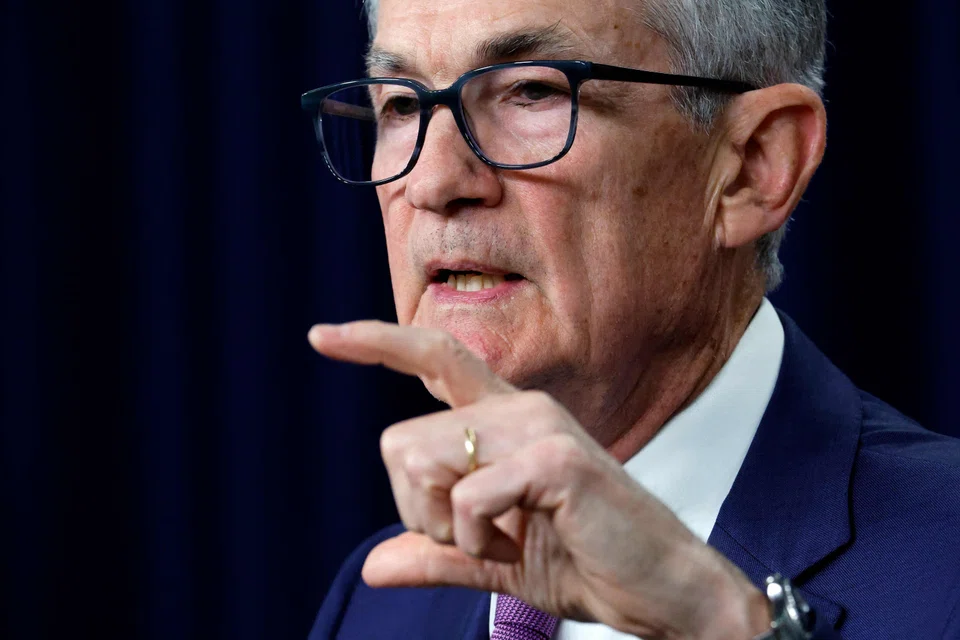
THE US stock market has been stamping its proverbial feet for more than a year now as it demands an interest rate cut from the central bank.
And yet, when Jerome Powell and the US Federal Reserve present the gift, as expected, wrapped in a big red bow on Wednesday (Sep 18), the multi-trillion-dollar spoiled child might still throw a massive tantrum.
The Fed is very likely to cut interest rates by a quarter-of-a-percentage point from the current level of between 5.25 and 5.5 per cent, and promise more cuts in the months to come, Wall Street strategists say. Unfortunately, the markets are positioned for a half-a-percentage point cut.
A rate cut of any size will immediately bring down mortgage rates, which are already at a one-year low of below 7 per cent.
Even if the drop in mortgage rates is marginal, there should be a surge in property-market activity. Homebuyers have been waiting on the sidelines because of an unusual situation where media outlets in the US and around the world started to report that Fed rate cuts would begin in September.
The cheaper credit should also break a mini-freeze in corporate merger activity, said Goldman Sachs chief executive David Solomon last week.
And so, intuitively, Wednesday – the day of a rate cut that was first mooted in late 2023 – should be a celebration. But the stock market is always a counterintuitive creature. It celebrates events before they happen rather than after them. And this time, the celebrations may have gotten way ahead of themselves.
Last Friday, cyclical stocks surged, including the small-cap Russell 2000, the index of domestically focused small caps that is the most sensitive to Fed policy, testing highs for the year.
The reason? An unusual move on the Fed funds futures market, where bond investors buy insurance for future central-bank moves.
Earlier in the week, mixed inflation data – price increases were in line with expectations as inflation moderated but did not go away – and resilient jobs data had caused the market to coalesce around a quarter-of-a-percentage point cut. The odds of a bumper 50-basis-point cut went close to zero.
No matter that every major Wall Street brokerage and several Fed officials have warned a bumper cut is highly unlikely.
The shifts in economic and inflation data are simply not drastic enough to warrant a major cut, they warn. Jobs growth is slowing, but the increase in the unemployment rate – less than a half-a-percentage-point in the space of a year – is not sounding any alarm bells.
Even if there were a labour-market emergency, the Fed might hesitate to cut aggressively because of persistent pockets of inflation. The cost of shelter in the US, which includes rate-sensitive categories such as mortgage payments and rent, rose 5 per cent in September from a year earlier.
Dramatic start
“This presents a quandary for those at the Fed who have just recently said we need more confirmation that inflation is coming down at an acceptable pace before we are comfortable cutting rates,” said Quincy Krosby, chief global strategist at brokerage LPL Financial. “The Fed has to thread the needle.”
Still, stocks and the Fed funds futures market blithely price in a dramatic start to the rate-cutting cycle.
In the past, Powell has bridled at perceptions of market pressure on the central bank, scolding stock investors several times during the Fed’s rate-hike cycle, most recently warning of “premature” rate-cut talk in December 2023. One brokerage warned that the Fed may be reluctant to spur further policy speculation by making a jumbo cut.
“If the Fed cuts by 50 basis points, markets would likely price in a much faster and deeper cutting cycle than the data warrant,” noted analysts at brokerage Bank of America Global Research.
The central banker could use his press conference this week to preach patience and reprimand policy speculators, if the decision is a more modest quarter-point cut.
If the Fed does decide to go big, in a statement of intent to save the US from a recession, the stock market will initially jump for joy.
It’s possible that the laughter about a 50-basis-point could soon turn to tears, however. If the Fed is moving with such urgency, it typically means the central bank perceives the onset of a major economic downturn, and that’s not a good thing, pointed out JJ Kinahan, chief executive of IG North America and president of its brokerage tastytrade.
Another dose of tough love from the Fed chairman could put a dampener on the long-awaited celebrations. But the likelihood that the central bank will prime the pump for several more cuts in the coming months means that any selloff is unlikely to last too long.
A new era of cheap credit will begin on Wednesday, even if it begins with tears and gnashing of teeth rather than the popping of champagne corks.
“A soft landing is phenomenal,” said Oliver Pursche, senior vice-president at financial advisory Wealthspire. “It’s great for most people, but it will disappoint some investors who are looking for more aggressive rate cuts.”