

Quick takes: Singapore banks touch earnings estimates, restore dividends

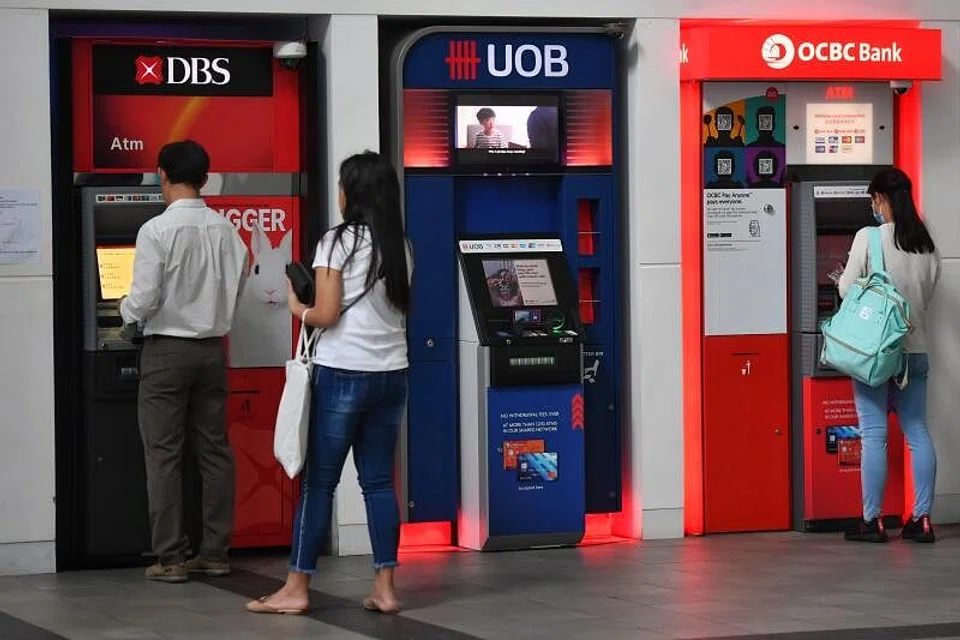
WITH DBS closing the results season on Thursday, all three Singapore banks have restored their dividend payouts to pre-pandemic levels.
Analysts have expected the banks - which are highly capitalised - to be able to normalise their payouts, following the lift in dividend cap by the regulator.
The Monetary Authority of Singapore (MAS) in July lifted its dividend cap on locally incorporated banks and finance companies based in Singapore. It joins other central banks that have recently eased dividend restrictions imposed on banks last year, as the global economy rebounds amid gradual reopenings and rapid vaccine roll-outs.
All three banks also posted higher earnings that hit or were in line with estimates, as they posted smaller allowances than that from the year-ago period.
That said, the banks are watching how the Covid-19 pandemic will continue to hit their exposure in regional markets such as Malaysia and Indonesia. There has also been a spike in Covid-19 infections in China with the spread of the Delta variant, with China-Asean flows a key driver of growth for banks here.
The banks have taken allowance buffers for their regional exposure, and DBS remains the only bank that has taken writebacks on its general provision. In Q2, DBS included a general provision writeback of S$85 million, though this is a lower general provision writeback compared with that in the last quarter of S$190 million.
Shares of D05 and U11 were up as at lunch break on Thursday, while O39 traded lower. Here are their results:
DBS
DBS's net profit for its second quarter rose 37 per cent as it joined its peers in posting a smaller allowance from the year-ago period, it said on Thursday.
It declared a quarterly dividend of S$0.33 per share, restoring dividend payout to its pre-pandemic level. This brings its first-half dividend payout to S$0.51 per share. DBS suspended its scrip dividend scheme.
Net profit for the three months ended June 30, 2021, stood at S$1.70 billion, compared with S$1.25 billion from the year-ago period. The earnings beat the S$1.47 billion consensus forecast in a Bloomberg survey of five analysts.
Its profit before allowances was 9 per cent lower than a year ago, as higher business volumes were more than offset by a lower net interest margin and a decline in investment gains.
DBS said asset quality has performed better than expected, with improving economic environment. Its new non-performing asset formation and specific provisions are at pre-pandemic levels as at first half of this year.
Allowances stood at S$79 million, down 91 per cent from the year-ago period. This included a general provision writeback of S$85 million - a lower general provision writeback compared with that of the last quarter of S$190 million.
OCBC
OCBC's net profit for its second quarter rose 59 per cent, riding on an improved economic outlook.
It declared a dividend of S$0.25 per share for the period. On absolute terms, this is the same interim dividend payout that it had paid in 2019. The payout ratio is at 42 per cent, which is within the range of 40 to 50 per cent.
Net profit for the three months ended June 30, 2021 stood at S$1.16 billion, compared with S$730 million from the year-ago period. The earnings were in line with the S$1.14 billion consensus forecast in a Bloomberg survey of five analysts.
Although there has been a spike in Covid-19 infections in China with the spread of the Delta variant, OCBC's group CEO Helen Wong expressed confidence in the authorities bringing the situation under control.
"The domestic economy is actually recovering very well. If you call it a setback, I'll actually call it more of a normalisation. It is a very big economy, and it continues to manage to grow in the mid to high single-digit average GDP. It is very admirable."
The bank's chief financial officer Darren Tan said the bank has set aside allowances in the second quarter as a "buffer against potential credit deterioration" in the region, in view of the pandemic's resurgence in South-east Asia.
Allowances for impaired assets stood at S$283 million for the first half of the year and were "mainly for various corporate accounts for Malaysia and Indonesia", in the second quarter. The bank expects to see an increase in relief loans from the two countries in the coming quarter, he said.
UOB
UOB's net profit for its second quarter rose 42 per cent, as more economies reopened and as it posted lower credit allowance.
The bank declared an interim dividend of S$0.60 per ordinary share. This translates to a dividend payout ratio of 50 per cent.
Net profit for the three months ended June 30, 2021 stood at S$1 billion, compared with S$703 million from the year-ago period. The earnings beat the S$968 million consensus forecast in a Bloomberg survey of five analysts.
When asked by the media on what justifies the bank's optimism in Asean, UOB's chief executive and deputy chairman Wee Ee Cheong said that it is due to a combination of reasons. "First of all, this (Covid-19) is a health crisis, this is not an economic crisis," he said. "Secondly, I think the selection of customer base is equally important."
While he acknowledged that Asean is still in the thick of the crisis, he noted that the respective central banks and government relief programmes have helped ease the pain.
Even with the bank's optimistic outlook, chief financial officer Lee Wai Fai said that it is not the time to write back general provisions. This comes as Covid-19 and general economic conditions have not improved to the extent that he will consider doing so.
There remain worries too that increasing Covid-19 cases in the region could drag down SME customers.
To add, the Covid-19 crisis remains challenging in the Asean region, with economic recovery potentially coming in at a "lower pace" and towards next year, added Mr Lee.
Here are some analysts' comments:
Citi's Robert Kong and Tan Yong Hong on DBS: Fee income for Q1 and Q2 highest on record, treasury markets income are at new highs. Good business momentum with healthy loan and transaction pipelines. Asset quality is better than expected with non-performing assets (NPA) formation and specific provisions at pre-pandemic levels.
Citi's Robert Kong and Tan Yong Hong on OCBC: Q2 2021 credit costs rose to 30 basis points (bps) in Q2 2021 from 22 bps in Q1 2021. The quarter-on-quarter rise in credit costs is due to management taking additional overlay general provisions (GP) for asset quality risks that could arise from high Asean Covid cases or lockdowns and for Malaysia, a new six-month loan moratorium.
Citi's Robert Kong and Tan Yong Hong on UOB: GP reversals are likely only post-pandemic, from 2022. Management expects some uptick in loans relief and delinquency in the region but views that GP of S$3 billion (including overlay provisions of S$1.2 billion) is sufficient to cover these contingencies.
CGS-CIMB's Andrea Choong and Lim Siew Khee on OCBC: Management has a more cautious asset quality outlook given resurgence of Covid-19 cases and consequent lockdowns in Malaysia and Indonesia. While some 40 per cent of new NPA formation in this quarter were due to corporate exposures in the two countries, the group's nonperforming loan ratio held steady at 1.5 per cent. While management reiterated its stance on paying sustainable and predictable dividends, there is scope for a higher payout in the second half of the year, given its track record of steady asset quality, the management overlay buffer, lack of a merger or acquisition target and robust income streams across banking, wealth and insurance.
CGS-CIMB's Andrea Choong and Lim Siew Khee on UOB: The bank saw steady loan growth momentum although regional economic recoery remains uneven. The two positive surprises for this quarter include a higher interim dividend per share and a reduction in management's credit cost guidance, both of which reflect the bank's view of an acceleration in economic ecovery going into the next financial year. Segment of concern largely centres around its business banking book in Malaysia and Thailand. Going forward, UOB's wealth strategy will propel growth
Maybank Kim Eng's research head Thilan Wickramasinghe on OCBC: Early signs of inflection with stabilising margins, rising loan growth and increasing fee momentum. Provisions are falling overall, but pockets of stress exist in Asean operations due to rising Covid-19 levels. The group is gearing towards North Asia and Singapore with a rising share in sustainability finance - half of Q2's lending was green - giving it a storng platform for medium term growth, while also providing upside risks for dividends.
Maybank Kim Eng's Thilan Wickramasinghe on UOB: With operating conditions improving in Singapore, North Asia, and other developed markets, growth momentum is set to increase in the second H2 FY21 with wider economic reopening. However, the group's exposure in South-east Asia may take longer to recover given fresh lockdowns and the resurgence of Covid-19. Still, strong provisioning and capital levels should provide sufficient offset for this risk. Dividend risks are on the upside.
Jefferies' vice president and equity analyst Krishna Guha on Singapore banks: Q2 results confirmed the improving economic growth outlook and asset quality especially for large corporates. Earnings are likely to be revised up; rate/yield curve movement will drive comparables for the next year. Overall, the three banks beat estimates accompanied by improvement in guidance and restoration of dividend back to pre-pandemic level. While there were few questions marks around capital/distribution policy (OCBC) and asset quality outlook (UOB), the results paint a picture of steady economic recovery albeit with ample fiscal and monetary support. We look for better pricing power amidst sustained expansion and are watchful of paybacks such as higher taxes.
Moody's vice president and senior credit officer Eugene Tarzimanov on Singapore banks: The results (from OCBC and UOB) are in line with Moody's positive view on Singaporean banks' profitability taken in March. While Moody's expects that non-performing loans will increase moderately over the rest of 2021 and 2022, particularly in OCBC and UOB's foreign operations, the banks' ample reserves and improved earnings provide them with very good buffers.
Alliance Bernstein's managing director Kevin Kwek on Singapore banks: 50 per cent payout can still be expected of DBS and UOB, given that we can see modest improvement momentum to bottom lines. CET 1 levels at about 14 per cent allow for such a payout ratio, considering loan growth expectations and capital consumption rate. Depsite a resurgence of Covid-19, growth could pick up over a one-and-a-half year time horizon, so banks will want to keep some in reserve, and just in case good M&A deals come along. For OCBC, however, despite management rhetoric on keeping dividends "sustainable and progressive", the bank had reverted to a lower-than-peers payout ratio. Street views are that the justification given isn't robust.
TRENDING NOW

Fed hike throws Singapore banks a margin lifeline; UOB most likely to feel impact

He built the Vingroup empire. Now South-east Asia’s richest man is handing some key roles to his sons

Real-estate veteran Desmond Sim quits from CEO roles at Realion, ETC
Chagee, Mixue and Luckin won the market. Sustaining their edge is the harder part

