

Keppel Reit wanted more of MBFC, but Hongkong Land’s 20-day deadline hobbled gearing fix
After the S$1.45 billion sale of its Tower 3 stake, Hongkong Land pumped its remaining MBFC interests into a new Singapore private real estate fund

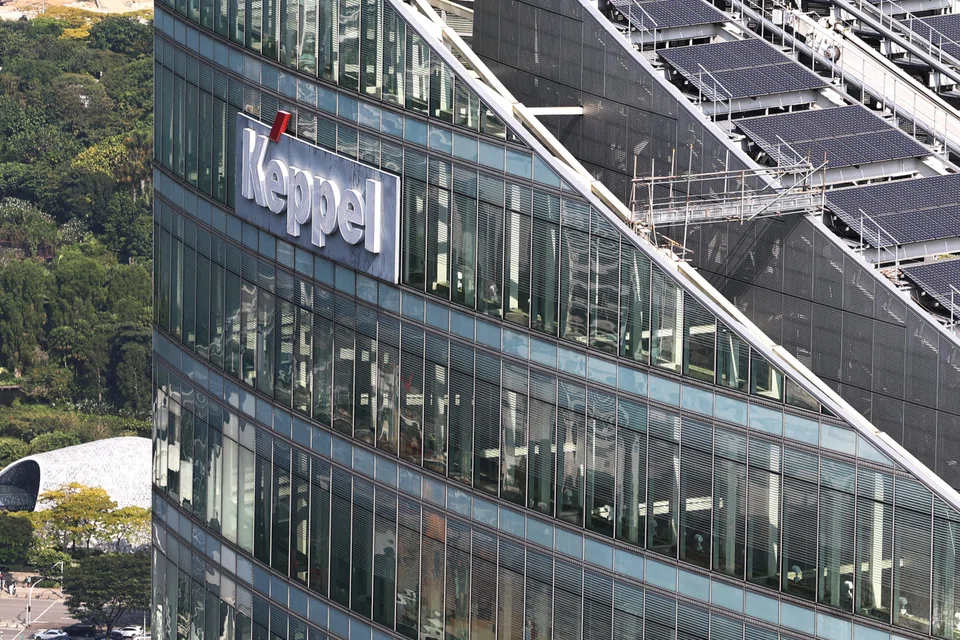
[SINGAPORE] Keppel Reit – which recently bought a one-third stake in Marina Bay Financial Centre (MBFC) Tower 3 from Hongkong Land for S$1.45 billion – was keen to snap up even more of the Grade-A commercial project, but was held back as its gearing neared the regulatory limit.
“These are good assets… we could not have acquired any more than MBFC Tower 3,” said Chua Hsien Yang, CEO of the real estate investment trust’s (Reit) manager, in a Tuesday (Dec 30) dialogue with the Securities Investors Association (Singapore).
The acquisition brought Keppel Reit’s pro forma aggregate leverage up to 49.9 per cent, which is just below the Monetary Authority of Singapore’s limit of 50 per cent.
The deal will be funded with 60 per cent equity and 40 per cent debt, instead of recycled capital through divestments.
“If we had the benefit of time, that is something we could have done,” said Chua. “However, we had only 20 calendar days to respond to the pre-emptive offer notices. There was no way we could have sold any asset within that limited time period.”
He said the manager therefore “had to let the offers for MBFC Tower 1, Tower 2 and One Raffles Quay lapse”. Hongkong Land pumped these remaining assets into a new Singapore private real estate fund when the right-of-first-refusal expired.
In response to queries from The Business Times, the manager clarified that Keppel Reit was only aware that the pro forma aggregate leverage would near the regulatory limit when it received the pre-emptive offer notices on Nov 21, 2025.
The manager added that the deadline to accept the offers was Dec 11, which was 20 days from the receipt of the notices. The deadline for the completion of the transaction was Dec 31 – 20 days from the date of acceptance.
RHB analyst Vijay Natarajan was “slightly negative” on the deal. He recommended on Friday that unitholders switch to Suntec Reit from Keppel Reit for office exposure.
SEE ALSO




Keppel Reit had previously bought one-third of MBFC Tower 3 from its sponsor Keppel. The remaining one-third is still owned by anchor tenant DBS.
Given its gearing ratio, the Reit is funding its latest stake purchase through an S$886 million preferential offering of over 923 million new units and 40 per cent debt.
Chua said the Reit’s “focus for 2026 will be on divestments to bring down aggregate leverage”.
To drive yield, Keppel Reit is banking on positive rental reversions and a structural unlock of S$8 million to S$10 million in annual tax savings, following its dilutive acquisition of an additional stake in MBFC Tower 3.
The manager also outlined a clear road map to recover value: capturing the 10 per cent gap between the property’s passing rents and market rates, while simultaneously executing a “tax transparency” conversion to secure immediate cash-flow savings.
“We believe that this deal will be accretive over time,” said Chua. He cited the “rental uplift potential” from the 30 per cent of leases expiring in the next two years.
Chua pointed out that third-quarter signing rent in 2025 was close to the breakeven passing rent, which is “not unreachable” as the Reit has already achieved rentals above that mark.
Additionally, the tax savings – expected to take six months to approve – will be unlocked through the Reit’s conversion of the property’s holding entity to a limited liability partnership.
The numbers provided by Keppel Reit’s manager indicated that if the purchase had been completed at the start of 2024, its distribution per unit (DPU) for that year would have been 6.4 per cent lower, assuming a blended debt cost of 3.3 per cent.
Even with a lower blended debt cost of 2.2 per cent, the DPU would still have been 3.6 per cent lower.
Despite this, Chua defended the acquisition as a “highly strategic opportunity” as the property is in a market that has no new office supply coming in the next few years.
With no new land to be released any time soon in the Central Business District and construction requiring at least five years, he believes the lack of new supply will support rental growth.
Chua said MBFC Tower 3 was prioritised for its resilience, citing the presence of DBS as a key tenant. He highlighted that the bank, a “globally recognised financial institution with an investment-grade credit rating”, provides “income security” that justifies the selection of this asset over others.
To address concerns regarding alignment with unitholders, the manager confirmed it would receive its management fees entirely in units.
Chua also pointed out that Keppel holds about a 37 per cent stake in the Reit, ensuring the sponsor is motivated to see the unit price perform.
“The management team is committed to continue delivering strong dividends for investors,” he added. “There are a lot of retirees that depend on our distributions and we are conscious of this.”
The Reit closed down 0.5 per cent or S$0.005 at S$0.97.
Decoding Asia newsletter: your guide to navigating Asia in a new global order. Sign up here to get Decoding Asia newsletter. Delivered to your inbox. Free.
Copyright SPH Media. All rights reserved.
TRENDING NOW

Once staunchly pro-China, Malaysian Chinese businesses are now distancing themselves from Beijing

Looking beyond looming CEO succession, should UOB potentially pursue a transformative merger?

Could stablecoins be the future of money?

Grab CEO’s wife Chloe Tong on life with Anthony Tan and finding her purpose

