Rising yields, oil prices put Asian equities in ‘tug of war’ with AI boom: HSBC
The bank’s strategist turns more positive on Asia, but says AI remains the region’s dominant growth story

[SINGAPORE] Asian equities are caught in a “tug of war” between mounting pressure from elevated oil prices and rising bond yields, as well as the continuing momentum from the ongoing artificial intelligence boom, said Herald van der Linde, head of equity strategy, Asia-Pacific, HSBC.
Van der Linde said that he turned “a little bit more positive” on Asian equities since the latest US Federal Reserve rate hike in September, in part because markets had already absorbed much of the expected impact from higher US interest rates.
“The good thing is that although the Fed raising interest rates (is) considered to be negative, a lot of that has been priced in,” he said.
Historically, Asian equities have typically underperformed in the run-up to the first Fed hike before performing better once rates start to rise, he added.
Still, the region’s growth story remains heavily concentrated.
“There is only one growth story in the region, and that remains AI or anything related to AI,” van der Linde said.
That makes it important to distinguish between markets rather than treat Asia as a single trade, he noted.
Currency risks would also be another factor to watch out for, as they have significant impact on equity returns in the region, he added. This is particularly for US dollar-based investors.
Hong Kong, for example, pegs its currency to the US dollar, while Taiwan operates a managed float.


In contrast, he said, markets with currencies that have depreciated substantially against the US dollar over the longer term, such as Indonesia and India, face a higher hurdle in delivering attractive US dollar returns.
Same themes, different story
Van der Linde identified South Korea and Taiwan as key beneficiaries of the AI boom, although their markets have followed somewhat different paths.
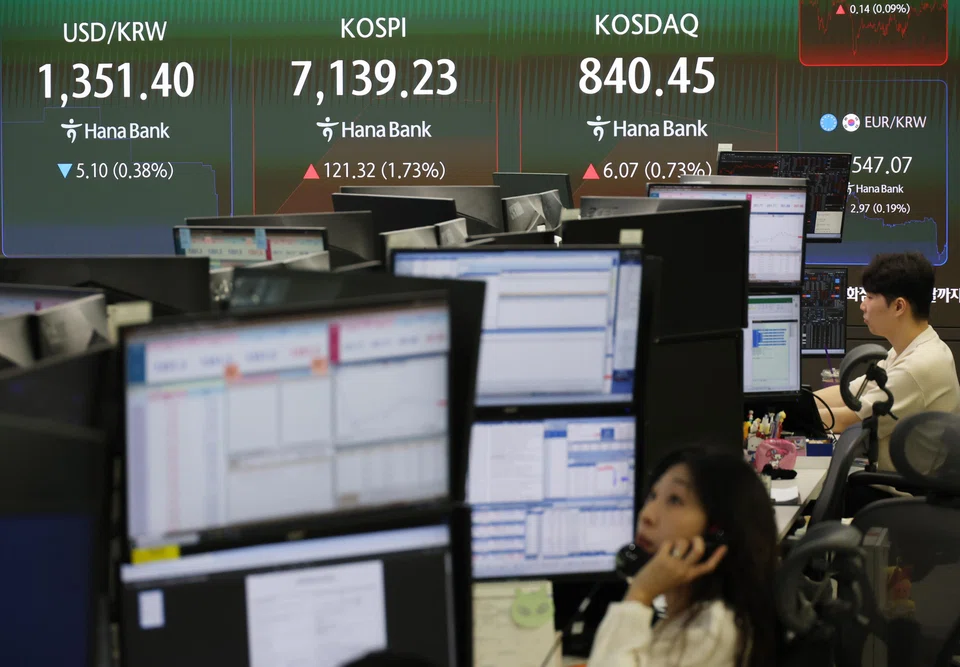
South Korea equities had become “quite speculative” in the middle of the year following a phenomenal run-up with some investors borrowing to buy stocks, he said.
“We were actually a bit nervous about this run-up in the first half of the year, because we felt that the dynamics in the market were just not healthy.”
The subsequent “washout” helped remove some of that excess, he added.
Beyond AI, he also identified other sectors where South Korea did well, including nuclear power and defence equipment, both of which are enjoying strong global demand.
Taiwan similarly benefited from the AI boom, led by semiconductor heavyweight TSMC, although van der Linde said speculative activity there was less pronounced than in South Korea.
In contrast, he described India as a “reasonably interesting market” under more typical circumstances, but said the strength of the AI trade in North Asia overshadowed India’s appeal, leaving investor demand “lukewarm at best”.
“If at some point in time the… AI run-up starts to falter, then people might look at a market like India,” he said.
In Japan, he pointed to pressure on the automobile industry due to competition from China, while highlighting opportunities in high-end AI semiconductors and banks.
Meanwhile, he saw Asean as a “mixed bag” – flagging strengths in Singapore’s banks given the relatively higher interest rates, while Malaysia and Thailand benefit from data-centre investment.
Greater China still under pressure
For Greater China, van der Linde drew a distinction between the mainland economy, Chinese companies listed in Hong Kong and Hong Kong’s domestic economy.
In Hong Kong, he noted that higher interest rates have been stalling the growth of the property market, while retail was also slowing as consumers headed to Shenzhen – a neighbouring city they commonly go to for F&B and shopping.

The city’s recent initial public offering boom could “cool a bit”, even though the pipeline remained strong, he noted.
“China is curtailing the money coming (from) China into Hong Kong – that means some of the steam will be taken out of the IPO market.”
For Chinese companies listed in Hong Kong, specifically Hong Kong technology stocks, he noted that they were very sensitive to bond yields and could fare better if yields retreat from current highs.
As for China’s economy, the bigger constraint was not the lack of liquidity but weak confidence among consumers and in the property market, he said.
Nevertheless, he highlighted bright spots in the economy, such as biopharmaceuticals and banks.
Moving forward
Van der Linde expects bond yields to come down from highs, which could provide some support for Asia’s equity valuations. However, he said investors could get “a bit less comfortable” with the AI theme as more AI-related equity supply comes to market, including potential large IPOs.
HSBC’s equity strategy team remains “risk on”, with van der Linde saying investors should remain fully invested in equities.
“Ultimately, in the longer run, it is about how innovative Asia is, how (well) it can adapt, how (well) it can create new markets,” he said.
“Very often we look at all these macro things and say this is not good for equities,” he noted. “But what drives it is simply companies being innovative and entrepreneurial – and as long as that happens, markets can do very well.”
Decoding Asia newsletter: your guide to navigating Asia in a new global order. Sign up here to get Decoding Asia newsletter. Delivered to your inbox. Free.
Copyright SPH Media. All rights reserved.