Samsung sees AI chip shortage worsening, keeps investors in suspense on returns
The firm reports an operating profit of 107.4 trillion won for the July-to-September period
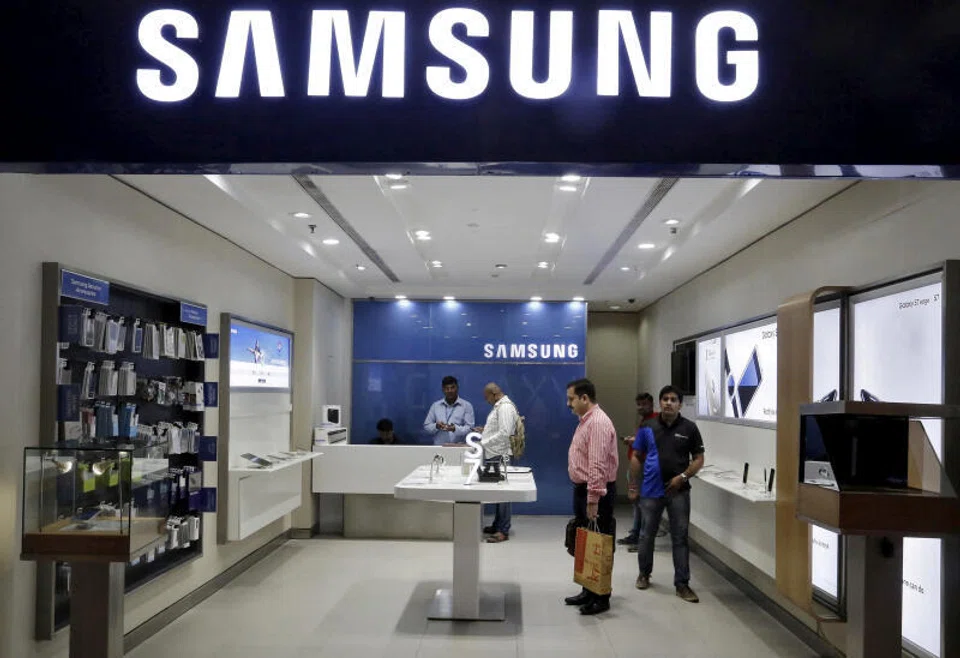
[SEOUL] Samsung Electronics posted a 15 times jump in quarterly chip profit on Thursday (Oct 29), powered by the artificial intelligence boom, but its shares tumbled as investors balked at a lack of fresh shareholder-return plans and an outlook that lagged rival SK Hynix’s.
Samsung shareholders’ hopes were up as SK Hynix on Wednesday reported better-than-expected earnings and an upbeat outlook while spelling out plans to return about US$75 billion to shareholders in 2026.
“SK Hynix did quite a lot more than expected yesterday ... it went beyond market expectations, but Samsung Electronics hasn’t really changed anything from the guidance it gave before,” said Lee Min-hee, analyst at BNK Investment & Securities.
SK Hynix said on Wednesday its dynamic random-access memory and high-bandwidth memory (HBM) chips were sold out through 2029 and the chip shortage would persist to 2030, helping ease market concerns that AI-driven chip earnings could lose momentum.
Samsung said its HBM supply has been sold out for 2027, with key customers requesting more of the key chips used in AI data centres, and gave a more conservative view than SK Hynix on how long the supply gap would last.
“In 2027, the (memory) business expects AI infrastructure capital expenditure to reach a historic level as the AI ecosystem expands,” it said in a statement.

“Increasing AI-driven demand will far exceed the industry supply in comparison with 2026.”
Samsung said the chip market is expected to remain tight through 2028, saying it will take time to build new fabrication plants despite a sharp increase in capital spending for its chip division in 2027, after a 62 per cent jump to 76.8 trillion won in 2026.
Samsung reported operating profit of 107.4 trillion won (US$80 billion) for the July-to-September period, in line with its estimate and up from 12.2 trillion won a year earlier.
SEE ALSO



Its semiconductor operating profit jumped to 106.5 trillion won, accounting for almost all of the group’s total profit, but that was slightly short of analysts’ estimate of 107.3 trillion won, according to LSEG.
Its shares opened higher then reversed course, falling as much as 6.2 per cent in morning trade, while SK Hynix rose 0.7 per cent.
“Samsung’s decline was likely attributable to its outlook on how long the memory shortage would last, which came across as marginally less bullish than SK Hynix’s commentary yesterday,” said Jing Jie Yu, an analyst at Morningstar.
January decision on returns
The company previously said 2026’s shareholder returns would total between 90 trillion and 110 trillion won including 30 trillion won in third-quarter dividends.
On Thursday, it said it would finalise its next shareholder return policy in January.
“The market appeared to expect an additional buyback and/or dividend announcement, but the company deferred the decision until late January, potentially disappointing near-term expectations,” CLSA senior analyst Sanjeev Rana said.
While demand for AI chips is expected to remain resilient, concerns about financing for AI infrastructure and rising competition from China have weighed on chip stocks in recent months.
Google parent Alphabet reported on Wednesday a massive acceleration in cash burn as it poured resources into building out AI.
New long-term customers
The pace of memory chip price gains is slowing as chipmakers sign more long-term supply contracts and higher chip prices weigh on demand from smartphone and personal computer makers.
Samsung said it has signed long-term supply contracts with 10 major customers and is in talks with another 10, aiming for such agreements to account for 60 to 70 per cent of its total production capacity by 2030.
It is expanding long-term sales beyond AI-related firms, such as hyperscalers, to include mobile and automotive customers, it said.
Analysts said Samsung’s foundry business remained at a loss, weighing on its chip division earnings.
However, Samsung said its foundry business experienced a notable revenue improvement on sales of the logic die for HBM chips and order wins in advanced two-nanometer chips from hyperscalers and other AI customers.
It will start mass production in 2027 at its Taylor plant in Texas, making chips for Tesla, while considering building a new fab to meet demand for advanced, two-nano chips.
Higher memory chip costs shrank margins in Samsung’s mobile business, which fell to a loss of 800 billion won. REUTERS
Decoding Asia newsletter: your guide to navigating Asia in a new global order. Sign up here to get Decoding Asia newsletter. Delivered to your inbox. Free.
Share with us your feedback on BT's products and services