

Sasseur Reit eyes South-east Asia for next phase of growth as it looks beyond China
It will explore small to mid-sized opportunities in markets such as Malaysia, Vietnam and Indonesia

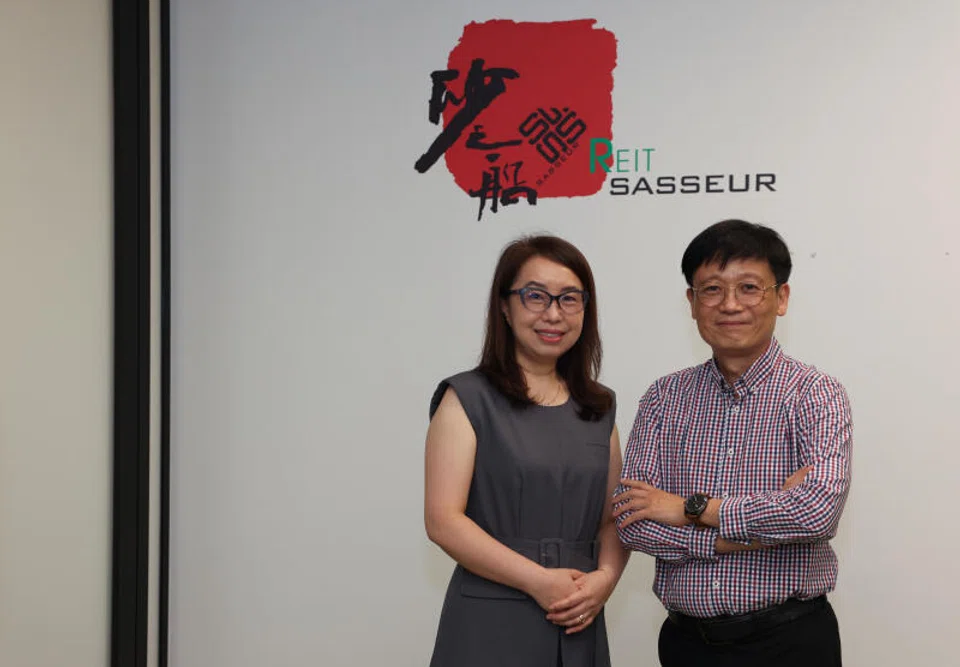
[SINGAPORE] Eight years after listing on the Singapore Exchange with four outlet malls in China, Sasseur Real Estate Investment Trust (Reit) is setting its sights on South-east Asia as it seeks to expand beyond its home market.
“My hope is that within the next three to five years, we can really internationalise Sasseur Reit – meaning it is no longer just a China-focused outlet platform, but an international one across this region,” CEO of the manager Cheng Hsing Yuen told The Business Times.
South-east Asia, supported by an expanding middle class, rising tourist arrivals – including from China – and a growing number of Chinese brands entering the region, was identified as a key growth market.
“Our approach to South-east Asia will be measured and pragmatic. We will start with markets and assets we can execute with minimum risk,” said Cheng.
He added that the Reit will focus on partnerships with local operators possessing on-the-ground expertise. For a start, it will look at small to mid-sized retail assets in “relatively mature markets”, such as Malaysia, Vietnam and Indonesia.
Sasseur Reit is also evaluating potential assets in Singapore, although low capitalisation rates of about 3.5 per cent or below pose a hurdle to deals that are accretive to distribution per unit (DPU).
China remains part of growth strategy
The move to widen its search beyond China also comes as the growing China Reit (C-Reit) market has pushed up valuations of quality outlet assets, creating greater competition for Sasseur Reit, said Cheng.
Still, China remains an important market, given the growing demand for value-driven retail and what he sees as an under-penetrated outlet sector. There are fewer than 300 outlet malls in China, compared with about 7,500 traditional shopping malls, he noted.
“As and when, if there are any properties or outlet malls that meet a few criteria – stable income, good location and being accretive to us – we will still look at them.”
One potential avenue for future acquisitions could involve the sponsor incubating retail assets and introducing its operational expertise before Sasseur Reit considers acquiring them once they mature and generate stable income.
In China, this could include smaller outlet malls managed by the sponsor on behalf of third-party owners, including property developers looking to divest assets amid headwinds in the sector, Cheng said.
Currently, Sasseur Reit’s portfolio comprises four outlet malls in China:
- Sasseur (Chongqing Liangjiang) Outlet;
- Sasseur (Chongqing Bishan) Outlet;
- Sasseur (Hefei) Outlet; and
- Sasseur (Kunming) Outlet.
Portfolio occupancy stood at 98.8 per cent as at end-2025 and annual shopper traffic reached 17 million. The portfolio recorded 4.6 billion yuan (US$684.4 million) in sales in 2025, up 2.6 per cent year on year.
For the first half of 2026, the Reit had a 10.2 per cent increase in DPU to S$0.03366, from S$0.03055 for the year-ago period; this was driven by resilient portfolio sales growth and lower finance costs.
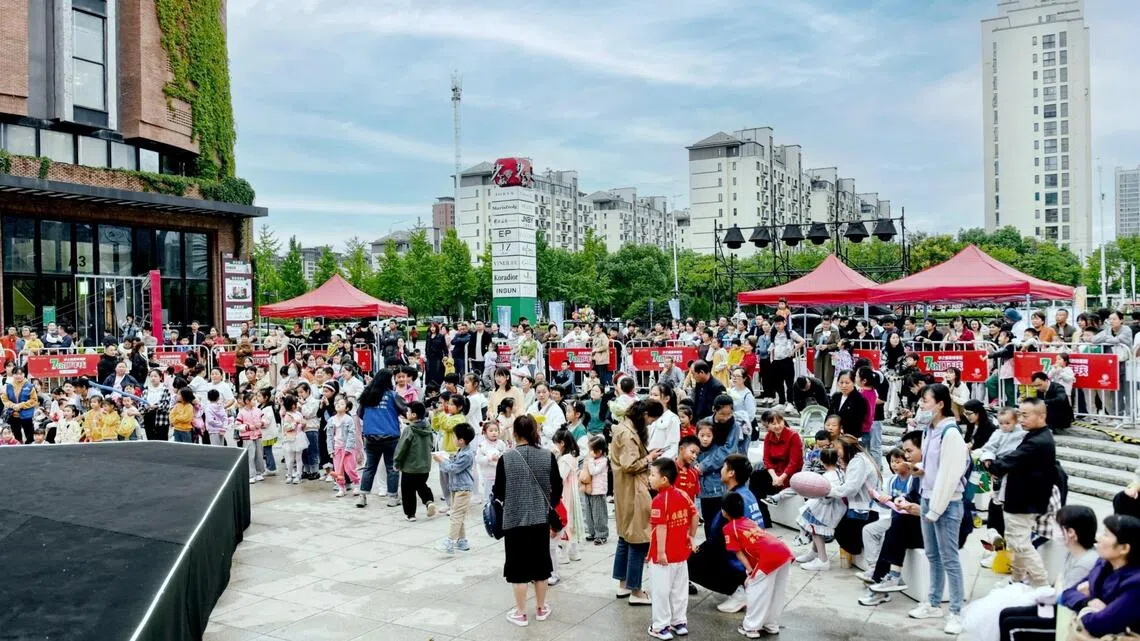
Rental income, under its entrusted management agreement (EMA) model, rose 4.3 per cent on year to 350.7 million yuan in H1.
In Singapore dollar terms, EMA rental income rose 6.8 per cent year on year to S$65.4 million, reflecting higher rental income and the appreciation of the renminbi against the Singdollar during the period.
EMA framework under review
Alongside its growth plans, Sasseur Reit is reviewing the EMA framework ahead of its expiry in March 2028 – a process that chief financial officer of the manager Ella Jia described as “the biggest project” for the Reit at the moment.
Under the model, an entrusted manager handles the day-to-day operations of its outlet malls, where gross revenue is largely commission-based and linked to tenant sales. Sasseur Reit receives a fixed rental component with a built-in 3 per cent annual increase, as well as a variable component tied to outlet sales, allowing it to participate in any sales upside.
The structure is intended to provide unitholders with income stability and downside protection through the fixed component, while retaining exposure to growth in outlet sales through the variable component.
The Reit manager noted that the current EMA was “designed in 2017/2018, when the assets and China’s retail environment were quite different”. “Since then, the retail landscape, consumer behaviour, operating environment and the maturity of the assets have evolved.”
The review will take into account factors including growing consumer value-consciousness, changes in operating expenses borne by the entrusted manager and the longer-term performance of the assets.
The manager intends to retain the EMA structure, which it said has remained resilient through periods of disruption such as the Covid-19 pandemic.
It expects to provide greater clarity on the proposed terms before 2028, with the renewal to be put to unitholders for approval before the existing EMA expires.
C-Reit opens avenue for capital recycling
Separately, Sasseur Group listed its first C-Reit on the Shanghai Stock Exchange this year.
Cheng said the C-Reit gives the sponsor access to China’s domestic capital market and investor base, while Sasseur Reit provides access to international capital and a vehicle through which the group can expand beyond China.
“Our sponsor has told me that Sasseur Reit is just as important to him as the C-Reit,” Cheng said.
The C-Reit also offers higher domestic market valuations for China properties, establishing an avenue for capital recycling in future.
“If we have a good project in this part of the world and need capital, we could divest a property, recycle into the C-Reit, take the capital and invest it in this part of the world,” said Cheng.
Jia noted, however, that while such a transaction was technically possible, whether it would make strategic sense would depend on broader considerations beyond valuations, including differences in investor bases and market structures.
Still, there are no acquisitions in the immediate pipeline and Cheng expects inorganic growth to materialise over the medium term.
In the meantime, the manager is focused on extracting further organic growth from its four existing outlets, including optimising its tenant mix to keep pace with changing consumer preferences and increase dwell time, ramping up experiential retail offerings and undertaking asset-enhancement initiatives.
When acquisition opportunities do arise, Sasseur Reit has considerable balance-sheet headroom to support its growth ambitions.
Aggregate leverage stood at 25.6 per cent as at end-June – the lowest among the S-Reits – while its cost of debt fell to 3.7 per cent in H1, its lowest since listing, from 4.4 per cent in 2025 and about 5.3 per cent in 2024 following a series of refinancing exercises.
Cheng believes the Reit has yet to fully tap that capacity.
“We are not yet maximising the value of this platform,” he said. “We have lowered interest rates and our gearing is one of the lowest in the market – we should make use of that headroom.”






