Scalability of digital assets hinges on ‘boring’ risk-management systems: summit participants
SGX’s chief risk officer says sound risk management is not necessarily at odds with innovation
[SINGAPORE] The next stage of growth for digital finance will be determined by the ability to innovate and achieve scale while managing the attendant risks, said industry observers at the Digital Assets Summit 2026 on Tuesday (Oct 6).
The one-day event held at SGX Centre and hosted by the Digital Assets Association (DAA) Singapore brought together leading digital finance projects, financial institutions and legal professionals to explore the transformative power of digital assets.
Industry players who delivered speeches and engaged in panel discussions covered topics such as how digital assets are being integrated in financial markets, the changing role of financial intermediaries, AI’s growing role in finance and the interoperability and regulatory coordination needed to connect global markets through digital finance.
Danny Chong, the co-chair of the Digital Assets Association who delivered the opening address, said: “We know we can tokenise an asset. The harder question is whether we can build a functioning market around it. Can it trade at scale? Is there enough liquidity? What does it settle against? And can we manage the risk around it?”
He added that these questions may sound less exciting than launching a token, “but anyone who has spent time in the markets knows that the boring parts are usually where the real markets are built, and that leads to what I think is the defining challenge for the next space”.
Senior Minister of State in the Prime Minister’s Office Desmond Tan, who was the guest of honour, said that while technologies like tokenisation and distributed ledgers can simplify certain processes and reduce operational friction, they can introduce new vulnerabilities.
“They can also create new dependencies on digital infrastructure and networks that institutions may not have (direct) control or ownership over,” he said.
“In short, technology does not eliminate risk, but relocates that risk, from one vulnerability to another. The challenge here is understanding where the risk resides and ensuring accountability remains clear.”
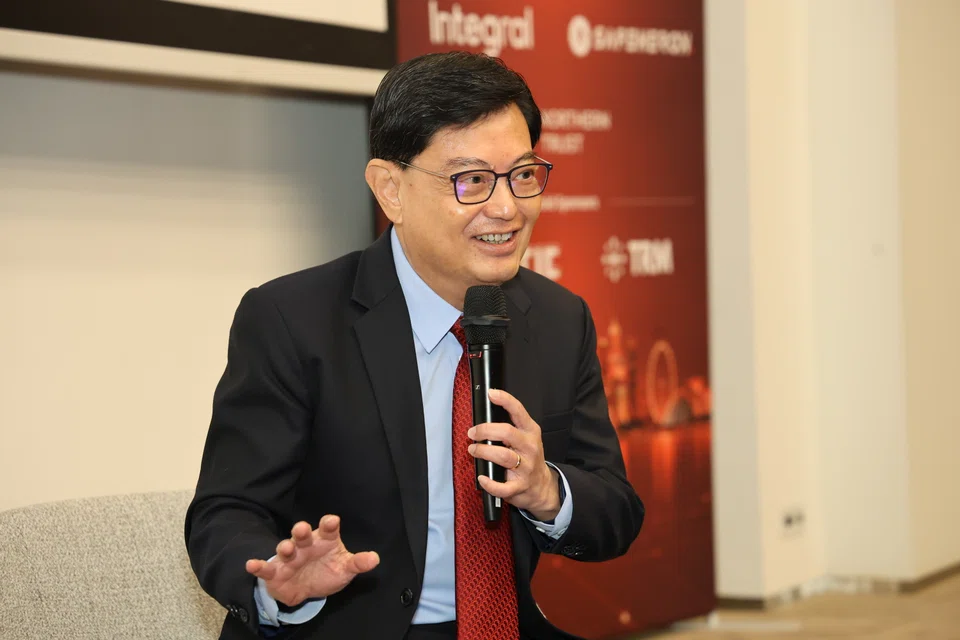
In a separate fireside chat at the event, Heng Swee Keat, chairman of the National Research Foundation, said: “The truth of the matter is that we are at a very early stage of this digital finance and tokenisation. The possibilities, the potential, is there, but how do you manage the risk?
SEE ALSO


“If the financial system is under stress, how would you manage that stress? Because I don’t think you can operate a financial system by assuming that you stay stable forever.”
For this reason, he encouraged the industry to explore how innovations like artificial intelligence, digitalisation and quantum computing will fundamentally reshape finance, while also considering the risks involved.
Ivan Han, chief risk officer at the Singapore Exchange, noted in his keynote speech that he does not view sound risk management as being in conflict with innovation.
“It provides confidence, discipline (and) safeguards that turn a promising idea into something institutions can use at scale,” he said, noting that institutions commit capital when they understand the risk.
“Regulators support innovation when they have confidence in the safeguards, and markets grow when participants trust that the infrastructure will work on a normal day and on the most difficult day,” he added.
Chong of the Digital Assets Association said Singapore is in the position to serve as “one of the places where networks connect, where institutions have confidence, and where new markets can scale”.
“If we can hold together liquidity, connectivity, and confidence, programmable finance becomes much more than a technology story,” he said. “It becomes a market story, and potentially a new chapter in how global finance itself is built.”
Decoding Asia newsletter: your guide to navigating Asia in a new global order. Sign up here to get Decoding Asia newsletter. Delivered to your inbox. Free.
Copyright SPH Media. All rights reserved.