

Sembcorp furthers green pivot with latest acquisition in China; observers say risks present but surmountable

SEMBCORP Industries' U96 announcement of its acquisition of a stake in Chinese renewable energy company State Development Investment Corporate Group (SDIC) New Energy is yet another move that will bring the conglomerate closer to its goal of transforming its portfolio from "brown to green".
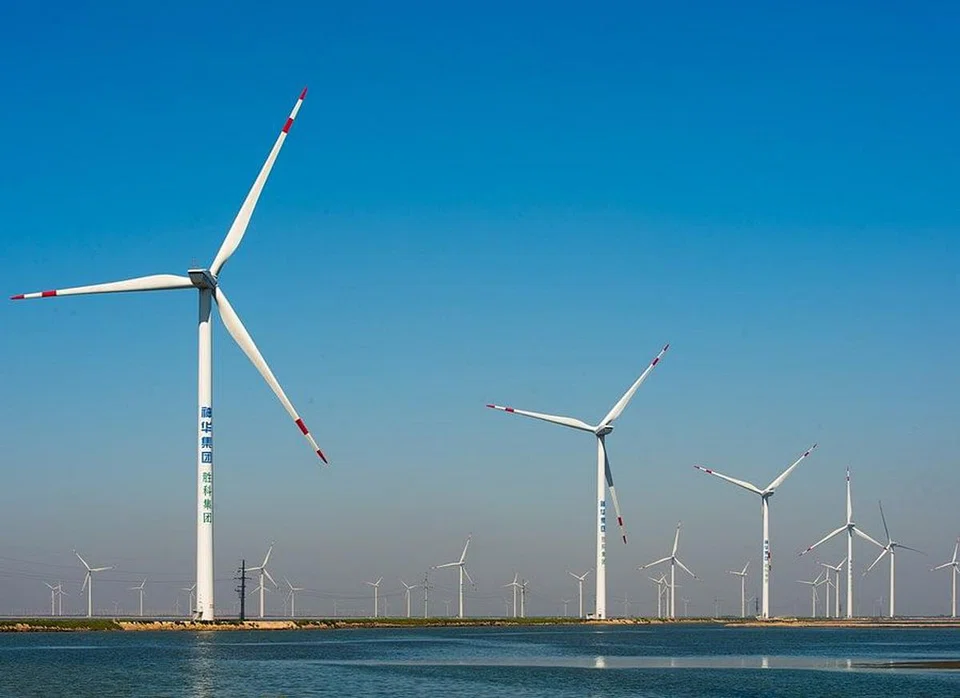
SDIC New Energy holds a portfolio of 30 operational wind and solar photovoltaic (PV) assets with a total gross installed capacity of about 1.9 gigawatts (GW) located across 7 provincial regions in China.
Sembcorp said this investment is part of its target to reach 10 GW in gross installed renewables capacity by 2025.
Market watchers viewed the latest acquisition as positive for the counter. DBS analyst Ho Pei Hwa told The Business Times that this move could drive a rerating for Sembcorp's stock price as it will increase the group's focus on renewables and clean energy with a notable pivot away from coal and gas-powered assets.
She also noted that renewable and clean energy command a "valuation premium" which could benefit the company.
On Thursday (Dec 2), Sembcorp said its wholly-owned subsidiary Sembcorp Energy (Shanghai) Holding had inked an equity transfer agreement with SDIC's Shanghai SDIC Xieli Development Equity Fund Partnership to take over its 35 per cent stake in SDIC New Energy for a total sum of 1.5 billion yuan (S$320 million). The remaining 65 per cent is held by SDIC Power, the publicly-listed power arm of SDIC.
This investment will be funded by a combination of internal cash resources and external borrowings, and is slated for completion in H1 22. Sembcorp said the acquisition is expected to be earnings accretive from the first year.
DBS's Ho said the acquisition will raise Sembcorp's renewable gross capacity in China by 135 per cent to 3.3 GW from 1.4 GW previously. Sembcorp can also expect a boost of about 10 per cent to its bottom line, based on SDIC New Energy's latest net profit figures, she added.
Phillip Securities analyst Terence Chua said the assets are located in the north-western region, which is considered as a location with "higher wind resources".
Although Chua said the acquisition would help the group with its pivot, he warned that there is "uncertainty and volatility" in China, which could affect the value of Sembcorp's investment and pose risk to contract renewals.
"The contracts with the government range from about 3-5 years, and there is a risk that it may not be renewed. It is important to stress though that this risk is small," said Chua. "There is also no fixed tariff, which could affect the pricing and profitability of the project depending on the trajectory of tariff prices."
DBS's Ho added that China and India, even with their operational risks due to regulations, are the fastest-growing countries in terms of both renewable demand and production. She stressed that it would be crucial for Sembcorp to "have good local partners and manage risks well".
In the wake of an ongoing global energy transition and rising climate change risks, Sembcorp in May unveiled a strategic plan to pivot from "brown to green" in what was termed "a new chapter" for the company.
Sembcorp said it aimed to bump up profit contributions from its sustainable solutions portfolio to 70 per cent by 2025 from 40 per cent currently. This plan came shortly after the group demerged from Sembcorp Marine in September last year and sharpened its focus to capture growth opportunities in energy transition and sustainable development.
The company also set targets for its renewable energy and integrated urban solutions portfolios to hit a compound annual growth rate (CAGR) of 30 per cent and 10 per cent respectively by 2025.
Since then, Sembcorp has made several moves that are in line with the transition to greener energy.
In November, the company said it would acquire a 98 per cent stake in a portfolio of operational wind and solar PV assets in China for 3.3 billion yuan from CGN Capital Partners Infrastructure Fund III - a private equity infrastructure fund focused on renewable energy infrastructure assets in China - and its affiliates.
Meanwhile for financing, the company in August launched a sustainable financing framework for sustainability-linked transactions for the energy sector, allowing the company to issue sustainability-linked bonds, sustainability-linked loans or any other sustainability-linked instruments that are in accordance with the framework's guidelines.
In June, the group also priced its inaugural S$400 million green bond offering through its wholly-owned subsidiary Sembcorp Financial Services due in 2031 at an annual coupon rate of 2.45 per cent.
TRENDING NOW
Prima to move out of historic Keppel Road flour mill building in 2028

Temasek-related Azalea, SeaTown, Seviora Capital to merge in 2027

Family offices see more tailored products, leverage ‘collective firepower’ for direct deal access

Singapore room rates soar, but hotels seeing mixed demand from F1 race and events

