

Sembcorp, Keppel could face challenges in wake of Iran attack
Heightened short-term uncertainties could be a time to stick with higher-confidence long-term structural trends

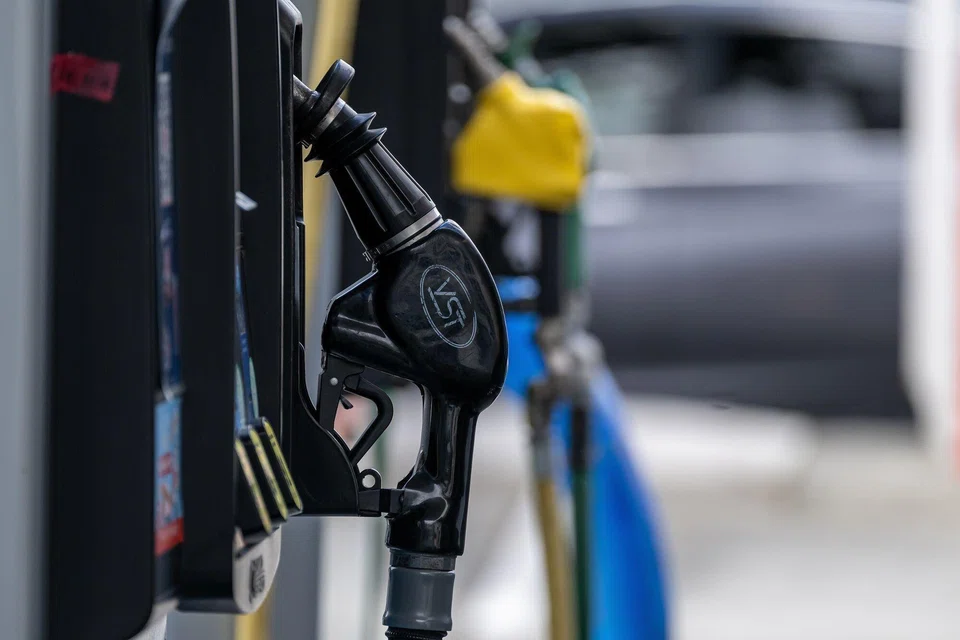
INVESTORS looking to sustainability plays for immediate shelter from the oil price hikes of the US-Israeli war in Iran may want to tread with caution.
Shares of the purest renewable energy plays on the Singapore Exchange have not fared well in the first few days of trading after the US and Israel launched their attacks on Feb 28.
Sembcorp Industries, a renewable energy developer, closed at S$5.72 last Wednesday (Mar 4), down 6.5 per cent from before the weekend. The Straits Times Index, the Singapore market benchmark, declined by a more modest 3.7 per cent over the same period.
Keppel Corp, an asset manager with significant sustainability-related investments, also underperformed the market with an 8.3 per cent retreat since the attacks to end at S$12 on the same day. Shares of Seatrium, a shipbuilder for both the oil and gas and offshore wind sectors, decreased 3.3 per cent to head out at S$2.32.
Why doesn’t a surge in oil prices and the prospect of those prices staying elevated for a prolonged period translate into higher optimism for renewable energy players? Shouldn’t the burden of higher oil prices shift demand towards renewable energy alternatives?
A possible answer is that consumption demand and investment interest in renewable energy are driven by more than just oil prices, and it’s the multivariate complexity that makes it challenging to draw a clear relationship between oil prices and renewables.
For example, a 2024 working paper by researchers at the International Monetary Fund finds insufficient evidence to show that renewable adoption reduces the impact of fossil fuel price changes on energy inflation rates.
The inconclusive relationship could be a result of difficulties in controlling for national energy policies, threshold effects or trade linkage spillovers, the researchers explain. Whatever the reasons, the uncertainty reduces the confidence in renewable energy as a shield against oil price spikes.
Markets are also highly idiosyncratic, which means that tendencies in one geography can be irrelevant in others. A 2025 paper by Chinese and Spanish researchers finds mixed impact of energy-related uncertainty on US renewable energy demand.
On one hand, energy-related uncertainty spurs efforts to seek sustainable alternatives and accelerate renewable deployment, while greater renewable usage tends to reduce energy-related uncertainty. On the other hand, higher uncertainty about energy prices inhibits investment in renewables. But this study focuses on US data, and the findings may not apply to other markets.
Another study by South Korean researchers suggests that renewable energy consumption can mitigate the risk of oil prices, while higher oil prices can raise concerns about external risks and drive greater investments in renewable energy. But the research focuses only on oil-importing countries.
Those studies illustrate how challenging it can be to model with confidence how the current situation in the Middle East will affect sustainability players.
For a country like Singapore, which imports all of its fuel and relies heavily on natural gas for electricity, higher oil and gas prices could provide greater impetus to diversify the fuel and energy mix. But for a country like Indonesia, which has domestic supplies of oil and gas and coal, higher fossil fuel prices could drive greater investments into domestic extraction and energy activities.
Adjacent to the energy sector, in the transportation arena higher fossil fuel prices might not necessarily drive up demand for electric vehicles. In markets where electricity is primarily produced by fossil fuels, higher oil and gas prices could also raise electricity prices. Furthermore, immediate demand for electric vehicles is highly dependent on the level of access to charging infrastructure.
Probably the most significant impact from attacks in Iran is that it becomes more difficult to predict the future prospects for renewable players, which can chill investment interest. Without a good idea of how long the war might last, much less the objectives of the campaign, it’s difficult to use that as a decision input for assessing renewable investments, some of which can be long-term infrastructure projects.
What are sustainable investors to do in these times? Heightened short-term uncertainties could be a time to stick with higher-confidence long-term structural trends.
For instance, a rather popular thesis – often used in scenario analyses as a potential future – is that the inevitable physical impact of climate change and slow-to-act policymakers will drive increased disorderly transition risks. That scenario may not change much even if there is a war in the Middle East.
In fact, some of the potential beneficiaries of this long-term trend – renewable energy players, infrastructure developers and green real estate players, for example – could be bargain pick-ups in the current market turmoil.
This article first appeared in BT’s ESG Insights newsletter on Mar 6
Decoding Asia newsletter: your guide to navigating Asia in a new global order. Sign up here to get Decoding Asia newsletter. Delivered to your inbox. Free.
Copyright SPH Media. All rights reserved.
TRENDING NOW

Once staunchly pro-China, Malaysian Chinese businesses are now distancing themselves from Beijing

Grab CEO’s wife Chloe Tong on life with Anthony Tan and finding her purpose

Could stablecoins be the future of money?

ST Engineering opens tech-focused aircraft maintenance facility in Changi; to create over 500 jobs

