

Seven & i’s IPO of US arm hinges on faster turnaround, CEO says
The company has said that it’s aiming for a listing for the latter half of 2026
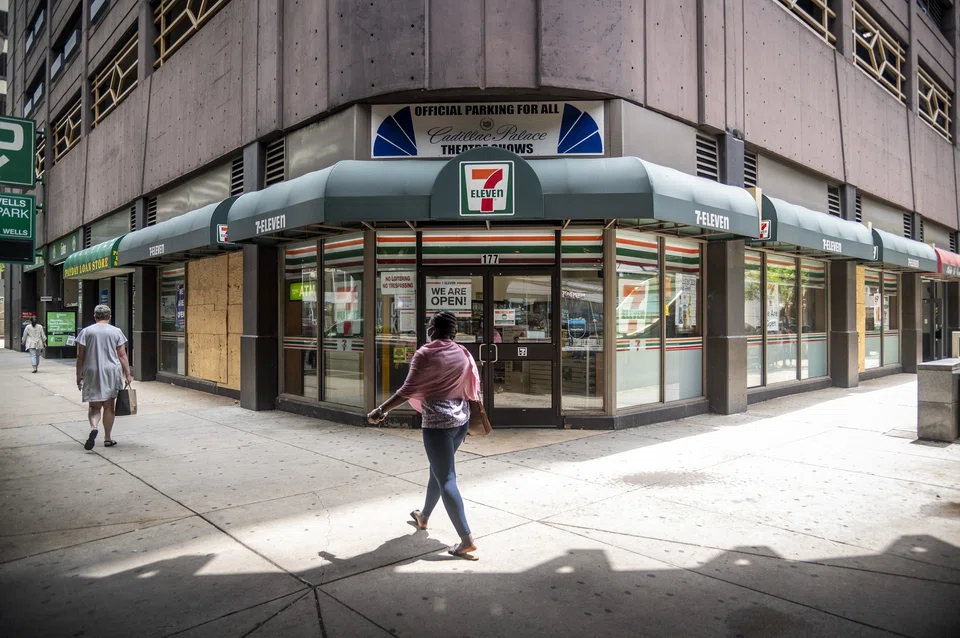
[TOKYO] Seven & i Holdings’ chief executive is pressing its US convenience-stores business to deliver a faster turnaround as the retailer seeks a public listing of the unit to fund new investment and lift shareholder returns.
The timing of an initial public offering (IPO) will depend on execution and the market, said Stephen Dacus, who became CEO six months ago. “How long that takes depends on actual performance, which is unpredictable. It’s a fact that we have not yet fully realised 7-Eleven’s potential, and that its performance is still insufficient,” he said, referring to the company’s US operations.
Seven & i, which took the American convenience store concept and turned it into a global retailing empire, has been revamping itself by selling its Japan-based supermarket and speciality-store operations, installing new leadership and seeking a partial sale of the US unit. Those efforts accelerated after Alimentation Couche-Tard made a 6.8 trillion yen (S$56 billion) takeover proposal last year.
Although the Canadian operator of Circle K stores dropped its pursuit in July, Seven & i is forging ahead. The goal is to maximise shareholder value, not to just “do an IPO on a schedule”, Dacus said. The company has said that it’s aiming for a listing for the latter half of 2026.
As part of the broader changes, Joe DePinto, the CEO of the US unit, will retire at the end of this month, the company said in a statement late Friday. Two years ago, DePinto’s compensation was 7.7 billion yen, more than 20 times that of the CEO at the time, making him the top-paid executive at the company and one of the highest within corporate Japan.
The US business is made up of the original 7-Eleven chain of stores that got their start almost a century ago in Texas, before Seven & i took full control in 2005. Over the past decade, it expanded through the US$3.1 billion acquisition of Sunoco LP petrol stations in 2018 and the US$21 billion purchase of Speedway outlets from Marathon Petroleum in 2021. DePinto was instrumental in those deals.
A turnaround in North America rests on four key initiatives outlined earlier this year, according to Dacus. First is boosting sales of private-brand products – items that are made and sold by the company under its own name. Second, because large-format shops bring in more profit and sales, the bulk of a planned 1,300-store expansion will focus on those.
Third, cost reduction is critical because “our selling and administrative expenses per store are higher than our competitors – that’s a fact, you can see it in the numbers”, Dacus said. For the six months through August, operating profit at the US unit rose 2.7 per cent to 134 billion yen, helped by cost reductions. At the same time, total chain sales slid 10 per cent to 4.8 trillion yen as inflation dampened consumer demand.
Finally, extracting more profit out of fuel sales; even though the company sells the most petrol in retail, it’s not deeply involved in the supply chain. By doing so and cutting costs, earnings before interest, taxes and depreciation could go up by US$400 million annually, as targeted, by fiscal 2030, Dacus said.
SEE ALSO
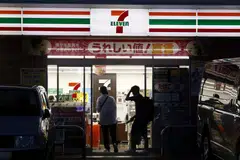


Longer term, North American convenience stores are evolving into hybrid food outlets, blurring lines with fast-food chains. Seven & i’s success in making food central to its Japan business should help improve US prospects, Dacus said. “We are not trying to simply sell Japanese food in America; more than that, we want to bring the Japanese way of thinking about quality.”
Since taking the helm in May, Dacus has pledged to open thousands of new stores, set clear priorities, reorganise teams and optimise capital allocation. That’s helped Seven & i’s shares recover from their steep drop when Couche-Tard said it would no longer pursue a deal. Even so, the stock remains down 11 per cent this year, while the benchmark Topix Index has climbed 21 per cent.
Part of that was due to lacklustre sales in Japan, but there are early signs of recovery, with same-store sales climbing 2.7 per cent in November from a year earlier, the fastest pace in two years. Rivals Lawson rose 4.6 per cent and FamilyMart also advanced 1.9 per cent.
Overall, for the fiscal year ending February, operating profit is forecast to shrink 4 per cent to 404 billion yen on sales of 10.6 trillion yen, Seven & i said in October. Analysts are projecting 411 billion yen in operating profit on the same revenue.
Seven & i has said that it plans to raise a total of about 7.5 trillion yen through the IPO and improving profitability, in addition to the divestments of other units. Roughly 40 per cent of that will be returned to shareholders with the rest earmarked for investments and debt reduction.
Asked if the IPO could be called off or postponed, Dacus said the US business has “significant potential”.
“There’s an opportunity to redefine the meaning of convenience in the American market,” Dacus said. “There’s no scenario in which we would go not go through with the IPO, because I believe performance will improve.” BLOOMBERG
Decoding Asia newsletter: your guide to navigating Asia in a new global order. Sign up here to get Decoding Asia newsletter. Delivered to your inbox. Free.
Share with us your feedback on BT's products and services
TRENDING NOW

Once staunchly pro-China, Malaysian Chinese businesses are now distancing themselves from Beijing

Looking beyond looming CEO succession, should UOB potentially pursue a transformative merger?

Could stablecoins be the future of money?

Grab CEO’s wife Chloe Tong on life with Anthony Tan and finding her purpose

