

SGX-listed gold-linked counters fall on precious metal’s decade-worst plunge
Market watchers expect volatility in the yellow metal to continue in the near term
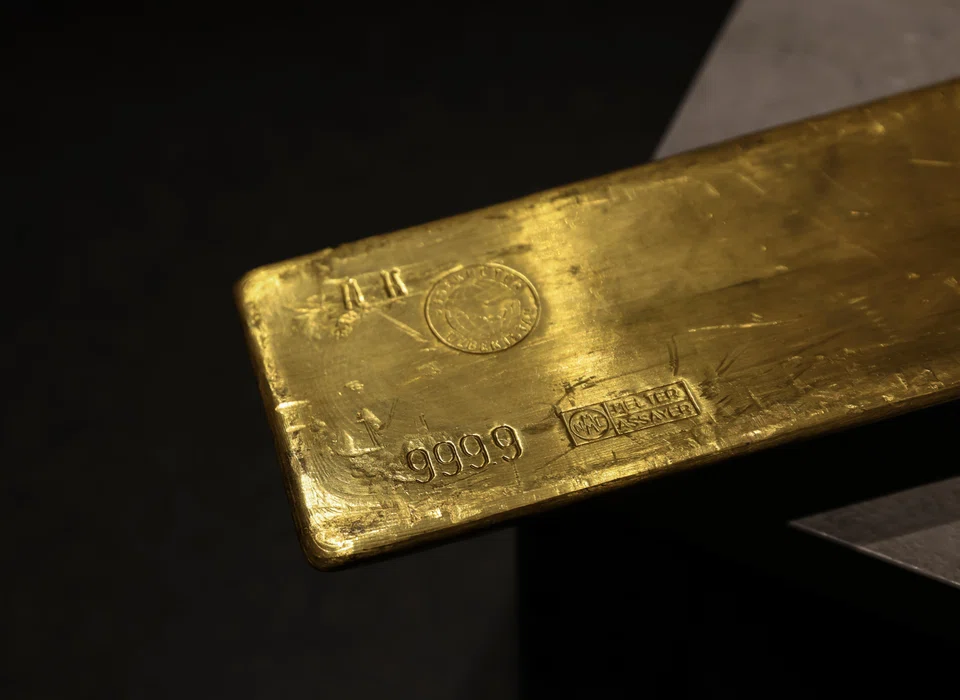
[SINGAPORE] After a sharp correction that saw gold shed as much as 10 per cent on Monday (Feb 2), shares of pawnbrokers and other gold players on the Singapore Exchange (SGX) mostly finished lower.
The retreat follows a volatile weekend where spot gold dipped below the US$5,000 an ounce mark and logged its worst reversal in more than a decade.
Christopher Forbes, head of Asia and the Middle East at CMC Markets, described the move as a “classic air-pocket after an extraordinary run”. He remarked that profit-taking, a firmer US dollar and fresh geopolitical headlines from Washington have “knocked froth off a crowded trade”.
The trigger for Friday’s sell-off were headlines surrounding US Federal Reserve chair nominee Kevin Warsh.
Warsh’s potential impact on the Fed’s leadership coincided with a firmer US dollar which can amplify pressure on metals in the short run, said Charu Chanana, chief investment strategist at Saxo Markets, in a note on Monday.
Uday Vikram, co-chief investment officer at Klay Group, remarked that markets had priced in a narrative of a more politically pressured and dovish Fed, reinforcing themes of dollar debasement and strong demand for hard assets as alternatives to fiat.
“This sell-off is a gut check,” said Uday. He noted that investors are now reassessing whether the market is on the cusp of a turn towards harder money – a Fed leadership that prioritises credibility, discipline and independence more than markets had assumed.
Chanana added that headlines over the Fed’s looming leadership transition were compounded by CME Group raising margin requirements, a move that forced leveraged investors to liquidate positions rapidly.
The price decline was further accelerated by reports that China halted trading in several commodity-linked funds – notably silver. This increased uncertainty and forced selling dynamics for some holders, she noted.



Losing steam
The broader market reflected caution as the SPDR Gold Shares exchange-traded fund (ETF) retreated 8.8 per cent on Monday, having risen more than 50 per cent over the past year. Gold producer CNMC Goldmine also took a hit, closing 8.4 per cent lower on Monday. Despite that, the counter remained up more than 350 per cent year on year. Bullion retailers and pawnbrokers whose inventory values are directly tied to spot prices also retreated, except for MoneyMax Financial Services .
MoneyMax closed 2.1 per cent higher on Monday following an announcement that it expects “significant improvement” in net profit for both the second half and full year of 2025, compared with the same periods in 2024.
This is primarily driven by two key areas: the company’s pawnbroking division, which benefited from higher interest income, and its gold and luxury retail segment, which was boosted by elevated bullion prices and a surge in sales volume, said MoneyMax.
In January, the financial and luxury retailer received in-principle approval from SGX to move from the Catalist to the mainboard. This transition reflects the group’s rapid expansion and positions the company among larger peers.
Meanwhile, ValueMax ended 4.3 per cent lower on Monday, still up more than 19 per cent since the start of the year. It climbed more than 140 per cent in the past year.
Aspial Lifestyle , owner of jewellery chains Lee Hwa, Goldheart and pawnbroker Maxi-Cash, shed 5.4 per cent on Monday. It has advanced around 23 per cent since the start of the year.
Choppier path
In the near term, CMC Markets’ Forbes believes that gold is more likely to trade “violently” within a high plateau than collapse, with a key range of US$4,800 to US$5,000 an ounce. He added that in the longer term, the forces behind this rally – negative real rates, loose fiscal policy and geopolitical risk – still support structurally higher prices. However, he noted that gold’s path will be choppier.
Similarly, Klay Group’s Uday said: “In the near term, we could see continued downward pressure as positions unwind due to profit-taking, leverage and weaker hands being forced out… But over the longer term, the structural drivers behind gold and select commodities remain intact, offering long-term investors a clear opportunity to re-engage.”
Meanwhile, in a Monday note, JPMorgan Private Bank revised its year-end gold target to U$6,150 per ounce, with a range of US$6,000 to US$6,300.
Tang Yuxuan, head of Macro Strategy, Asia, at JPMorgan Private Bank, noted that the projection is supported by “catch-up potential” in central bank reserves and ETF holdings that remain below previous peaks. She added that while increased retail activity could continue contributing to price swings, the steady demand from strategic long-term buyers provides a solid floor, driving the bank’s higher conviction in gold over silver.
Decoding Asia newsletter: your guide to navigating Asia in a new global order. Sign up here to get Decoding Asia newsletter. Delivered to your inbox. Free.
Copyright SPH Media. All rights reserved.
TRENDING NOW

Britain’s mansion tax shows the difficulty of targeting wealth

Once staunchly pro-China, Malaysian Chinese businesses are now distancing themselves from Beijing

The only common thing in S-E Asia is that we all eat rice: Cisco’s Asean president

Singapore data centre operator DayOne opts for US IPO at likely US$20 billion valuation

