

SGX RegCo proposes tighter disclosures on pay, dividends and investor relations to lift valuations
It is seeking feedback on raising baseline standards for transparency and focusing on value creation

[SINGAPORE] Listed companies on the Singapore Exchange (SGX) may soon face tighter disclosure rules on executive pay, dividend policy and investor relations, as the regulator pushes firms to show more clearly how they create shareholder value.
Singapore Exchange Regulation (SGX RegCo) on Wednesday (Apr 22) launched a public consultation aimed at raising baseline standards for transparency and sharpening issuers’ focus on value creation, under its drive to tackle persistent valuation gaps in the local equities market.
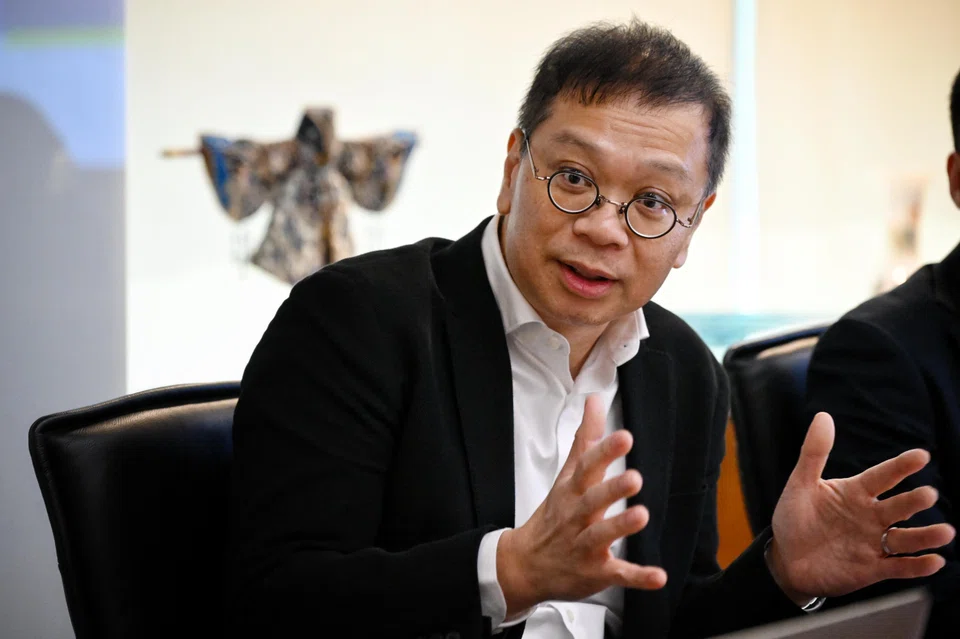
Tan Boon Gin, CEO of SGX RegCo, said at a media briefing: “We see these rules as pushing both boards and shareholders to think more about value creation and forming a foundation for two-way engagement.”
He noted that while some market participants have called for more prescriptive disclosure requirements – citing Japan’s push for companies to improve price-to-book ratios – Singapore is still at an earlier stage of development.
What new rules will require
Under the proposed rules, an issuer would be required to:
- Disclose in its annual report the key performance indicators used to determine the remuneration of the board and key management, and how these indicators align with long-term shareholder value creation;
- Maintain and describe a dividend policy in its annual report;
- Maintain an investor engagement website; and
- Maintain and publish, on its website, an investor relations (IR) policy, and describe investor-engagement activities in its annual report.
SGX RegCo said that the idea is not to mandate that companies pay dividends, but to ensure they are transparent about their approaches.
It is seeking public feedback on its proposed disclosure requirements, with the consultation period running from Wednesday to May 22.
Subject to market support, the changes are expected to be implemented in phases from Jan 1, 2027.
“Our market participants need time to build their capabilities, develop their networks and change their practices,” said Tan.



He noted that these enhancements complement SGX’s “Value Unlock” programme by ensuring that capability-building results in long-term improvements to corporate practices.
Under the programme, issuers can apply for financial grants to build capabilities in corporate strategy, capital management and investor relations. In return, grant recipients are expected to step up their corporate practices and disclosures.
SGX has so far engaged with more than 130 issuers on these grants, but noted that there is still much work to be done in the area of strengthening investor engagement practices.
Among the largest issuers listed on SGX, around two-thirds do not disclose that they have an IR policy, or do not publish it.
Similarly, two-thirds do not disclose the metrics used to measure how remuneration is linked to value creation.
This lack of clarity can undermine investor confidence and contribute to valuation discounts, the regulator noted in its consultation paper.
Listed issuers with strong disclosures that support value creation include Frencken Group, AvePoint, DBS, Singtel, Sats, DFI Retail Group, CapitaLand Investment and LHN, SGX said.
“Natural progression”
Industry observers told The Business Times that the proposals mark a “natural progression” in corporate governance that could help reinforce a “certain level of discipline” among listed issuers.
David Gerald, founder and chief executive officer of the Securities Investors Association (Singapore), or Sias, pointed out that the disclosure of performance indicators, for example, “creates a clear basis for investors to assess whether management is being incentivised in a manner aligned with sustainable value creation”.
“The market is an impartial judge, and will reward those who unlock shareholder value, and punish the laggards who do not,” he added.
Lawrence Loh, director of the Centre for Governance and Sustainability at the National University of Singapore Business School, said that better disclosure could help address valuation gaps stemming from information shortfalls.
“In cases where undervaluation is due to information shortage, enhanced disclosure can lead to greater investor confidence and, potentially, higher valuations over time,” he said.
The proposals also reflect rising expectations on how boards communicate with shareholders.
Jeffery Tan, group general counsel at Jardine Cycle & Carriage, said they “reflect a deeper change, as boards are now expected not just to disclose, but to explain and justify decisions to shareholders”.
He added that Singapore remains broadly aligned with global markets, and that the US and United Kingdom are more prescriptive on pay disclosures, while Japan and South Korea have stepped up governance reforms.
Market participants said they expect the new rules to drive gradual behavioural change among issuers.
Terence Wong, founder and chief executive of Azure Capital, noted that companies may initially approach the new disclosure requirements as a box-ticking exercise, but could eventually recognise the benefits of stronger IR practices in lifting valuations.
“Some may grudgingly do it at the start, but if they were to see results and realise they can use their shares as a currency for growth, it will be an exciting time for the market,” he said.
Wong was referring to companies that have been slow to adapt, even as others are already stepping up engagement with brokers, analysts and the media. These changes will encourage more companies to follow suit and inject greater vibrancy into the market, he added.
However, the effectiveness of the proposals will depend on how companies respond in practice.
Emily Poon, CEO-designate of the Singapore Institute of Directors, warned that if companies respond with boilerplate policies, the impact would be limited.
“Investors are also becoming increasingly savvy and they will be able to distinguish between generic responses and meaningful efforts to engage,” she added.
Decoding Asia newsletter: your guide to navigating Asia in a new global order. Sign up here to get Decoding Asia newsletter. Delivered to your inbox. Free.
Copyright SPH Media. All rights reserved.
TRENDING NOW

DBS, OCBC, UOB rout lops billions off STI as inflation, rate concerns spook investors

Grab CEO’s wife Chloe Tong on life with Anthony Tan and finding her purpose

OCBC sheds S$8 billion in value as shares close nearly 6% down; analysts cautious on banks

Deal between tycoon friends sparks scrutiny of Philippine power sector

