

SGX RegCo’s disclosure push may strain smaller firms, raise box-ticking risk, analysts warn
Ultimately, how companies approach the exercise will decide if the proposed rules will improve transparency and accountability, they add

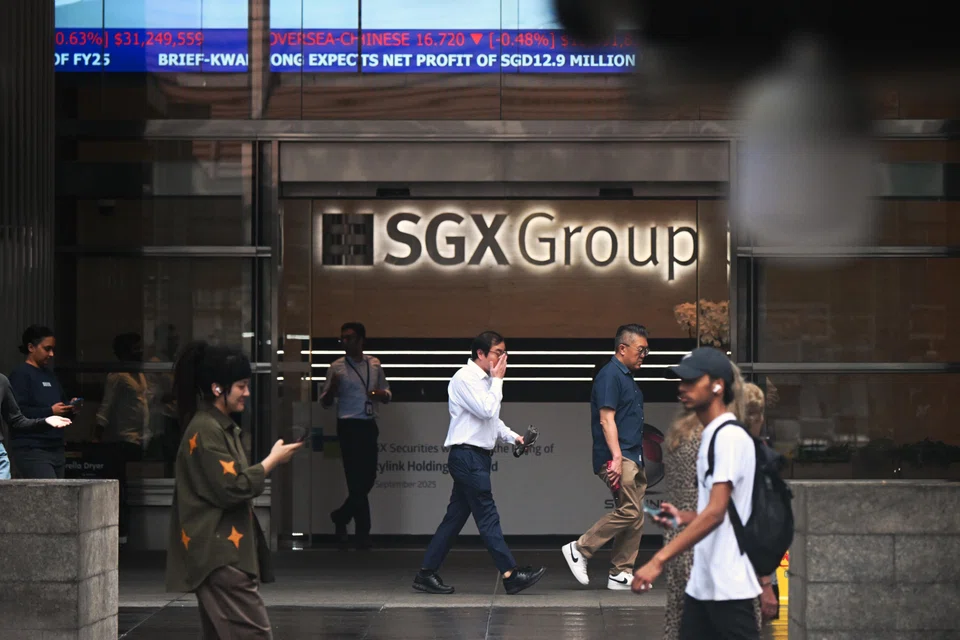
[SINGAPORE] Small and mid-cap listed companies on the Singapore Exchange (SGX) could come under strain from proposed tighter disclosure rules, with industry watchers cautioning that the push to lift valuations may also raise compliance burdens and risk boilerplate reporting.
A consultation on the proposal for tighter rules on executive pay, dividend policy and investor relations (IR) was launched by the Singapore Exchange Regulation (SGX RegCo) on Wednesday (Apr 22). Any changes are expected to be implemented in phases from 2027.
Under the proposed rules, issuers must disclose how board and management pay is tied to long-term value creation, maintain a dividend policy, and formalise investor engagement through dedicated websites and IR policies, alongside reporting their outreach activities.
While market watchers broadly support efforts to improve transparency and accountability, they note that limited resources and time constraints could disproportionately affect smaller or financially constrained companies.
Putting together these disclosures and maintaining proper investor engagement require resources, explained Andy Wong, senior equity research analyst at OCBC.
Smaller companies may face greater challenges complying with the proposed requirements due to the lack of “deep pockets” and less-established practices, he told The Business Times.
Similarly, Gillian Goh, co-group head of advisory and equity capital markets at CGS International Securities, noted that firms without professional management structures, or very lean management teams, may struggle.
“Family-controlled businesses, especially, may need to adjust in articulating how governance and capital allocation decisions align with minority shareholder interests,” she added.
Compliance pressures
Singapore-listed companies remain “reticent” in such enhanced public disclosures, observed Adrian Loh, head of research at UOB Kay Hian (UOBKH).
Small and medium-sized enterprises, including family-controlled firms, which constitute a sizeable proportion of small and mid-cap listed companies, typically have limited or no IR capabilities.
Ong Hwee Li, chief executive of SAC Capital, attributed this largely to cost considerations, noting that such firms often lack the bandwidth to prioritise stakeholder engagement.
“Fortunately for Catalist companies, they do have continuing sponsors to guide them on the right thing to do and proper disclosures,” he said. However, continuing sponsors cannot replace the IR function, as both roles serve different purposes, he noted.
Still, not all analysts see the proposals as onerous.
Paul Chew, research manager at Phillip Securities Research, believes that the proposed disclosures are not challenging to meet, as they largely reflect basic expectations of transparency and governance.
“The disclosures reveal management intentions – to run a company that fairly treats minorities or run it as a privately owned, self-interested entity,” he said.
This is where ongoing market initiatives could play a role in encouraging better compliance over time, market watchers noted.
OCBC’s Wong pointed to SGX’s “Value Unlock” programme and the Monetary Authority of Singapore’s (MAS) S$6.5 billion Equity Market Development Programme as potential catalysts.
“Fund managers or analysts usually provide some feedback in terms of disclosures, transparency, and operational improvements from a third-party perspective, so this can provide the impetus for some of these companies to consider the disclosure rules that will be implemented from next year,” he added.
Risk of box-ticking remains
Still, a recurring concern among market watchers is whether enhanced disclosure rules will translate into meaningful communication or whether companies will resort to generic or “motherhood” statements.
“As with any enhanced disclosure framework, there is a risk that the proposals could devolve into a box‑ticking exercise if companies focus more on form than substance,” said Jimmy Seet, capital markets partner at PwC Singapore.
Ong noted that the outcome will depend on how companies approach the exercise. He added that investors will ultimately “distinguish the difference by looking at the quality and depth of the disclosures”.
Chew said that, even if the proposed rules become a box-ticking exercise, they would still improve transparency on how companies treat minority shareholders. He likened it to product labelling, whereby investors can assess what they are buying.
UOBKH’s Loh stressed the importance of oversight, suggesting that SGX RegCo should dedicate resources to monitor the quality of disclosures.
He pointed to developments in Japan and South Korea as potential benchmarks that could support improvements in valuations.
In Japan, companies trading below book value are required to disclose plans to improve capital efficiency, while, in South Korea, the Corporate Value-Up Programme of 2024 encouraged companies to simplify group structures and have stronger board independence.
“In Singapore’s case, we cannot continue to depend on the MAS to inject liquidity into the market to engender higher valuations – intangibles like enhanced disclosure have to go hand in hand with the liquidity push,” he added.
Balancing transparency
While some listed companies already have in place the key investor relations and disclosure practices proposed by SGX RegCo, they cautioned that greater transparency must be balanced with commercial considerations.
Some of the listcos highlighted by SGX include Singtel and LHN .
For telco Singtel, existing disclosure practices include publishing its dividend policy, financial results and material developments, as well as maintaining regular engagement with both institutional and retail investors.
In FY2025, Singtel engaged with more than 500 institutional investors through over 200 virtual and in-person meetings.
“We also disclose the framework underpinning executive director and management remuneration, including annually assessed financial and non-financial KPIs (key performance indicators) aligned with Singtel’s strategic priorities and long-term shareholder value creation,” a Singtel spokesperson told BT.
Meanwhile, LHN flagged the need to balance transparency with commercial sensitivity, particularly when disclosing strategic priorities or performance metrics in competitive sectors.
“Disclosing them too explicitly can signal competitive strategy to rivals, or create market expectations that reduce flexibility in execution,” said an LHN spokesperson.
Goh pointed out that, ultimately, the aim of SGX RegCo’s disclosure push is to improve investor confidence, broaden the shareholder base and potentially lower the cost of capital – but how companies navigate the trade-offs will determine its impact.
TRENDING NOW

Motoring tycoon Peter Kwee is back in court: Here are his previous legal battles

Demand, tech capabilities position Apac and AI as Skyscanner’s next growth frontiers: CEO Bryan Batista

Beyond the greenback, Vietnam’s big borrowers turn to Asian-currency bonds

Nvidia’s outlook cut to stable by Moody’s on governance concerns

