SIA to post first yearly loss; analysts foresee more pain ahead
Covid-19's impact on air travel has led to collapse in demand; fuel hedging losses also have hit airline
Singapore
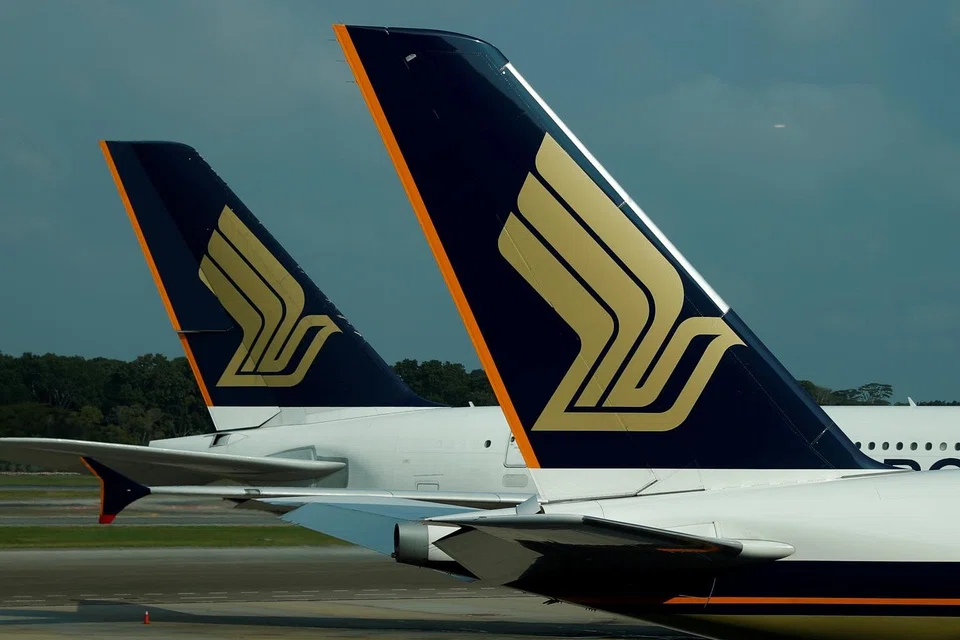
SINGAPORE Airlines (SIA) on Friday said it expects to report a small operating profit, but a net loss - its first yearly loss ever - for the full year ended March 31. This is mainly owing to its fuel hedging losses.
But some analysts don't think its losses will end there. Another loss-making year could be possible, given the "staggering" crash in the April-to-June quarter where there was virtually no flights, they say.
Forecasts of recovery in the international aviation market range from as soon as the second half of 2020, to as late as 2022. Bloomberg's consensus estimates see SIA's adjusted net losses coming in at more than S$800 million for FY20/21.
SIA on Friday said the Covid-19 pandemic's impact on air travel, leading to border controls and travel restrictions, exacerbated by a lack of domestic market to fall back on, has led to a collapse in demand.
In response, SIA and SilkAir have extended their combined capacity cuts of about 96 per cent until the end of June 2020, while Scoot is expecting capacity cuts of about 98 per cent.
SIA added: "The collapse of fuel prices in March 2020 has led to fuel hedging losses on contracts maturing in the final quarter of FY19/20. The unprecedented scale of the capacity cuts by the SIA Group as a result of Covid-19 has also resulted in the SIA Group being in an over-hedged position with respect to the expected fuel consumption for FY20/21.
"Accordingly, the surplus hedges need to be classified as ineffective under applicable financial reporting standards and the marked-to-market losses as at March 31, 2020, will be recognised in the profit and loss statement for FY19/20."
The group thus expects to report a material operating loss for the final quarter ended March 2020. But strong results for the first nine months will still enable SIA to report a small operating profit for the full year. The airline will release its financial results on May 14.
Brendan Sobie, aviation consultant at Sobie Aviation, said: "If it wasn't for the need to recognise the over-hedge for the following year, it would have been profitable, but because according to accounting standards they have to recognise some of that loss now, so that creates a net loss."
He was not surprised at SIA's update and expects it to continue to be loss making in FY20/21, given the severe capacity cuts across its carriers, and further recognition of fuel hedging losses.
He believes that the recovery of the international aviation market may take "a few years". However, he expects a near full recovery in the domestic market over the next few months.
Several analysts, like Timothy Ang, research analyst at Phillip Securities Research, believe that people may refrain from travelling until a vaccine is found for Covid-19. Until then, airlines may continue to incur "cash burn" to house their fleets.
Paul Yong, aviation analyst at DBS Bank, is more optimistic that flights could recover in the second half of this year, although he acknowledges that there are others who expect recovery only next year.
Meanwhile, airlines in countries where the pandemic has stabilised are taking this opportunity to rebuild bilateral air links, he said.
Given that the pandemic has not abated, SIA expects operating cashflow to remain negative for the quarter ending June 2020. With fuel prices still weak since the beginning of April to date, additional fuel hedging losses may be expected in the first quarter of FY20/21, it said.
Given the uncertainty in the market, the group has taken a pause and plans to monitor developments closely before entering into any additional hedges.
It is also in talks with aircraft manufacturers to adjust its delivery stream for existing aircraft orders, and with suppliers to reschedule payments.
To bolster its liquidity and strengthen its balance sheet, it undertook a S$8.8 billion rights issue backed by Temasek.
SIA has also tried to maximise freighter utilisation, and supplement freighter capacity with the deployment of passenger aircraft operating cargo-only flights to meet the demand from global supply chains.
"Although cargo capacity remains below pre-Covid-19 levels, we have seen an improvement in cargo yields during the final quarter of FY19/20 and this is expected to sustain into the first quarter of FY20/21," it said.
SIA also noted that its 20 per cent-owned carrier Virgin Australia has entered into voluntary administration. SIA has no requirement or obligation to provide capital to Virgin Australia.
It said: "We have been equity accounting for our share of losses in Virgin Australia. As at Dec 31, 2019, our carrying value was zero and we have no exposure to further losses incurred by the company. We have no outstanding loans to the airline."
Virgin Australia and SIA are by no means the only airlines in need of rescue. Last weekend, Norwegian Air shareholders backed a 10-billion kroner rescue plan, while major US passenger airlines have agreed to a US$25 billion rescue package from the government, and European airlines such as Air France-KLM and Lufthansa receive state-backed financing.
SIA shares closed one cent higher at S$4.41 on Friday.
READ MORE: Traders cry foul over losses from SocGen actions on SIA shorts
Decoding Asia newsletter: your guide to navigating Asia in a new global order. Sign up here to get Decoding Asia newsletter. Delivered to your inbox. Free.
Share with us your feedback on BT's products and services