

Singapore bond issuance hits record US$95 billion in 2025, up 21.8%: MAS
Broader corporate participation and refinancing needs lifted activity

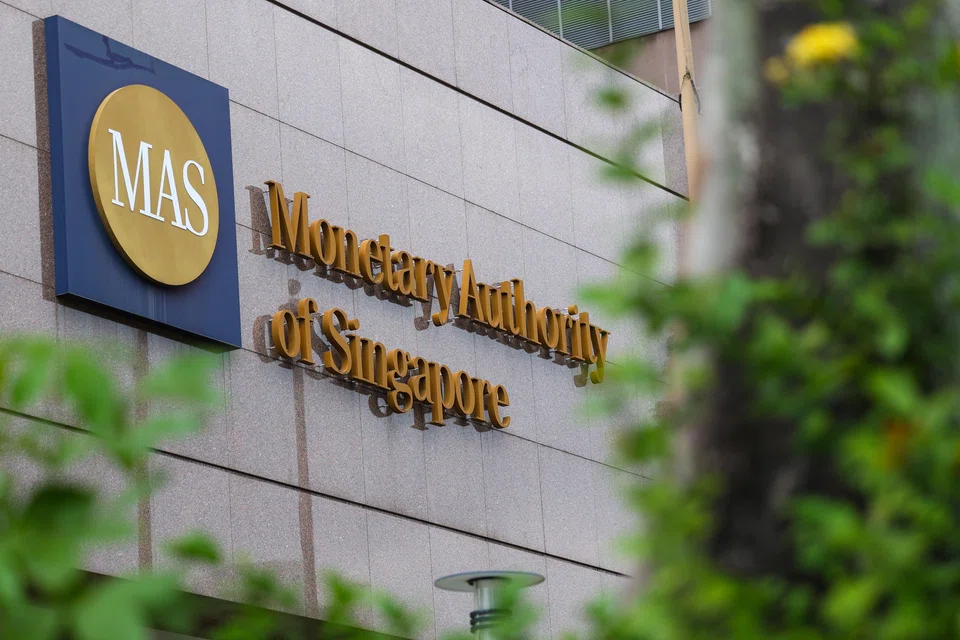
[SINGAPORE] Singapore’s bond market issuance jumped 21.8 per cent year on year to a record US$95 billion in 2025, driven by refinancing needs and regional demand for capital for artificial intelligence, technology and infrastructure.
The figure, which covers long-term Singapore-dollar and non-Singapore-dollar bonds, surpassed the previous record of US$77 billion set in 2023, the Monetary Authority of Singapore (MAS) said on Monday (Sep 14), in its annual update on the corporate debt market.
The increase came as global bond issuance rose 7.7 per cent to US$9.8 trillion in 2025, “supported by improved funding conditions amid easing monetary policy”, MAS said.
Asia ex-Japan G3 bond issuance – referring to bonds denominated in the three major global currencies of the US dollar, euro and yen – grew 12.1 per cent to US$252 billion, with South-east Asia among the fastest growing markets in the region.
In the broader Singapore debt market, new issuance rose 10 per cent to S$339 billion in 2025, from S$308 billion the year before. Total outstanding debt arranged by financial institutions in Singapore increased 6.8 per cent to S$659 billion.
The US dollar remained the dominant currency, accounting for 65.6 per cent of issuance, while the Singapore dollar made up 21.4 per cent. The euro and sterling accounted for 3.9 per cent and 2.8 per cent, respectively.
More corporates tap Singdollar market
Financial institutions remained the largest issuers in both the Singdollar and foreign currency markets, though their share moderated as more corporates tapped the market.
In the Singdollar market, financial institutions accounted for 64.9 per cent of issuance in 2025. Property companies made up 10.3 per cent, statutory boards 9.6 per cent, corporate special-purpose vehicles 9.4 per cent and other corporates 5.8 per cent.
MAS said Singdollar issuance increased among both financial institutions and corporates, with new entrants from sectors such as digital infrastructure, private capital and consumer finance contributing to “a more diversified issuer base”.

First-time issuers included Equinix Asia Financing, Wee Hur and IReit Global. Financial institutions increased Singdollar issuance by S$10.8 billion from the previous year, while corporate issuance rose by S$6.6 billion, supported by lower rates and tighter spreads.
Singapore also continued to serve as a funding hub for foreign-currency issuance, MAS said, pointing to Seagate’s US$3.2 billion bond issuance and Foxconn Singapore’s 650 million euro (US$750.9 million) deal as examples.
Financial institutions such as DBS and Nomura tapped Singapore’s multicurrency market in currencies ranging from the Australian dollar and euro to sterling, the Hong Kong dollar, yen and US dollar, the regulator said.
Covered bonds hit record
Covered bond issuance also reached a record S$11 billion in 2025, up from S$7.7 billion in 2024.
The outstanding size of Singapore’s covered bond market grew to S$29.8 billion, from S$26 billion the year before and S$17.3 billion in 2021. MAS said the market had expanded at a compound annual growth rate of 15 per cent over the past four years.
Covered bonds are backed by ring-fenced pools of residential mortgages, giving investors recourse to both the issuing bank and the underlying pool of assets. Banks use them as an additional source of funding and to tap regional and international investors.
The strong issuance momentum has carried into 2026.
Singdollar credit issuance reached S$17.2 billion in the first half, about 28 per cent higher than the S$13.4 billion recorded the year before, OCBC Group Research said in a July report. Excluding heavier issuance from the Housing & Development Board, volumes were still up about 9 per cent year on year.
OCBC expects issuance to remain resilient in the second half, supported by refinancing needs and demand for high-quality Singdollar credit, although surpassing 2025’s record levels could prove challenging without further issuance from statutory boards and financial institutions.
Even so, the funding environment has become less favourable in 2026.
MAS said expectations for further monetary easing had given way to renewed inflation concerns amid higher energy prices and geopolitical developments. Higher yields in major markets have raised borrowing costs and affected both funding decisions and investor allocations.
It nevertheless expects Asian bond markets to remain resilient, supported by refinancing needs and robust investor demand, as well as continued demand for high quality Singdollar assets amid global uncertainty.
Decoding Asia newsletter: your guide to navigating Asia in a new global order. Sign up here to get Decoding Asia newsletter. Delivered to your inbox. Free.
Copyright SPH Media. All rights reserved.
TRENDING NOW

Government to bring forward raising of retirement age, give employers more financial support to create flexi-load jobs

If Europe goes to war, the fallout will be felt in East Asia

Indonesia stocks suffer worst plunge in nearly 30 years as MSCI proposes standalone status

Vietnam’s northern provinces, not Hanoi or Ho Chi Minh City, are powering near 10% GDP growth

