Singapore data centre Reits chase Japan deals as power crunch raises stakes
Scarcity of power-ready assets supports valuations, but grid constraints could make further expansion harder

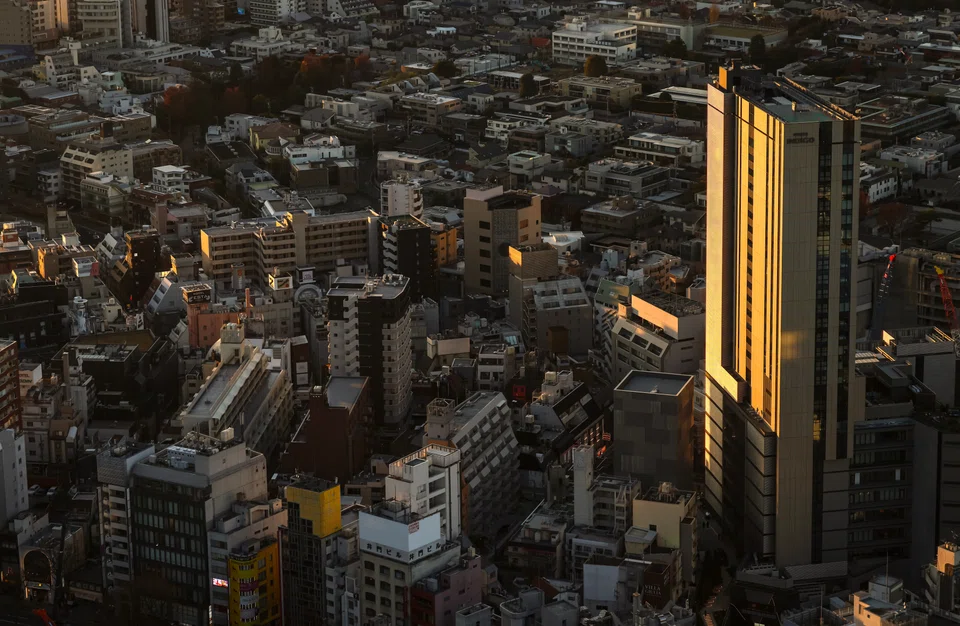
[SINGAPORE] Singapore-listed data centre real estate investment trusts (Reits) are stepping up their bets on Japan, as surging demand for computing capacity intensifies competition for scarce power-ready assets.
Keppel DC Reit in September proposed to acquire two Tokyo data centres, which would raise Japan’s rental income contribution to 23 per cent, from 9 per cent.
A month earlier, Digital Core Reit agreed to acquire an additional 25 per cent stake in an Osaka data centre, increasing its stake to 45 per cent from 20 per cent.
Analysts said that Japan offers Singapore Reits a combination of scale, market maturity, lower market risk, as well as deeper liquidity, compared with other data centre markets in the region.
The recent deals reflect growing investor appetite for high quality, operational data centres in Japan that are fully fitted and have long-term access to power, they added.
Pritesh Swamy, head of research and consulting for the Asia-Pacific data centre group at Cushman & Wakefield, said: “In today’s environment, especially in Japan, power availability itself has become one of the most valuable attributes of a data centre asset.”
He observed that competition for operational facilities in Japan has driven up asset values over the past two years, with investors more willing to accept lower yields for assets offering immediate income.
Both Keppel DC Reit’s proposed Tokyo assets, as well as Digital Core Reit’s Osaka assets are fully occupied.
Japan’s data centre market is underpinned by increasing domestic enterprise workloads, cloud adoption and rising artificial intelligence workloads, while relatively attractive yen-denominated financing has also supported investor appetite.

High domestic data consumption has also fuelled hyperscale demand, which accounts for 60 to 70 per cent of total capacity, said Neil Bear-Hetherington, director for Asia-Pacific data centre capital markets at CBRE.
Japan has more than 1.8 gigawatts (GW) of operational capacity and a vacancy rate of 6.6 per cent, making it one of Asia-Pacific’s largest and most mature data centre markets, Swamy told The Business Times.
Amid the increase in demand for Japanese data centre assets, prices of colocation racks – which are servers shared in a data centre facility – rose about 3 per cent in 2025, Bear-Hetherington added.
More supply is on the way, with Cushman & Wakefield estimating that Japan has a further 3.5 GW of data centre pipeline to be developed by 2030.
Swamy noted that nearly 40 per cent of the under-construction capacity and 26 per cent of the planned capacity in Japan is pre-leased.
Sponsors remain crucial
For Singapore Reits looking to expand in Japan, securing access to suitable assets remains a key hurdle, putting their sponsors in an important position.
“Sponsors-to-Reit transactions are important as they incubate, develop and stabilise assets on their balance sheets before dropping them into their linked specialised Reits,” Bear-Hetherington told BT.
Digital Core Reit, for example, recently purchased an additional 25 per cent interest in a freehold Osaka data centre from its own sponsor, Digital Realty.
Sponsor relationships can also provide access to proprietary opportunities, development expertise and acquisition certainty, said Swamy.
However, Bear-Hetherington noted that while sponsors are important, there is a “strong market” of Reits and other investors buying assets from unrelated sellers.
He noted that in March, CapitaLand Ascendas Reit and a Mitsui-managed fund acquired a 45.9 MW data centre in Greater Osaka for US$997 million.
“Data centre investment allocation from wider investors is increasingly sought as a thematic allocation and to diversify portfolios into a growing sector,” he said.
Access does not guarantee returns
But even with a strong sponsor-to-Reit pipeline, attractive returns are not assured.
Although yen-denominated debt remains attractive for investors, higher interest rates and compressed capitalisation rates could weigh on transaction activity and returns.
Power constraints present another challenge. While scarcity of power-ready capacity can drive up the value of operational data centres, it could also limit the development of new capacity and the expansion of existing facilities.
This shortage is particularly pronounced in the Greater Tokyo region, said Bear-Hetherington.
“Access to high-voltage grid power is key to the growth of the market and the resultant stabilised assets, particularly in Greater Tokyo,” he said.
The Greater Osaka region, in comparison, has seen more data centre growth as it has “comparatively better power availability”, he added, noting that the supply of data centres in the Osaka region is expected to increase from 2027.
Across Japan, electricity demand is expected to grow 5.3 per cent over the next decade, driven in part by rising consumption from data centres.
To meet this rising demand, the nation is seeking to upgrade its grid infrastructure, with the Japanese government looking to build and bolster 30 power substations across the country.
Analysts expect the power grid to be under even more pressure, as legacy data centre facilities seek to upgrade its electrical infrastructure to meet higher-density AI workloads.
“Overall, we believe infrastructure constraints, particularly power availability, are likely to remain one of the key challenges for sector growth over the next two years,” said Swamy.
Despite these challenges, Jack Harkness, senior director, data centre lead for Asia-Pacific, regional industrial and logistic services at Savills, expects the demand for Japanese data centres to remain strong, supported by established hyperscale demand and long-term growth potential.
However, the scarcity of power-ready assets means that buyers will have to become increasingly selective.
“Ultimately, investors are focused on opportunities where power, delivery and future income can be underwritten with sufficient certainty,” said Harkness.
Decoding Asia newsletter: your guide to navigating Asia in a new global order. Sign up here to get Decoding Asia newsletter. Delivered to your inbox. Free.
Copyright SPH Media. All rights reserved.