Geopolitical shifts high on agenda at the Singapore FinTech Festival’s closed-door forum
Ahead of the festival, financial and policy leaders will gather at Insights2040 Annual Meetings to collaborate on solutions for a changing world
Few years have brought as much change to the global financial landscape as 2026.
Geopolitical developments, in particular, moved front and centre on boardroom agendas this year, said Pat Patel, chief executive officer for US, Latin America (Latam), Middle East and Africa at the Global Finance & Technology Network (GFTN).
Patel is also co-CEO of GFTN Connections.
They include the conflict in the Middle East, a proposed move to make Canada an Associate Member of the European Union, and the economic thawing of India-China relations, he said.
These issues “directly shape decisions on capital, markets, partnerships and technology”, he added.
Geopolitics is among the three shifts in focus at this year’s Insights2040 Annual Meetings. (See below)

The invite-only forum is convened by GFTN, a not-for-profit entity set up by the Monetary Authority of Singapore (MAS) in 2024.
It will take place on Nov 16 and 17 at Sands Expo and Convention Centre, ahead of the Singapore FinTech Festival (SFF) 2026.
Insights2040 builds on its predecessor, the Insights Forum, by becoming a year-round platform, Patel said. The “2040” reflects the initiative’s long-term view of the future of finance.
This year’s agenda draws on a year-long groundwork. GFTN worked with central banks and government agencies across 12 jurisdictions – including India, Rwanda and Switzerland – to gather key issues that would shape the forum.
Discussions will then continue at SFF 2026, which will run on Nov 18 to 20. The event is organised by MAS and GFTN, in collaboration with The Association of Banks in Singapore.
What’s changed in 2026
Three key factors have reshaped the global financial landscape over the past year, said Pat Patel, chief executive officer for US, Latin America (Latam), Middle East and Africa at the Global Finance & Technology Network (GFTN). He is also co-CEO of GFTN Connections.
1. Geoeconomics is now a boardroom issue
Shifting trade routes and financial corridors are directly shaping decisions on markets, partnerships, investment and strategy
2. Technology is moving from experimentation to scale
AI and tokenisation – the digital version of real-world assets on the blockchain – are “rewiring” infrastructure, business models and customer experience. The challenge now is building trusted, scalable infrastructure – not just promising pilots, said Patel.
Quantum computing carries a longer-term urgency, which Patel described as “a strategic resilience issue”.
Quantum computers use principles of quantum mechanics to process information much faster than classical computers for specific, complex tasks. Use cases include financial risk modelling and drug discovery.
Patel explained that quantum computing has the potential “to undermine today’s public-key cryptography and expose sensitive financial data to future decryption”.
The risk extends beyond encryption, said Patel, to include digital identity, payment integrity and tokenised assets. “Businesses that prepare for quantum-resistant security now will be better placed to manage future risks,” he added.
3. Agentic AI is reshaping how businesses operate
Unlike a chatbot that only answers questions, agentic AI can autonomously carry out tasks with little human oversight. It is changing workflows, product and service delivery, and resource allocation, explained Patel, while raising fundamental questions about accountability and liability.
Closed doors, open conversations
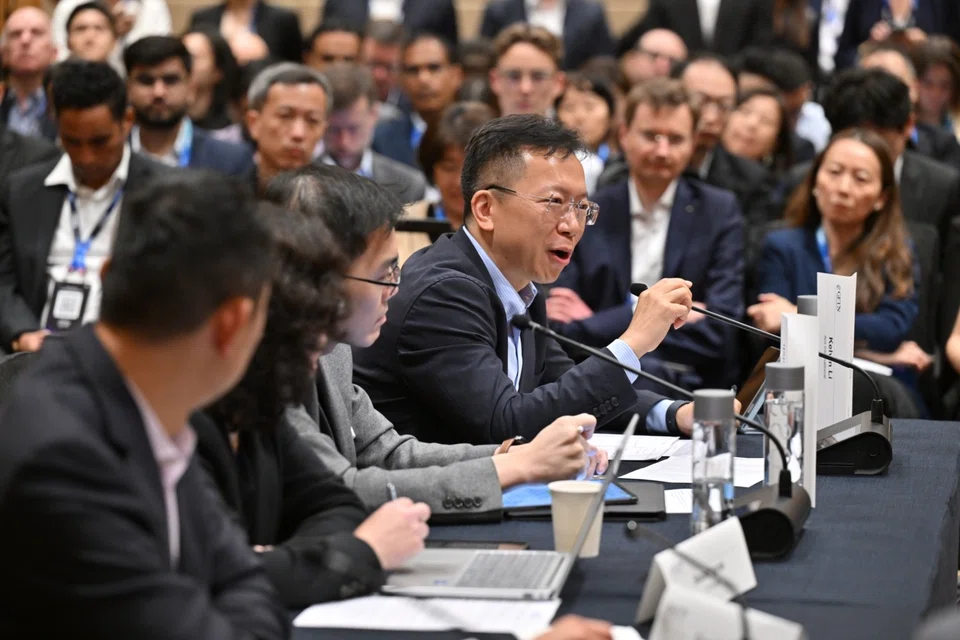
This year’s Insights2040 will comprise more than 30 roundtables, 20 closed-door discussions, and over 20 workshops and design thinking sessions. Design thinking is a human-centered approach to problem-solving.
The sessions at Insights2040 will focus on policy and technology challenges related to financial services.
The invite-only forum is expected to bring together around 5,000 members and partners. The number is capped deliberately, Patel said, to maximise dialogue and networking opportunities.
Those interested in joining the forum can apply on the Insights2040 website.
What sets the forum’s conversations apart from a conference panel is the format, he said.
Insights2040 runs under the Chatham House Rule. Information from the discussions can be freely shared and used, without disclosing the identity or organisational affiliation of speakers.
This helps sharpen the candour and quality of discussions, said Patel.
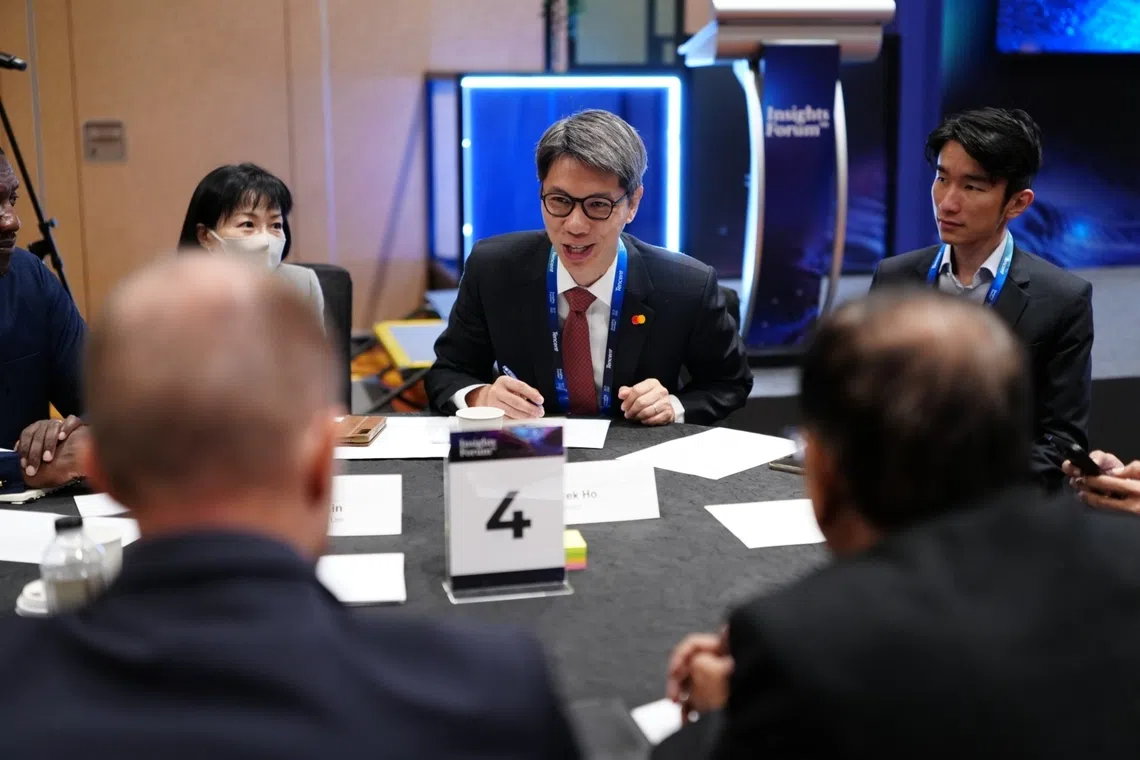
“(Leaders from) both the public and private sector share far more in a closed-door format, from technical issues to views and opinions, without fear of reprisal,” he explained.
The result: Conversations that go on to shape policy roadmaps, technology priorities and new product development, Patel said.
Collaborate to innovate
Innovation in finance carries a paradox, Patel pointed out.
The same forces driving tokenisation and new payment rails moving money could just as easily fragment the system into “digital islands” instead of one connected network.
Tokenisation is the digital version of a real-world asset – such as bonds and equities – on the blockchain.
National payment systems, digital currencies, tokenised assets and digital identities “may work well domestically but fail to connect across borders”, he explained.
This can create friction, raise costs and potentially exclude certain markets and businesses from the global network.
Preventing that, Patel said, requires collaboration.
How? By establishing common standards, aligning regulatory approaches and strengthening shared governance across borders, while respecting national priorities.
The objective is not to make every financial system identical, but to ensure different systems can connect, transact and innovate together.
This is also the challenge Insights2040 is designed to address, Patel said, “(by) bringing policymakers, financial institutions and technology leaders together to turn interoperability from ambition into practice.”
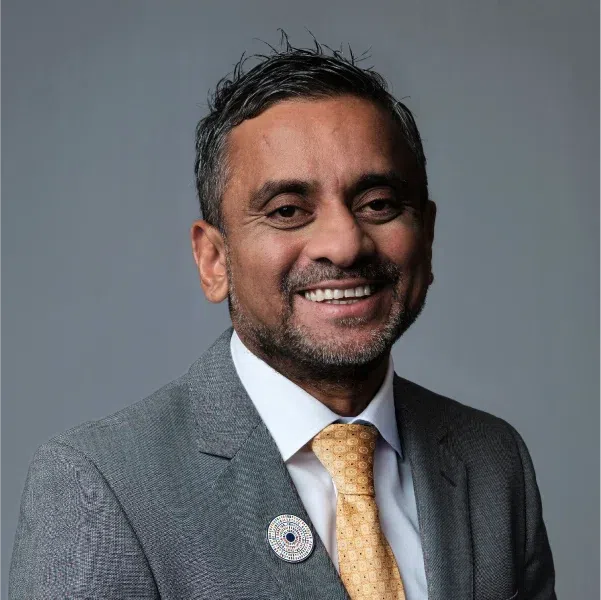
“The objective is not to make every financial system identical, but to ensure different systems can connect, transact and innovate together.”
Pat Patel, chief executive officer for US, Latin America (Latam), Middle East and Africa at the Global Finance & Technology Network (GFTN) and co-CEO of GFTN Connections
This was produced in partnership with the Monetary Authority of Singapore and the Global Finance & Technology Network.
For more stories, go to bt.sg/sff26
Decoding Asia newsletter: your guide to navigating Asia in a new global order. Sign up here to get Decoding Asia newsletter. Delivered to your inbox. Free.
Share with us your feedback on BT's products and services