From India to Uzbekistan: How a S’pore not-for-profit is using fintech to grow economies
GFTN, which runs forums and ecosystem-building efforts globally, sees fintech now driving economic growth

Mobile payments took on bank transfers. Cryptocurrency challenged fiat money. For much of the past decade, that was fintech’s story: disruption.
Over the past two to three years, that has changed.
Fintech has gone beyond rewriting the rules of finance to transforming economies, said Sopnendu Mohanty, group chief executive officer of the Global Finance & Technology Network (GFTN).
Metrics like funds raised and customers acquired still matter, he said, but they say little about what fintech actually does for an economy.
Governments now want to know how the industry can help improve lives, livelihoods and their countries’ global standing.
They ask: “How can it bring financial inclusion? How can it create high-value jobs? How can it draw overseas investors?”, he observed.

GFTN is a not-for-profit entity set up by the Monetary Authority of Singapore (MAS) in 2024.
Through its global forums and ecosystem-building initiatives, GFTN connects public and private sector stakeholders from over 130 countries to build a more inclusive and sustainable financial system.
Its flagship event is the Singapore FinTech Festival (SFF), organised with MAS and in collaboration with The Association of Banks in Singapore. The 11th edition returns to the Singapore Expo from Nov 18 to 20.
Fintech’s wider role
These governments’ questions point to a bigger shift in how they see fintech, Sopnendu said.
Developing fintech companies to strengthen the financial sector is no longer enough, he said. They want fintech to build the wider economy.
Take the BharatNetra initiative, a GFTN partnership with the Odisha government in India. (See below)
Fintech as a growth engine
Sopnendu Mohanty has watched fintech grow from a tool disrupting financial services into an engine for economic growth.
From 2015 to 2025, Sopnendu served as chief fintech officer at the Monetary Authority of Singapore (MAS), before spearheading Global Finance & Technology Network (GFTN) as group chief executive officer since February 2025.
GFTN is a not-for-profit set up by MAS in 2024 to connect the public and private sectors in building a more inclusive and sustainable financial system. It replaces Elevandi, an earlier iteration established in 2021.
“At MAS, our conviction was that fintech should help the financial system serve people and businesses better, rather than simply disrupt incumbents,” he said.
That conviction has carried over to GFTN, which helps governments tap fintech to grow their economies.
Two case studies show the different pathways, according to Sopnendu:
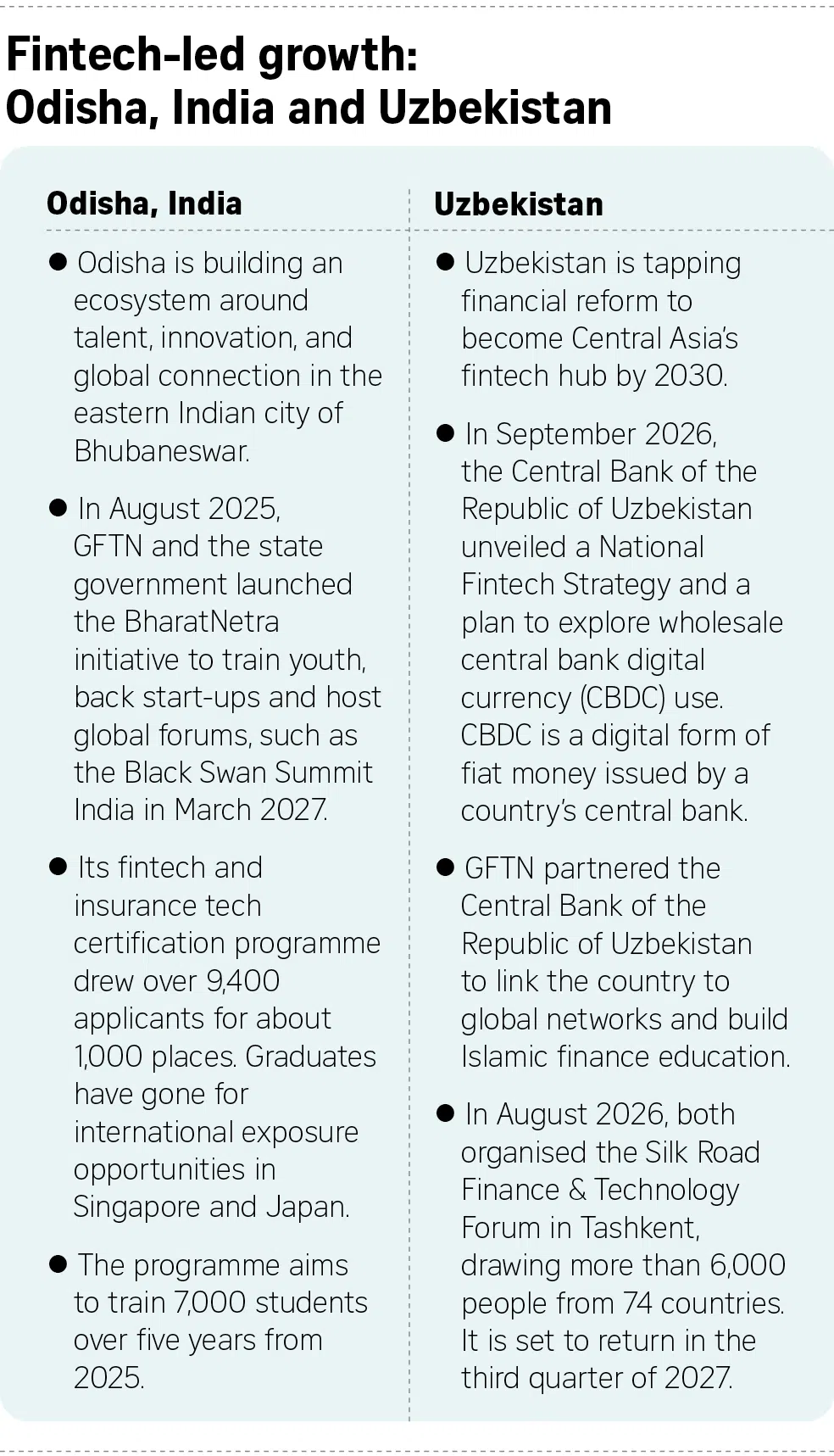
It aims to grow a fintech hub in the eastern city of Bhubaneswar by training talent, backing start-ups, and linking them to global markets and investors.
Three forces are pushing governments in this direction, he said:
- Digital public infrastructure has made financial services cheaper to deliver, and AI can now automate and tailor them for many people at once.
- Fintech has matured. Nearly three in four of the largest 85 public fintechs made profit in 2025, according to a June 2026 report by consulting firm Boston Consulting Group. Investors are also backing firms with clearer economics and growth plans that they can sustain.
- A more divided world is pushing countries to build stronger home-grown capabilities while forging new financial ties.
Sopnendu has been close to this shift.
As MAS’ first chief fintech officer, he helped make Singapore a leader in the field through PayNow, its digital payments infrastructure, and the SFF, now one of the world’s largest fintech festivals.
Looking back at how fintech’s role has grown, he said: “What has exceeded my expectations is the breadth of (fintech’s) application,” from shaping countries’ development plans to linking economies across borders.
Fintech’s next frontiers
But the work is far from over.
“We see considerable potential across Asia, particularly in South-east Asia and Central Asia, as well as in Africa,” said Sopnendu.
Governments there pursue digital transformation as a national strategy, he said, from digitising government services to training talent.
GFTN aims to help these markets speed up that change, connecting them with regulators, capital, technology partners and talent globally.
In mature markets, fintech adds to growth through better productivity and efficiency, he said. Digital payments have made transactions smoother, while AI and tokenisation could change how finance works.
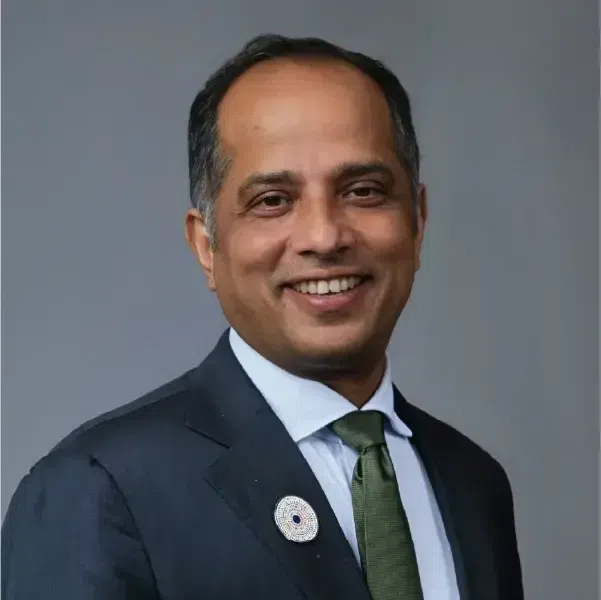
“We see considerable potential across Asia, particularly in South-east Asia and Central Asia, as well as in Africa.”
Sopnendu Mohanty, group chief executive officer of the Global Finance & Technology Network (GFTN)
Tokenisation digitally represents real-world assets like equities and gold on the blockchain.
“The next frontier (in mature markets) is ensuring these gains reach the whole economy, particularly small and medium-sized enterprises and underserved communities,” he said.
Singapore’s next opportunity thus lies in enabling other countries to use fintech to build stronger economies, he added.
GFTN can connect these countries to a global network of stakeholders and capabilities, fitting its support to each country’s needs.
Whether a market is emerging or advanced, the question to ask is the same, he said. “Does fintech make the economy more efficient, productive, inclusive and resilient?”
This was produced in partnership with the Monetary Authority of Singapore and the Global Finance & Technology Network.
For more stories, go to bt.sg/sff26
Decoding Asia newsletter: your guide to navigating Asia in a new global order. Sign up here to get Decoding Asia newsletter. Delivered to your inbox. Free.
Share with us your feedback on BT's products and services