Why upgrading existing buildings is South-east Asia’s next green frontier
Tech and policy can make retrofitting existing buildings, the sector’s biggest source of emissions, easier to finance
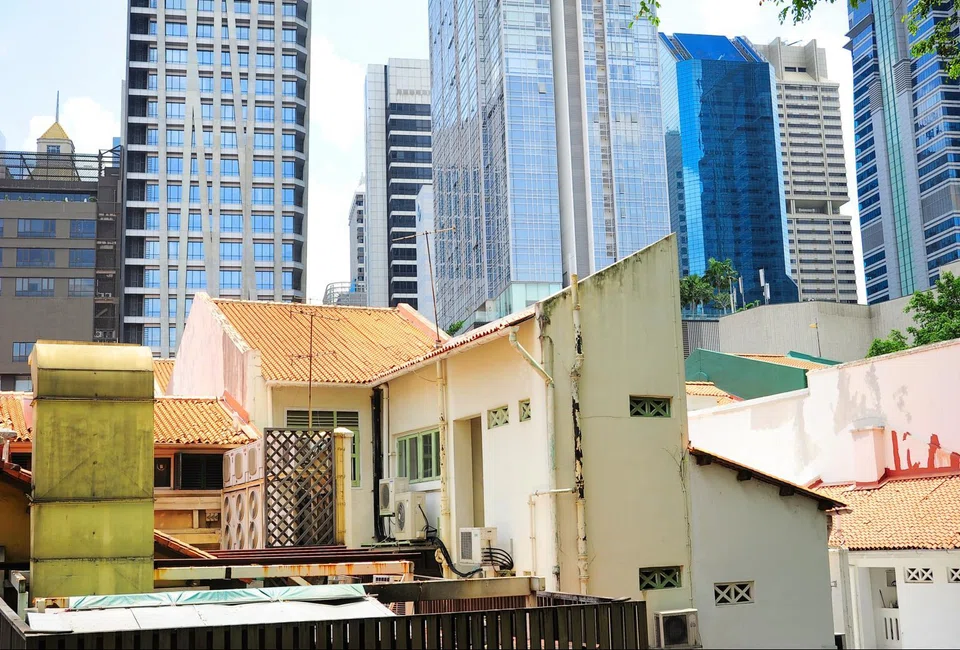
The “greenest” building is not always a new build; it could be an old building given a major upgrade.
Existing buildings account for most of South-east Asia’s built sector emissions, said Wujuan Lin, general manager of Hitachi Asia’s research and development centre. Hitachi Asia, a subsidiary of Japanese conglomerate Hitachi, is the group’s headquarters in South-east Asia.
Deep retrofitting them – by upgrading core systems like lighting and air-conditioners – is South-east Asia’s biggest opportunity to cut the sector’s footprint, he added.
In 2022, buildings made up over a fifth of the region’s greenhouse gas (GHG) emissions, a July 2025 report by think-tank Asean Centre for Energy found. Much of these GHGs, like carbon dioxide and methane, come from the energy used to operate buildings.
Buildings’ energy use could grow further and fuel more emissions, the same report stated. They could use over 50 per cent more energy than in 2022 by 2050, reaching 144 million tonnes of oil equivalent.
But retrofits face a financing hurdle. Investors favour financing large new green builds, as “payback period for retrofits are uncertain”, Lin said.

“Many retrofit projects are too small and complex, so it’s difficult to assess the outcomes,” Lin added. Outcomes depend on the building’s maintenance and tenant behaviour, among others.
Hitachi Asia’s services in South-east Asia include digital services for green building analysis and investment decisions, and emissions-cutting energy solutions.
Unlocking green financing
Tech can make retrofits easier to assess, thus easier to finance, said Lin.
Data analytics and artificial intelligence can collect and analyse building data from source and at scale, Lin said, creating “trust and transparency”.
They also help owners and banks quickly assess if projects – including retrofits – qualify for green financing, he said. Green financing refers to instruments designed to deliver investment returns and environmental benefits.
One example is the Building and Construction Authority’s (BCA) Super Low Energy Building (SLEB) Smart Hub, a Singapore green building data platform developed by Hitachi Asia.
Its AI-powered Building Energy Efficiency Assessment (BEEA) tool, launched in 2023, can assess a building’s energy efficiency in minutes. An on-site check would typically take two weeks, Lin said.
He added that owners and developers can use the report it generates to apply for green loans, and partner banks can assess their eligibility through the platform.
Setting the direction
Beyond technology, policies are vital to set a clear market direction, Lin said.
In Singapore, the BCA’s Green Mark Incentive Scheme for Existing Buildings 2.0 helps co-fund retrofit costs. This incentivises owners to improve their buildings’ energy efficiency, Lin said, in step with Singapore’s goal of greening 80 per cent of buildings by 2030.
Two-thirds of the Republic’s buildings are considered green as of July 2026.
Progress varies widely in South-east Asia, but acting soon matters most, Lin said. Buildings with no clear plan to cut emissions could risk becoming “stranded assets”, he added, losing their value as tenants look elsewhere and loans cost more.
This was produced in partnership with the Monetary Authority of Singapore and the Global Finance & Technology Network.
For more stories, go to bt.sg/sff26
Decoding Asia newsletter: your guide to navigating Asia in a new global order. Sign up here to get Decoding Asia newsletter. Delivered to your inbox. Free.
Share with us your feedback on BT's products and services