

Singapore should maintain or improve EV incentives to meet clean-transport goals: analysts

Derryn Wong
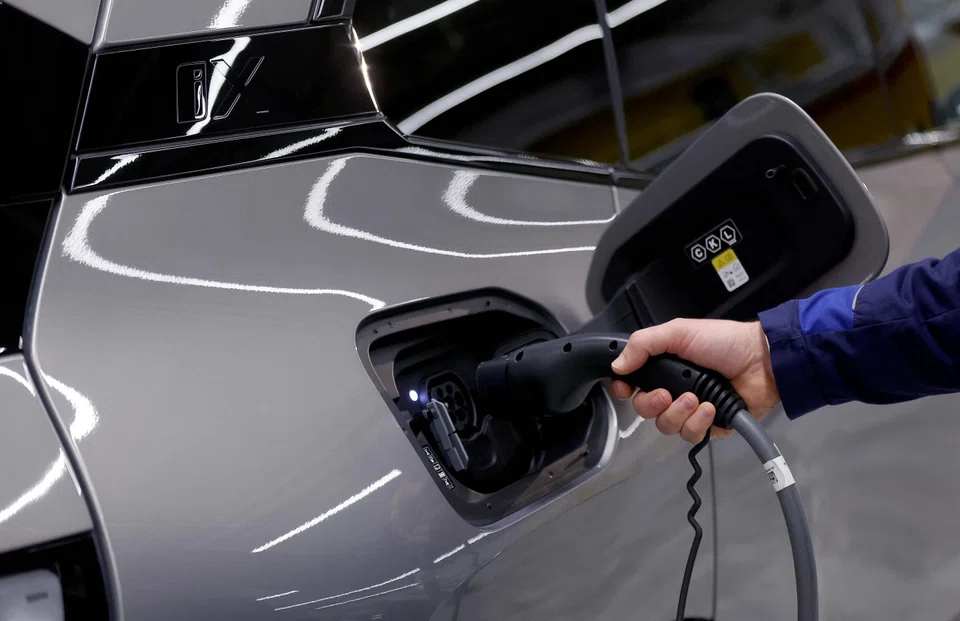
TAKE-UP rates of passenger electric vehicles (EVs) continue to grow in Singapore, thanks to government incentives – but these will need to be extended beyond their end-2023 expiry dates, or even improved, if the Republic is to achieve its clean-transport goals, say industry watchers.
Electrified passenger cars – which encompass battery EVs, petrol-electric hybrids and plug-in hybrids – made up a total of 56.9 per cent of new passenger car registrations in the first six months of 2023. However, the take-up of EVs was flat with 1,892 EVs registered, accounting for 14.3 per cent of new car registrations.
Although the EV population is now at a record high of 8,390 cars, EVs make up only 1.3 per cent of the total car population.
This means Singapore is still a long way from achieving its target of switching entirely to cleaner-energy vehicles by 2040.
EV incentives past 2023 still unclear
Two incentive schemes for EVs are set to expire at the end of the year.
First is the Enhanced Vehicular Emissions Scheme, which assigns rebates or penalties to vehicles depending on how pollutive they are. Only EVs can receive the maximum rebate of S$25,000, for vehicles with zero tailpipe emissions.
Then there is the EV Early Adoption Incentive, for all passenger EVs registered between 2021 and end-2023. This grants 45 per cent off their Additional Registration Fee, up to a maximum of S$20,000.
Passenger EVs are thus eligible for a theoretical total incentive of S$45,000.
The Ministry of Transport (MOT) is expected to provide updates on EV incentives later this year. In response to queries from The Business Times, a spokesperson said that while MOT will continue to “drive the adoption of cleaner-energy vehicles”, financial incentives are just one avenue to do so.
The National Environment Agency, which jointly manages the emissions scheme with the Land Transport Authority, said it has no comments on the possible extension of EV rebates for now.
Automotive industry watchers expect incentives to be extended – but possibly reduced – after this year.
They noted that the Commercial Vehicle Emissions Scheme (CVES) has been extended until 2025, but with EV-relevant rebates halved to S$15,000 from S$30,000.
Incentives a “key driver” for clean-vehicle push
Industry players agreed that EV incentives are crucial to achieving Singapore’s clean-transport goal, and should be maintained or even increased.
The small population of EVs versus Singapore’s clean-energy vehicle ambitions “would suggest that the current system of incentivisation should still continue”, said Claudius Steinhoff, president and chief executive of Mercedes-Benz Singapore.
BMW Group Asia managing director Lars Nielsen said that incentives still have a “crucial role” and should be reviewed periodically to drive EV take-up.
Sabrina Sng, managing director for Polestar, Lotus and insurance for car dealership group Wearnes Automotive, noted that even if cleaner-energy vehicles were to include hybrid cars, the category would still form only 14.4 per cent of all passenger cars.
EV incentives should not be reduced or removed at this stage, as there is still a long way for Singapore to go, she added.
With EVs still more expensive than their internal combustion engine equivalents, incentives are a “key driver” for sales, said Stephen Dyer, head of Asia and co-lead of greater China for automotive practice at business consultancy AlixPartners.
He said that Singapore should offer more incentives, since its high car prices hamper affordability.
Sng pointed out that Hong Kong and Norway’s incentives have made it cheaper to buy an EV than a petrol-powered car, unlike in Singapore. “If the government wants quicker and more widespread adoption of EVs, then (incentives) need to be increased.”
Marketing manager Daryl Ong, 36, who purchased a Hyundai Ioniq 5 EV this year, said he would not have considered doing so without incentives.
The effect of lower CVES incentives could foreshadow similar consequences if passenger EV rebates are reduced.
Growth in electric light commercial vehicles was powered by incentives, but slowed after the CVES rebate was halved, Urban Solutions’ head of mobility services and autonomous solutions Hoe Yeen Teck previously told BT.
Point of good return
It is less clear when EV incentives should start to be phased out.
Some countries look at the EV share of new-car sales, noted Sng, adding that this is less useful in Singapore, where sales fluctuate as the Certificate of Entitlement system dictates supply.
Dyer suggested that incentives be phased out once price parity without incentives is reached, which is when the “natural demand” for EVs has been firmly established.
But Anil Das, director of JTC’s logistics and transport cluster, considers it “premature to ascertain what the specific pivot points or metrics are”.
Other markets are also grappling with this problem. Das pointed out that Norway, where around a fifth of all cars are EVs, continues to have multiple incentives such as subsidies on tolls, parking and tax benefits.
Instead of taking away incentives, there is room to add more. Lynette Cheah, associate professor of engineering systems at the Singapore University of Technology and Design, said that fully electric heavy commercial vehicles do not currently receive emissions rebates – but should.
TRENDING NOW
World’s largest offshore wind platform by Seatrium consortium on track to be completed by 2028

Is stamp collecting enjoying an analogue revival or are its best days over?

GovTech retrenches another 38 staff in second round of layoffs
MBS adjusted property Ebitda falls 20.6% in Q3 with fewer high-roller visits, weaker hold

