

Say ‘yes’ to that work stint abroad and roll with the challenges: Sun Life’s Jessica Tan
The Singapore executive’s career has spanned the most dynamic growth cycles in recent decades

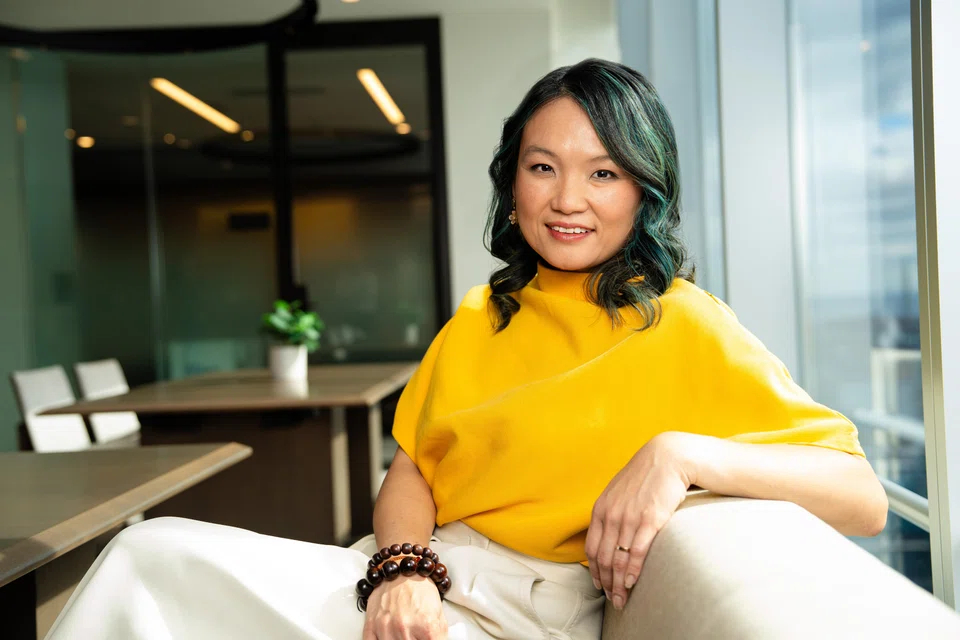
[SINGAPORE] Sun Life president Jessica Tan built her career by going where growth was, even if it meant crossing continents and spending years abroad.
That path, it happens, also aligns with Singapore’s push for more professionals to gain overseas experience.
Tan told The Business Times in a video call that each move she made was driven by a deliberate search for new challenges, even if it meant starting from scratch.
“Every part was quite conscious,” said the Singapore executive, who moved to Toronto in 2024 to helm the Canadian insurer, which operates globally with about C$1.6 trillion (S$1.5 trillion) in assets under management.
Her career has spanned some of the most dynamic growth cycles in recent decades, from the US dotcom boom of the late 1990s to China’s financial sector expansion, and now, North America’s evolving insurance landscape.
She is best known for her role as co-CEO of China insurer Ping An, one of Asia’s largest players, which had more than 251 million retail customers as at end-December 2025. She put more than a decade into building its tech capabilities, and oversaw its insurance, digital banking, healthcare and technology businesses.
Building a global career
While Tan’s moves were based on her instinct to pursue opportunity, family considerations have also come into the picture.
When her move to Toronto came up, for instance, there were discussions about how her daughters’ education would fit into the plan. One is now studying in Seattle, and the other relocated with her to attend high school in Toronto.
Tan’s career trajectory comes to mind as Singapore urges more of its citizens to gain experience through internships and work stints abroad, in a bid to build a globally attuned workforce with international business connections.
Her own journey began early. After studying at the Massachusetts Institute of Technology, she chose to stay on in the US to work – a move encouraged by her father.
“I was very lucky to be there in the dotcom boom in the late 90s, early 2000s,” she said of her early work experience as a consultant at McKinsey & Company.
She later returned to Singapore for family reasons, including to get married, but used that period to build out her regional exposure, taking on assignments across Asia, including in India, China, Vietnam and Indonesia.
“I really wanted to see what different Asian markets were like,” she said.
That experience led her to Ping An, where she moved into an operations role because she did not want to be “just” a consultant. This choice gave her the opportunity to build capabilities directly in a fast-growing organisation.
“It’s different when you are actually doing things. You have hands-on experience, you have lots of scars, but your ability to build things (becomes) extremely helpful,” she said.
“Looking back, I’m very happy I made that choice because I learnt so much.”
Starting from scratch
Tan’s experience highlights a key reality of working abroad: the need to do a “reset” with each move.
“You have got to be very resilient,” she said, given that each relocation entailed rebuilding networks and understanding a new market from the ground up.
“I think of it as different chapters,” she added. “With each new market, I start again – to know the people, the market, to find the opportunities and get excited about the new country and culture.”
Her early years in Asia built that adaptability. Assignments took her into unfamiliar environments, including being in Thailand during a coup – while seven months pregnant.
“It toughens you,” she said. “The first time … might be scary, but then the more you do it, it’s actually not too difficult.”
Curiosity has been a constant driver for Tan, helping her navigate the transitions. “I do constantly have a drive and curiosity about things,” she said.
Over time, this outlook has paid off in terms of networks. When she moved to Canada, the connections she had built over the decades quickly resurfaced.
“I have 5,000 contacts and another few thousand on my WeChat,” she said. “It builds on this; I think it’s very helpful because when you move to a different place, you have a network of people that can really help you along the way.”
Ambition versus reality
Even as Singapore expands its programmes to support those seeking overseas exposure, hesitation often remains, particularly among mid-career professionals weighing stability against opportunity.
But Tan believes that staying put in a familiar environment can limit exposure.
“It’s different working for a big global company in Singapore versus in the headquarters,” she said, adding that you “only see a section” when based outside the centre of operations.
That said, she acknowledges the support she received from family shaped her career decisions. Her parents helped with childcare, and flexible work arrangements enabled her to travel frequently between markets.
At one point when she was in Ping An, she commuted weekly to see her family.
“I come back (to Singapore) on Fridays and fly back (to China) on Monday mornings,” she said.
Rather than viewing this as a trade-off, she frames it as a matter of setting priorities. “It’s not about sacrifice. It’s about the quality time when you are there.”
For those in two minds about working abroad, Tan said that she believes the risks are often overstated. Her advice: Keep an open mind, and be willing to step out.
Her own move to Canada, she noted, came from an unexpected conversation at an industry panel discussion, at which she got a reminder that opportunities often emerge organically.
“So what if it doesn’t work out? What’s the worst? You come back after two, three years... You’ll have learnt much more,” she said. “It’s okay to start from scratch again.”
Tan offered three tips for those on the fence.
- Start early: Take opportunities in new markets or roles, even if it means starting from scratch. Early exposure builds skills and perspectives that are hard to gain later.
- Be resilient: Each move requires rebuilding networks and understanding new environments. Treat every transition as a fresh chapter rather than a setback.
- Stay curious and open-minded: Keep exploring different markets and experiences, and do not overestimate the risks. Even if things do not pan out, the learning is worth it.
This is the first in a series profiling Singaporean executives working overseas and what drives them
TRENDING NOW

Once staunchly pro-China, Malaysian Chinese businesses are now distancing themselves from Beijing

Stocks to watch: HPL, Aims Apac Reit, Zico, Advanced Systems Automation, ComfortDelGro

‘How many will survive?’: Bubble fears arise as China’s humanoid robotics face reality check

Smaller board lots can’t fix a market run by three banks

