Singapore’s latest one-year Treasury bill offers 3.87% yield

Tan Nai Lun
Tan Nai Lun

Published Thu, Jan 26, 2023 · 01:27 PM
    • The total value of applications in this one-year T-bill auction was S$10.5 billion, up from the S$8.6 billion applied in the last 1-year T-bill auction.
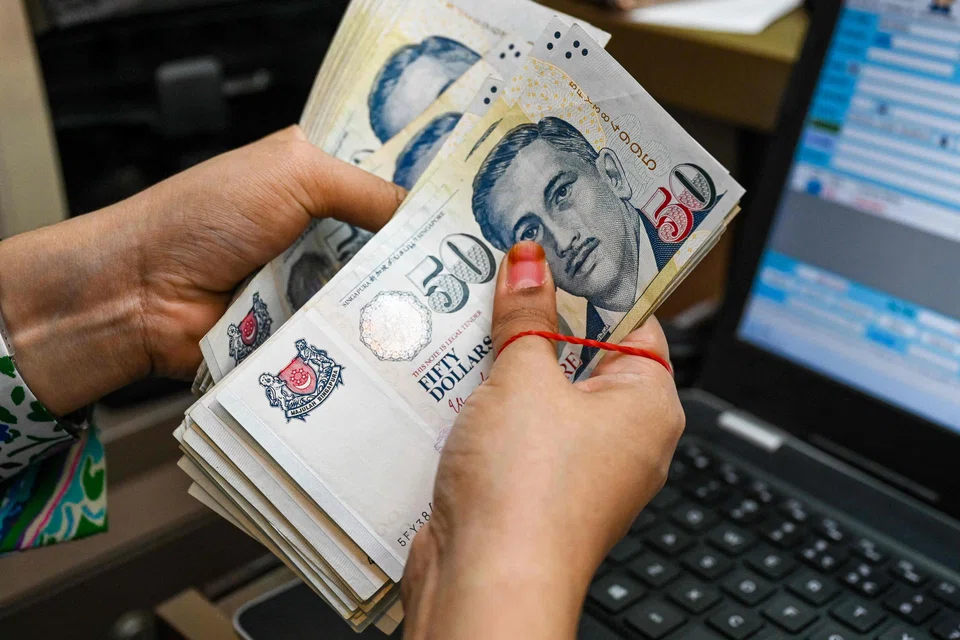
    • The total value of applications in this one-year T-bill auction was S$10.5 billion, up from the S$8.6 billion applied in the last 1-year T-bill auction. PHOTO: AFP

    SINGAPORE’S first Treasury bill (T-bill) with a one-year tenor in 2023 closed its auction with a cut-off yield of 3.87 per cent on Thursday (Jan 26).

    The T-bills – a risk-free fixed-income product, backed by the Singapore government – were around 2.9 times subscribed for the S$3.6 billion allotment in the latest auction. The T-bills will mature on Jan 30, 2024.

    The previous T-bill with a one-year tenor, which closed its auction on Oct 13, 2022, had a cut-off yield of 3.72 per cent and was 2.3 times subscribed.

    In the latest auction, non-competitive bids totalled S$643.9 million and were fully allotted.

    Those who submitted bids at the cut-off yield were allotted around 75 per cent of their application. Meanwhile, those who specified a lower yield were fully allotted, and those who specified a higher yield were not allotted.

    The total value of applications in this auction was S$10.5 billion, up from the S$8.6 billion applied in the last one-year T-bill auction. Meanwhile, the latest six-month T-bill auction attracted a total application value of S$13.1 billion.

    Frances Cheung, rates strategist at OCBC, said that the 3.87 per cent yield is at the lower end of the bank’s expected range. Given that the yield is also lower than the previous six-month bill rate, it reflects expectations of the rates peaking.

    Cheung, however, noted that the auction saw strong demand. She said: “Investors probably would like to lock in the return, which may still be considered as decent, for a longer period to guard against possible easing in rates.”

    Yield on T-bills hit a 30-year high of 4.4 per cent for the six-month tenor in December last year, on the back of rising interest rates globally, and attracted strong investor interest.

    In a T-bill auction, up to 40 per cent of the total issuance amount will first be allotted to non-competitive bids. If the amount of non-competitive bids exceeds 40 per cent, the bond will then be allocated to non-competitive investors on a pro-rated basis, with the balance going to competitive bids, from the lowest to highest yields.

    T-bills are issued at a discount, and investors get back the full face value at maturity. The bills can be purchased with cash, Supplementary Retirement Scheme funds or Central Provident Fund monies.