

Singtel CEO’s pay falls 17% to S$6.8 million in FY2026 on Optus incident and Singapore outages
The remuneration of other key executives is down 11.9% from a year earlier

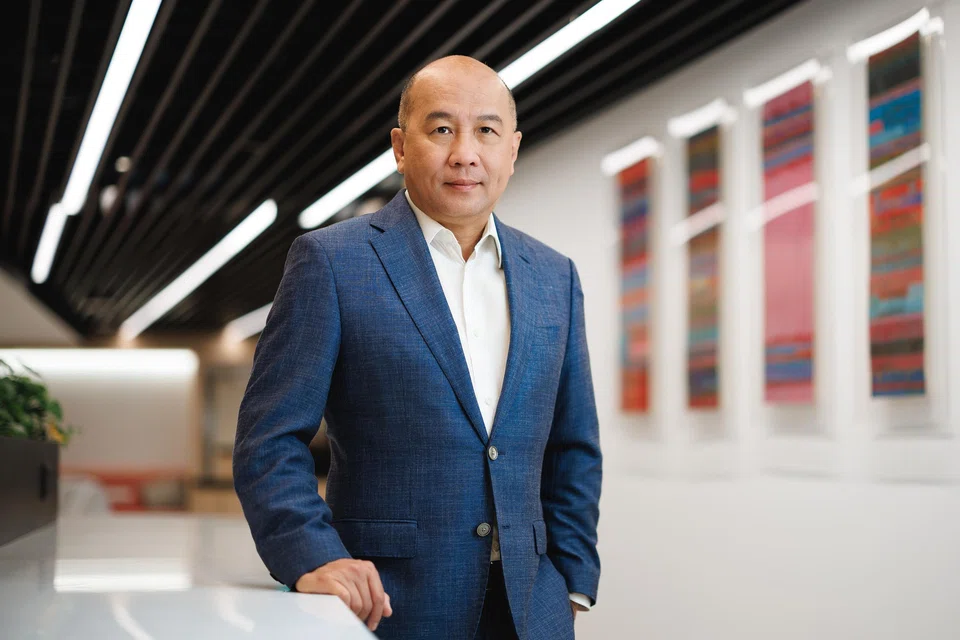
[SINGAPORE] Singtel CEO Yuen Kuan Moon had his pay slashed 16.9 per cent to S$6.8 million for FY2026, owing to the “triple zero” incident at its Australian unit Optus and Singapore network outages.
His compensation for FY2025 was S$8.2 million.
“In assessing the performance for the year ending Mar 31, 2026, and determining the appropriate remuneration outcome for the group CEO, the board took into account the Optus triple zero incident and the Singtel Singapore network outages during the year,” Singtel said in its annual report released on Tuesday (Jun 30).
The remuneration of other key executives fell 11.9 per cent to S$25.9 million for the same reasons.
In September 2025, an Optus outage following a network upgrade resulted in triple zero calls – the emergency number used for life-threatening situations and emergencies – being blocked.
A review found that this led to two deaths.
Separately, Singtel’s Singapore users were affected by multiple network outages this March. The largest outage on Mar 16 resulted in users not having access for more than six hours.
“In response (to the triple zero incident and Singapore outages), the group remains focused on restoring customer trust, enhancing service reliability, and strengthening operational resilience across its businesses,” Singtel said.
Cuts despite strong financial showing
The cuts in remuneration come even though the telco had a strong financial showing in FY2026.

The group’s net profit rose 39.5 per cent to S$5.6 billion, from S$4 billion a year earlier. This was boosted by S$2.84 billion in net exceptional gains, mainly from its Airtel stake sales, and partly offset by various provisions largely from Australia.
Underlying net profit rose 12 per cent year on year to S$2.8 billion.
Singtel’s asset-recycling strategy, Singtel28, recently hit S$6.8 billion against its S$9 billion mid-term recycling target, following its sale of S$1 billion of shares in Thai energy developer Gulf Development.
An AI-driven telco
Yuen said that to differentiate itself from its competitors, the telco will double down on its digital infrastructure and platforms.
“We see ourselves evolving from a largely traditional telco group into a global player in digital infrastructure and services, with a strong Asian focus,” he added.
One way the group intends to do so is by leveraging the scale from its recent acquisition of data centre operator STT GDC, while also scaling its digital infrastructure arm Nxera and sovereign artificial intelligence cloud provider RE:AI.
Driving this push is AI.
“We have been systematically adopting and integrating AI across our operations to boost productivity, enhance resilience and improve customer experience,” Yuen said.
In addition, almost all Singtel employees in Singapore have been trained in AI fundamentals, he said, noting that the telco is developing talents who can apply AI in real business scenarios.
“AI will strengthen our competitive resolve, uncover new sources of growth and value, and solidify our position as the region’s leading digital infrastructure and services provider.”
Shares of Singtel closed 0.7 per cent or S$0.03 lower at S$4.41 on Tuesday, after the release of the annual report.
Decoding Asia newsletter: your guide to navigating Asia in a new global order. Sign up here to get Decoding Asia newsletter. Delivered to your inbox. Free.
Copyright SPH Media. All rights reserved.
TRENDING NOW

DBS, OCBC, UOB rout lops billions off STI as inflation, rate concerns spook investors

Grab CEO’s wife Chloe Tong on life with Anthony Tan and finding her purpose

OCBC sheds S$8 billion in value as shares close nearly 6% down; analysts cautious on banks

Deal between tycoon friends sparks scrutiny of Philippine power sector

